
For more than six decades, the United States Agency for International Development (USAID) served as the primary vehicle for American soft power, managing a vast portfolio of humanitarian, healthcare, and disaster relief programs across the globe’s most vulnerable regions. This institutional pillar, established during the Cold War to foster stability and counter-adversarial influence, underwent a radical transformation following a series of executive mandates that culminated in its informal dissolution last July. A newly released study published in the journal Science now provides a data-driven assessment of this policy shift, suggesting a direct and measurable link between the withdrawal of American aid and a significant surge in violent conflict across the African continent.
The research indicates that the sudden suspension of thousands of overseas programs did more than just create a vacuum in humanitarian logistics; it appears to have destabilized fragile political ecosystems that relied on the agency’s support for basic food security and institutional resilience. While the administration’s stop-work order—issued in the days immediately following the inauguration—was initially framed as a temporary pause for fiscal review, the subsequent dismantling of the agency has resulted in the largest retreat of American international development assistance since the early 1960s.
The Science of Instability: Quantifying the Impact of Aid Withdrawal
The study, led by researchers including Austin Wright of the University of Chicago, analyzed the impact of funding cuts across 870 subnational regions in Africa. These regions had historically received varying levels of USAID support, ranging from agricultural development and healthcare infrastructure to governance training and emergency food aid. By utilizing two comprehensive global datasets to track both financial disbursements and incidents of violent conflict, the research team identified a stark "post-shock" trend.
According to the findings, in the ten months following the immediate withdrawal of aid, regions that were previously high-priority recipients of USAID funding experienced a 12.3 percent increase in overall conflict. More specifically, the data revealed a 7.3 percent surge in armed battles between organized groups and a 6.8 percent rise in protests and riots. Perhaps most distressingly, battle-related fatalities in these areas rose by 9.3 percent. Wright characterized the magnitude of this shift as unprecedented in recorded human history, noting that the global scale and speed of the shutdown represented a total termination of a superpower’s developmental commitments.
The researchers argue that the withdrawal acted as a "systemic shock." In many of these regions, USAID was not merely a secondary source of funding but a foundational component of the local economy and social safety net. When that support was removed without a transition period or local replacement, the resulting resource scarcity created a fertile ground for civil unrest and organized violence.
The Intersection of Food Insecurity, Climate Change, and Conflict
To understand why the removal of aid correlates so strongly with violence, experts point to the delicate relationship between agriculture, climate, and social stability. Farming and agricultural markets are the backbone of many African economies, yet they are also the most susceptible to disruption. When conflict breaks out, food security inevitably worsens as farmers are displaced and supply chains are severed. Conversely, when food security declines due to external factors, social unrest often follows as populations compete for dwindling resources.
Climate change acts as a "threat multiplier" in this equation. According to a recent United Nations report, extreme weather is now second only to conflict as a driver of global hunger and malnutrition. Rising sea levels, prolonged droughts, and cataclysmic storms are increasingly forcing populations to migrate. These climate refugees often move into territories held by other groups, sparking land disputes and ethnic tensions.
Zia Mehrabi, a food security and climate change researcher at the University of Colorado Boulder, emphasized that USAID’s programming—particularly in health, water, and therapeutic foods—provided a critical lifeline. "It is undeniable that USAID programming provided a critical lifeline to millions of women, children, and families in severe nutritional deficits," Mehrabi stated. He questioned the logic of abruptly retracting such fundamental support, suggesting that the direct result of such a policy is an increase in human suffering and mortality.
A History of Resilience: The Legacy of USAID Since 1961
The dissolution of USAID marks the end of an era that began in 1961, when President John F. Kennedy established the agency via the Foreign Assistance Act. At its inception, the agency was designed to provide non-military assistance to emerging nations, serving both a humanitarian purpose and a strategic one: preventing the spread of Soviet influence during the Cold War.
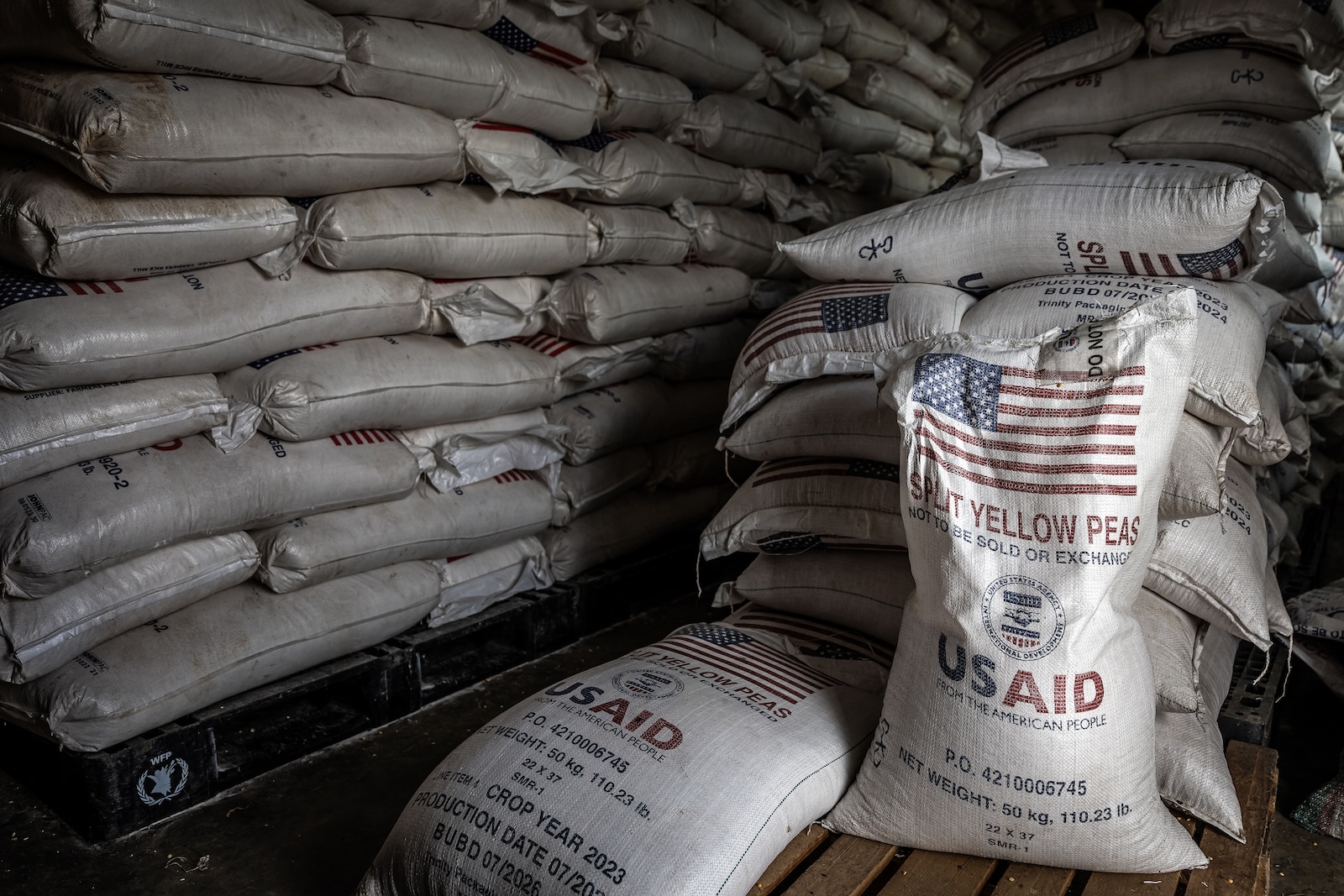
Over the decades, the agency’s mission evolved to focus on "resilience." Chelsea Marcho, a senior director for research and policy at the Food Security Leadership Council and a former USAID official, explained that building the capacity of foreign political systems to withstand shocks—whether economic, environmental, or social—was a primary goal. The recent Science study underscores this, showing that violence tended to be less severe in regions where USAID had successfully helped build stronger local institutions before the shutdown.
However, the agency’s impact extended beyond direct aid. USAID was the primary financier for pivotal data collection efforts. This included localized weather monitoring, agricultural yield forecasting, and the Famine Early Warning Systems Network (FEWS NET). The dissolution of the agency led to immediate disruptions in these systems, effectively "blinding" the international community to emerging crises.
The Data Vacuum: Measuring the Unmeasurable
One of the most profound consequences of the agency’s end is the diminished ability to track the very outcomes the shutdown has caused. Marcho noted that the world’s visibility into food security is in decline at the exact moment the risks to the global food system are reaching a breaking point. "The end of USAID has buckled our ability to measure the very outcomes of the end of USAID," she observed.
While some monitoring systems have been partially restored through private philanthropy or other international bodies, the loss of USAID’s centralized infrastructure and technical expertise has left significant gaps. Without reliable data on where crops are failing or where malnutrition is spiking, humanitarian organizations cannot effectively allocate their remaining, limited resources. This lack of information can delay responses to famines and outbreaks of disease, further exacerbating regional instability.
Academic Debate and Methodological Caution
Despite the striking correlations presented in the Science paper, some members of the academic community urge caution in attributing the rise in African conflict solely to the USAID shutdown. Zia Mehrabi, while acknowledging the importance of the study, argued that the paper leaves many questions unanswered. He pointed out that the 10-month observation period may be too short to capture the full complexity of these geopolitical shifts.
Furthermore, Mehrabi noted that the Trump administration implemented simultaneous cuts to other international funding sources, such as the State Department and various United Nations contributions. Disentangling the specific impact of USAID from these broader shifts in U.S. foreign policy is a significant analytical challenge. "The results are clearly early and tentative," Mehrabi said, suggesting it may be a leap to attribute the entirety of the conflict spike to a single agency’s dissolution.
In response, Austin Wright acknowledged the study’s limitations, including the short post-shock window and the fact that the geographic scope was confined to Africa. However, he maintained that the team’s "robustness checks"—detailed in the study’s extensive appendix—address many of these concerns, reinforcing the link between the withdrawal of development aid and the subsequent destabilization.
Implications for the Future of International Development
The withdrawal of the United States from the global development stage has prompted a broader conversation about the nature of aid and stability. Some critics of traditional foreign aid, including Mehrabi, suggest that the presence of American intervention does not always equate to long-term stability. He argued that the U.S. could more effectively deter conflict by fostering equitable trade and benefit-sharing in natural resource extraction, particularly regarding critical mineral supply chains in nations like the Democratic Republic of the Congo. Such shifts in economic policy, he proposed, could far outweigh the benefits of traditional aid.
Nonetheless, the immediate vacuum left by USAID remains a pressing concern for international observers. With an institutional history spanning over 60 years and an annual budget that once reached tens of billions of dollars, the agency’s footprint was a defining feature of the international order. Rebuilding such an apparatus, or even a fraction of its capacity, is not a simple task of reallocating funds.
"One cannot simply create USAID all over again," Wright concluded. The loss of institutional memory, local partnerships, and logistical networks represents a generational setback for international development. As violent conflict continues to simmer in the regions once served by the agency, the international community is left to grapple with the consequences of a world where the primary architect of global stability has effectively left the building. The findings in Science suggest that the cost of this withdrawal will be measured not just in dollars saved, but in lives lost and regions destabilized for years to come.










Leave a Reply