

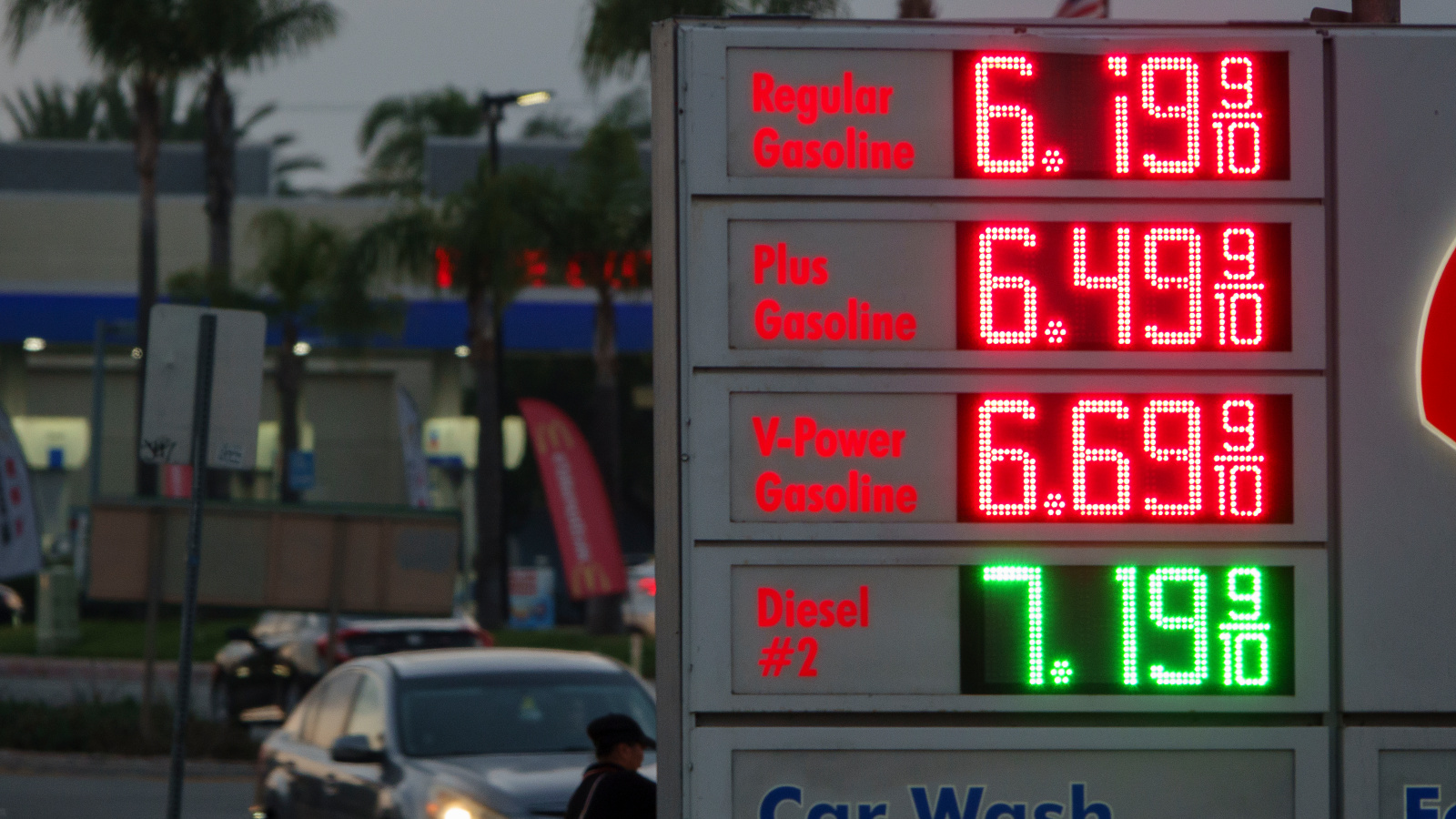
With the average price of gasoline in the United States climbing above $4.50 a gallon—representing a staggering 40 percent increase since the outbreak of the Iran war in late February 2026—the American landscape is witnessing a profound shift in consumer behavior. For the first time in decades, the reliance on the internal combustion engine is being challenged not just by environmental advocacy, but by sheer economic necessity. Analysts have declared the current situation the largest oil supply disruption in history, a crisis that has forced U.S. drivers to spend an additional $45 billion on gasoline and diesel compared to the previous year. According to a comprehensive survey conducted in late April by ABC News, The Washington Post, and Ipsos, approximately 44 percent of U.S. adults report they have significantly cut back on driving in response to the escalating costs at the pump.
This domestic squeeze is part of a broader, more complex global phenomenon known as "demand destruction." As the conflict in the Middle East continues to destabilize energy markets, the world is witnessing a structural realignment that experts suggest could lead to a permanent reduction in fossil fuel reliance. While the immediate catalyst is a geopolitical shock, the resulting shifts in infrastructure, technology adoption, and daily habits may ensure that global oil demand never returns to its pre-war peaks.
The Domestic Shift: From Highways to Public Transit
In the United States, a country historically defined by its car culture and expansive highway systems, the high cost of fuel is driving a resurgence in public transportation. Major metropolitan areas are reporting significant upticks in ridership. In Cincinnati, the Metro system has seen a surge in commuters, while in Los Angeles, Metrolink has reported a notable increase in Southern California residents opting for rail over the gridlock of the 405 freeway. In New York City, the D-line and other subway routes have become crowded with former drivers seeking to mitigate the "oil shock" that is currently causing a $45 billion rupture in the national economy.
The shift is not limited to trains and buses. The secondary vehicle market is reflecting a transformation in consumer preference, with sales of used electric vehicles (EVs) and hybrid cars growing substantially over the past two months. For those unable to switch vehicles entirely, the "micro-mobility" movement is providing an alternative; e-bikes and shared scooters are increasingly replacing short car trips for errands and local commutes. National rail carrier Amtrak has also reported ridership figures well above seasonal norms, as travelers abandon regional flights and long-distance drives in favor of the tracks.
However, the transition is not seamless. Much of the American suburban landscape was designed specifically for the automobile, making alternative transportation difficult or impossible for millions. In these regions, demand destruction is taking a more subtle form. Residents are increasingly carpooling, consolidating multiple errands into single trips, or negotiating with employers to work remotely more frequently—a trend that has regained the momentum it first saw during the COVID-19 pandemic.
The Strait of Hormuz and Global Supply Chains
The root of the current crisis lies in the Strait of Hormuz, where roughly 20 percent of the world’s oil shipments have been choked off due to the ongoing conflict. This maritime bottleneck is the primary artery for global energy, and its disruption has sent shockwaves through every sector of the global economy. The International Energy Agency (IEA) recently reiterated that demand for oil is being systematically "destroyed," forecasting a global contraction of 420,000 barrels a day this year alone.
Economists distinguish between a temporary dip in consumption and true "demand destruction." While high prices often lead to short-term conservation, demand destruction refers to a deeper economic shift where the source of demand is permanently removed. Kenneth Gillingham, a professor of environmental and energy economics at Yale University, notes that the term is most accurate when describing long-term structural changes. "To me, the term ‘demand destruction’ really only makes sense if you’re talking about it as a longer-term thing. Like, it’s truly destroyed the source of demand," Gillingham stated.
Asia: The Epicenter of the Energy Transition
While the impact is visible in the U.S., the most significant destruction in global oil demand is occurring in Asia. Prior to the conflict, Asia was projected to account for nearly all the growth in global oil and gas use over the coming decades. Now, those projections are being discarded as nations across the continent rethink their energy security.
In Japan, industrial output is already reflecting this change. Factories have scaled back the production of petrochemical products, with demand for naphtha—a key component in plastics and chemical manufacturing—falling by 25 percent year-over-year. This accelerated decline is part of a "long-term declining trend" in Japanese oil demand that the IEA suggests may be irreversible.
South Korea has seen a similar trend, with gasoline demand falling by approximately 5 percent. The crisis has prompted political leaders to take decisive action. South Korean President Lee Jae Myung has called for an aggressive pivot to renewable energy, stating that the nation’s future is at "serious risk" if it continues to rely on volatile fossil fuel markets. "Our future will be at serious risk if we continue to rely on fossil fuels," Lee remarked, signaling a policy shift that favors electrification over internal combustion.
Other Asian and South Asian nations are implementing radical conservation measures. Pakistan, the Philippines, and Sri Lanka have all introduced or proposed four-day work weeks to reduce the energy consumption associated with daily commuting. These measures, initially seen as emergency responses, are now being evaluated as potential permanent fixtures of the modern labor market.
The "Twin Fossil Shock" and the Rise of Electrotech
Experts at the energy think tank Ember argue that the world is currently experiencing a "twin fossil shock." This follows the 2022 volatility caused by the invasion of Ukraine and the current 2026 Middle East crisis. Daan Walter, who leads strategy research for Ember, suggests that this pattern of repeated shocks is shaking countries and companies out of their complacency.
"It’s very likely that if this crisis continues to be as bad as it is… we’re currently living in the peak year of oil," Walter said. He argues that if Asia chooses to grow its economy through "electrotech" rather than fossil fuels, the global demand for oil will peak much sooner than previously anticipated. The evidence for this shift is already appearing in trade data. In March, shortly after the onset of the Iran conflict, China’s exports of solar panels, batteries, and electric vehicles surged to record highs as the world scrambled for alternatives.
Unlike the oil shocks of the 1970s, the current crisis occurs at a time when scalable, cost-competitive alternatives are readily available. In the 1970s, nations turned to nuclear power and increased efficiency; in 2026, the solution is a combination of wind, solar, and advanced battery storage. This technological maturity provides a "permanent route out of fossil dependence" that was not available to previous generations.
Behavioral Psychology and Permanent Change
The longevity of these changes depends largely on human psychology and the quality of the alternatives. Susan Handy, a professor of environmental science and policy at the University of California, Davis, points out that shocks are often the only way to break entrenched habits. While people generally prefer stability, a crisis forces them to try new routines—some of which they may find preferable to their old ones.
"A shock like the big increase in gas prices… is really helpful in getting people to change behavior," Handy said. She notes that while many will return to their cars once prices stabilize, a significant percentage will stick with their new habits, whether it is biking to work, using public transit, or continuing to work from home. The shift is often reinforced by capital investments; a consumer who buys an electric vehicle or installs a heat pump during a crisis has "locked in" lower fossil fuel demand for the next decade or more.
Implications for the Future
The political landscape remains divided on the duration of this shift. Former President Donald Trump has asserted that oil prices will "drop like a rock" once the conflict ends, suggesting a return to the status quo. However, energy analysts warn that even if shipping through the Strait of Hormuz resumes tomorrow, the damage to infrastructure and the global supply chain will take months, if not years, to repair.
Furthermore, the psychological impact of two major energy crises in less than five years cannot be understated. For many nations, energy independence is no longer just an environmental goal; it is a matter of national security. The move toward a "green, global shift" appears to be accelerating, driven by the harsh reality that fossil fuels are an increasingly "unreliable and destructive resource."
As the world navigates this period of intense volatility, the "silver lining" identified by the IEA remains the potential for a cleaner, more resilient energy future. If the 2026 oil crisis is remembered as the moment the world finally turned away from oil, the current economic pain may be viewed by future historians as the catalyst for a necessary and inevitable transformation. For now, Americans continue to watch the numbers at the pump, while the rest of the world watches the Strait of Hormuz, all participating in a global experiment in living with less oil.










Leave a Reply