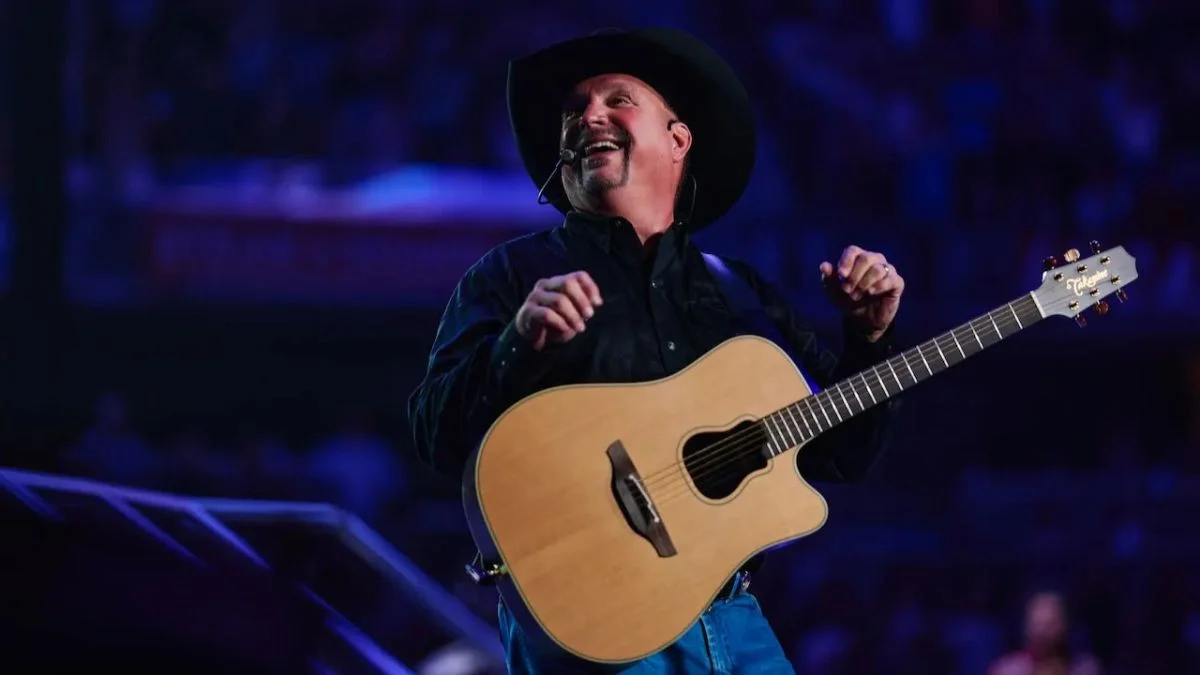
In a move that marks a significant shift in the Nashville media landscape, country music superstar Garth Brooks has reached a definitive agreement to acquire 100.1 FM, the longtime terrestrial home of the independent alternative radio station WRLT, widely known to the public as Lightning 100. The acquisition, facilitated through Brooks’ media entity Sevens Network LLC, is currently awaiting regulatory approval from the Federal Communications Commission (FCC). This transaction represents a bold pivot in Brooks’ broadcast strategy, signaling his intention to establish a permanent, country-centric presence on the FM dial in the heart of Music City.
For listeners in Middle Tennessee, the frequency 100.1 FM has served as a cultural anchor for decades. Lightning 100 has built a reputation as a pioneer of the Adult Album Alternative (AAA) format, curating a mix of indie, alternative, and local singer-songwriter talent that stands in stark contrast to the highly formatted, commercially driven playlists typical of major corporate radio conglomerates. While the transition of ownership is imminent, the station has confirmed that its programming will migrate to 106.3 FM and 102.5HD3, ensuring that the brand’s signature shows—such as "Nashville Sunday Night," "Music Business Radio," and "The 615"—remain accessible to its loyal audience.
The Strategic Evolution of Sevens Network
The acquisition of the 100.1 FM frequency is the latest development in a calculated expansion of Garth Brooks’ media footprint. In 2023, Brooks launched Sevens Network in partnership with TuneIn, an audio streaming service, to create a suite of digital-first radio channels. The flagship station of that partnership, The BIG 615, was designed to provide a global platform for country music, blending historical archives with contemporary hits.
However, the partnership with TuneIn concluded in September 2026, leaving Brooks without a terrestrial broadcast vehicle. The move to purchase a physical FM signal suggests that the multi-platinum artist believes the future of radio lies in a hybrid model—one that leverages the broad, localized reach of traditional FM broadcasting while integrating the data-driven capabilities of digital streaming. By owning the frequency, Brooks gains full control over the editorial direction and technical infrastructure of his radio operations, a luxury rarely afforded to independent curators in the modern era of radio consolidation.
A Legacy of Independence: The Lightning 100 Story
Since its inception, Lightning 100 has functioned as a critical gatekeeper for the Nashville music scene. Unlike stations that rely on national syndication or heavy-rotation pop-country formulas, the station has championed the "Nashville Sound" in its most authentic, eclectic form. By providing a platform for local artists to gain exposure before they reach national acclaim, the station has become an essential component of the city’s economic and cultural engine.
The station’s commitment to the local community extends well beyond the broadcast booth. Its annual "Live on the Green" music festival has historically drawn thousands to downtown Nashville, serving as a catalyst for local tourism and providing a stage for both emerging regional acts and established headliners. The announcement of the station’s move to new frequencies, coupled with the commitment to host the festival in 2027, suggests that while the business model is shifting, the station’s core mission of promoting musical discovery remains intact.
Industry Reactions and Market Implications
The sale of the 100.1 FM license is a stark reminder of the volatility within the broadcast industry. As streaming services continue to erode the dominance of traditional radio, station owners are increasingly looking to monetize their FCC licenses. For the independent radio community, this transaction highlights the difficulty of maintaining high-quality, local programming without the backing of a major media conglomerate.
Industry analysts suggest that Brooks’ entry into the local market could disrupt the existing competitive landscape. Nashville’s radio market is currently dominated by legacy country stations that operate under the umbrella of national media groups. A station owned by an artist of Brooks’ stature, which promises to spotlight "the legends, the greats, and the future greats," presents a unique competitive threat. It forces established stations to re-evaluate their programming strategies to ensure they are not losing market share to a brand that carries the personal weight and credibility of one of country music’s most recognizable figures.
Chronology of the Transition
- 2023: Garth Brooks launches Sevens Network in partnership with TuneIn, focusing on digital-first country music programming.
- September 2026: Sevens Network and TuneIn formally conclude their three-year partnership, leaving the Sevens brand to operate independently.
- November 2026: Sevens Network LLC announces the agreement to acquire the 100.1 FM frequency currently held by WRLT.
- Q4 2026/Q1 2027: Pending FCC approval, the transition of ownership is expected to be finalized, with the station shifting to its new frequencies shortly thereafter.
- 2027: Lightning 100 is slated to return with its signature "Live on the Green" festival, marking a significant milestone in the station’s new chapter.
Analyzing the "New Nashville" Media Strategy
In his public statements regarding the acquisition, Brooks emphasized that the move is not merely about buying a signal, but about building a "new kind of communication." He noted that as Nashville experiences an unprecedented population boom, the city requires a media infrastructure that reflects its status as a global destination for music.
"This is an opportunity to bring the entire family of Country Music together in one spot," Brooks stated. "Nashville is being called ‘The Newest City in America,’ and we want to bring a new kind of communication, combining terrestrial and digital radio, built to grow with this city."
This vision suggests a platform that could potentially host live, in-studio performances, interactive segments with industry executives, and a more robust digital presence that bridges the gap between the terrestrial listener and the international fan base. However, the success of this endeavor will depend on how well the new station integrates into the established habits of Nashville listeners, who have long looked to the 100.1 frequency for a specific brand of musical independence.
The Regulatory Hurdle
While the agreement is in place, the path forward rests with the FCC. The commission oversees the licensing of radio frequencies, and the transfer of a license requires a review of the buyer’s qualifications and adherence to public interest standards. Typically, these reviews take several months, during which time the existing station continues its operations. The public comment period allows for community members to voice their concerns or support regarding the change in ownership, which adds an element of transparency to the otherwise private business transaction.
Implications for Local Artists
For the local Nashville music community, the primary concern is the preservation of the "AAA" format. Many artists rely on Lightning 100 as the sole terrestrial outlet that will play their independent recordings without the need for a major-label promotional push. While the station has pledged to continue its programming, the transition to new frequencies (106.3 FM and 102.5HD3) inherently carries a risk of lost listenership, as some listeners may be slow to adapt to the new dial positions.
Furthermore, the shift in the local radio hierarchy will be closely watched by talent agencies and music publishers. If Brooks’ new station succeeds in capturing the ears of Nashville’s decision-makers and music fans, it could become the new standard-bearer for local airplay, effectively resetting the influence dynamic in the local music industry.
Looking Ahead
As the city of Nashville continues to evolve, the local media landscape is clearly following suit. The transition of the 100.1 FM frequency represents the convergence of high-profile celebrity investment and the survival instincts of independent broadcasting. Whether Garth Brooks’ new venture will successfully capture the spirit of "The Newest City in America" while maintaining the community-focused ethos that defined the frequency for decades remains to be seen.
What is certain is that the radio dial in Nashville will look significantly different in 2027. For the fans of Lightning 100, the focus will remain on the music; for Garth Brooks, the focus will be on proving that a legacy artist can build a sustainable, modern media empire that honors the past while aggressively targeting the future of country music. As both parties navigate this transition, the eyes of the music industry will be fixed on Music City, watching to see how this high-stakes shift in ownership ultimately influences the sound and culture of Nashville.