

In a significant shift for the Southeastern energy landscape, Georgia’s primary utility provider, Georgia Power, has received regulatory approval to launch a pioneering initiative that permits corporate customers to propose, fund, and implement their own clean energy projects. Known as the Customer-Identified Resource (CIR) program, this framework aims to bypass traditional barriers that have historically tethered large-scale energy consumers to the fossil fuel-heavy mix of the public grid. The program, which garnered bipartisan support from the Georgia Public Service Commission (PSC) on April 7, is slated for a formal launch by the summer of 2024.
For years, multinational corporations operating in Georgia have faced a paradox: while they have publicly committed to aggressive carbon-reduction goals, their physical operations remain dependent on a utility grid that continues to rely on coal and natural gas. Under the new CIR program, these entities will no longer be passive recipients of the utility’s chosen energy mix. Instead, they will have the authority to bring specific renewable energy projects—such as utility-scale solar arrays or battery storage systems—directly to Georgia Power for integration into the state’s electrical infrastructure.
The Evolution of Corporate Energy Procurement in Georgia
The genesis of the CIR program lies in the increasing friction between corporate environmental, social, and governance (ESG) mandates and the slow pace of utility-scale decarbonization. Traditionally, utilities and state regulators hold the exclusive power to determine the "generation mix"—the combination of fuel sources used to produce electricity. In Georgia, despite a burgeoning solar industry, the grid remains heavily influenced by the utility’s existing fleet of natural gas and coal-fired power plants.
Priya Barua, Senior Director of Utility Partnerships and Innovation at the Corporate Energy Buyers Association (CEBA), highlighted the transformative nature of this shift. CEBA, which represents major energy consumers seeking carbon-free power, was a central stakeholder in the negotiations with Georgia Power. Barua noted that the program provides an unprecedented "opportunity for the first time for these customers to be able to identify and bring projects" to the utility, effectively allowing the private sector to accelerate the greening of the grid through direct capital investment.
The necessity for such a program is underscored by the current workarounds companies have been forced to employ. For instance, the tech giant Meta has invested heavily in solar fields in Georgia to support its massive data center complex in Social Circle. However, that project was facilitated through an electric membership cooperative (EMC) rather than Georgia Power. Other companies, unable to find a local pathway for renewable investment, have been forced to look outside state lines. Hyundai, which is currently constructing a massive "Metaplant" for electric vehicle production near Savannah, recently secured renewable energy credits (RECs) from solar projects in Texas to offset its Georgia-based energy consumption. The CIR program aims to keep that investment—and the resulting environmental benefits—within the state of Georgia.
Mechanics of the Customer-Identified Resource Program
The CIR program is designed to be flexible, catering to both massive tech conglomerates and mid-sized industrial players. According to the framework approved by the PSC, there are two primary pathways for participation:
- Direct Project Proposal: Large customers can identify a specific renewable energy project, secure the land and technology, and present the package to Georgia Power. If the project meets technical and safety standards, the customer funds the development, and the energy produced is credited toward their specific sustainability targets.
- Rescue of "Unselected" Bids: During Georgia Power’s regular competitive bidding process for new energy generation, many viable renewable projects are often rejected because they do not fit the utility’s immediate least-cost procurement model. Under the CIR, a corporate customer can step in and choose to fund one of these "passed-over" projects, ensuring it gets built despite not being selected for the general rate-payer pool.
A critical component of the program is its "aggregation" feature. Barua emphasized that the program allows multiple customers to collaborate on a single project. This lowers the barrier to entry for small and medium-sized commercial and industrial (C&I) customers who may not have the capital or the energy demand to justify a standalone solar farm but wish to contribute to a collective renewable resource.
Contextualizing Georgia’s Energy Demand Surge
The timing of the CIR program is critical, as Georgia faces an unprecedented spike in energy demand. Georgia Power recently updated its Integrated Resource Plan (IRP), projecting a massive increase in load requirements—nearly 6,600 megawatts (MW) by 2030. This surge is driven primarily by the rapid expansion of data centers, which require vast amounts of electricity to power servers and cooling systems 24/7, as well as the growth of the electric vehicle and battery manufacturing sectors in the state.
To meet this demand, Georgia Power recently sought and received approval to expand its generation capacity, including the construction of new natural gas turbines. This move drew sharp criticism from environmental advocates and consumer watchdogs, who argued that the utility should instead prioritize solar, battery storage, and energy efficiency.
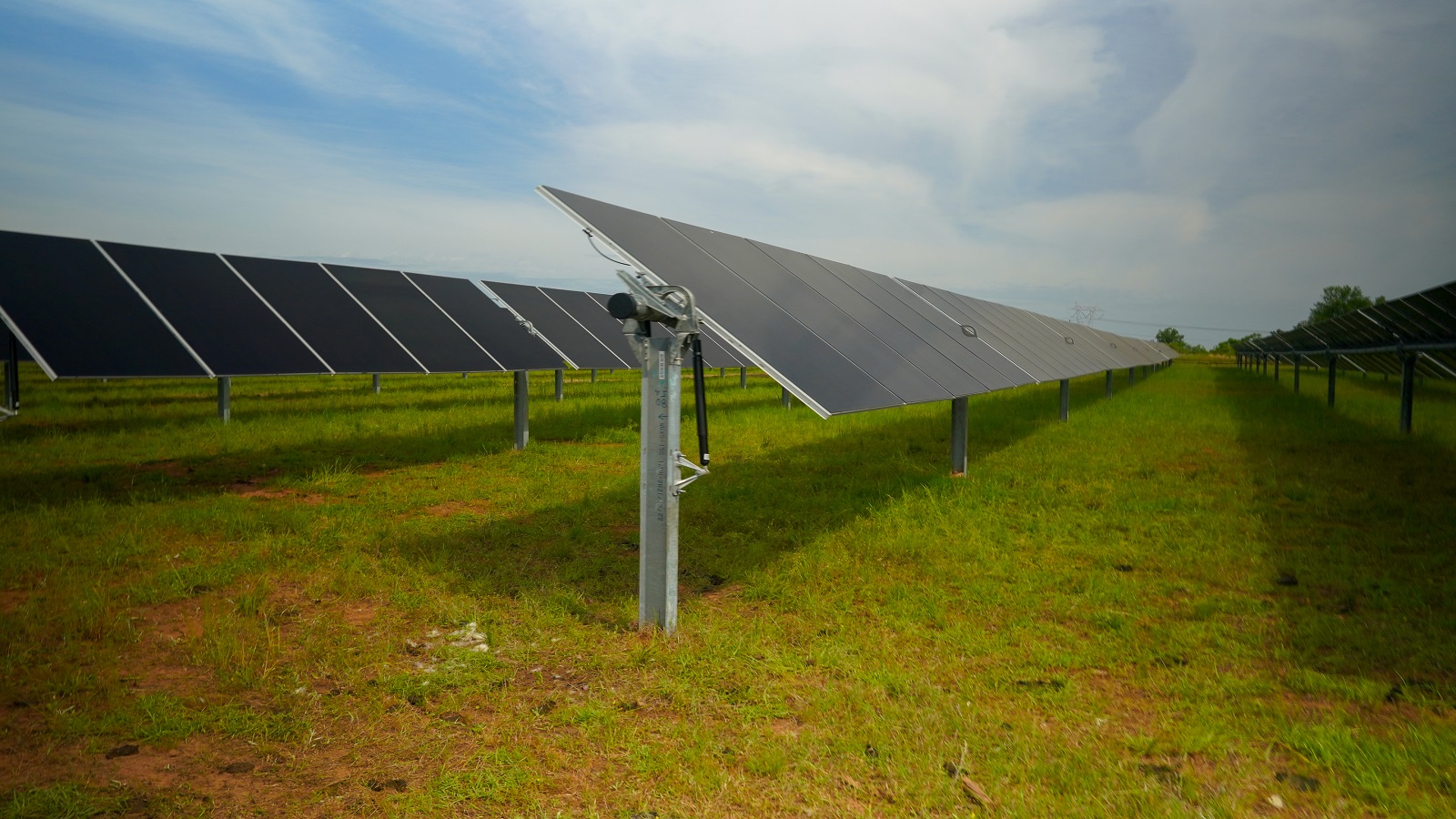
The CIR program offers a potential middle ground. By allowing corporations to fund their own clean energy, the program could alleviate some of the pressure on the utility to build new fossil fuel infrastructure. "It just accelerates the clean energy projects coming to the system, which would then negate the need for natural gas and other types of generation resources down the road," Barua explained. If corporations can bring enough "customer-identified" solar and storage online, the long-term necessity for additional gas-fired plants may be diminished.
Georgia’s Standing in the National Solar Landscape
Georgia currently holds a paradoxical position in the U.S. solar market. According to data from the Solar Energy Industries Association (SEIA), Georgia ranks 8th in the nation for total installed solar capacity, with over 5,500 MW currently online. This growth has been driven largely by utility-scale projects and favorable geography.
However, proponents of renewable energy argue that the state is underperforming relative to its potential. Unlike states like California or North Carolina, Georgia does not have a mandatory Renewable Portfolio Standard (RPS) that requires a certain percentage of energy to come from clean sources. Furthermore, the state has historically been resistant to "third-party ownership" of solar, a model that allows homeowners and businesses to lease solar panels from providers other than the utility.
The CIR program represents a "Georgia-style" solution to these challenges—a market-driven, voluntary mechanism that leverages corporate capital rather than government mandates. If successful, the program could significantly boost Georgia’s solar ranking while providing a blueprint for other states in the Southeast, where traditional utility structures remain the norm.
Stakeholder Reactions and Bipartisan Support
The approval of the CIR program is a rare moment of consensus among often-clashing stakeholders. The Georgia Public Service Commission, a five-member body of elected Republicans, approved the measure with broad support, recognizing the economic development potential of the program. In a state that has aggressively courted "green" manufacturing—from Qcells’ solar module factory to Rivian’s planned EV plant—offering a clear pathway for these companies to meet their climate goals is seen as a vital competitive advantage.
Environmental groups, while cautious about Georgia Power’s continued reliance on natural gas, have generally welcomed the CIR program as a step in the right direction. By creating a mechanism for "additionality"—the concept that corporate investment is bringing new renewable energy to the grid that wouldn’t have existed otherwise—the program ensures that these projects have a tangible impact on reducing total carbon emissions.
Consumer advocates have also expressed cautious optimism. Because the CIR projects are funded by the specific corporate customers who propose them, the costs are not passed on to the general residential rate-payer. This protects average Georgians from subsidizing the sustainability goals of multi-billion-dollar corporations.
Broader Implications and Future Outlook
As the program prepares for its summer rollout, several questions remain regarding the technical implementation and the "interconnection" queue. Georgia Power’s grid, like many across the country, faces bottlenecks in connecting new energy sources to the transmission lines. The speed at which the utility can process these customer-identified projects will be a major factor in the program’s ultimate success.
Furthermore, the CIR program highlights a growing national trend where the private sector is increasingly taking the lead on grid modernization. From Google’s 24/7 carbon-free energy goals to Microsoft’s carbon-negative pledge, the world’s most powerful companies are no longer willing to wait for utilities to slowly transition.
If the Georgia model proves effective, it could serve as a template for other vertically integrated utilities across the United States. It demonstrates that utilities can maintain their role as grid managers while allowing customers to act as developers and financiers of the clean energy transition. For Georgia, the program offers a chance to reconcile its booming industrial growth with its environmental responsibilities, potentially turning the "Peach State" into a national leader in corporate-led renewable energy innovation.










Leave a Reply