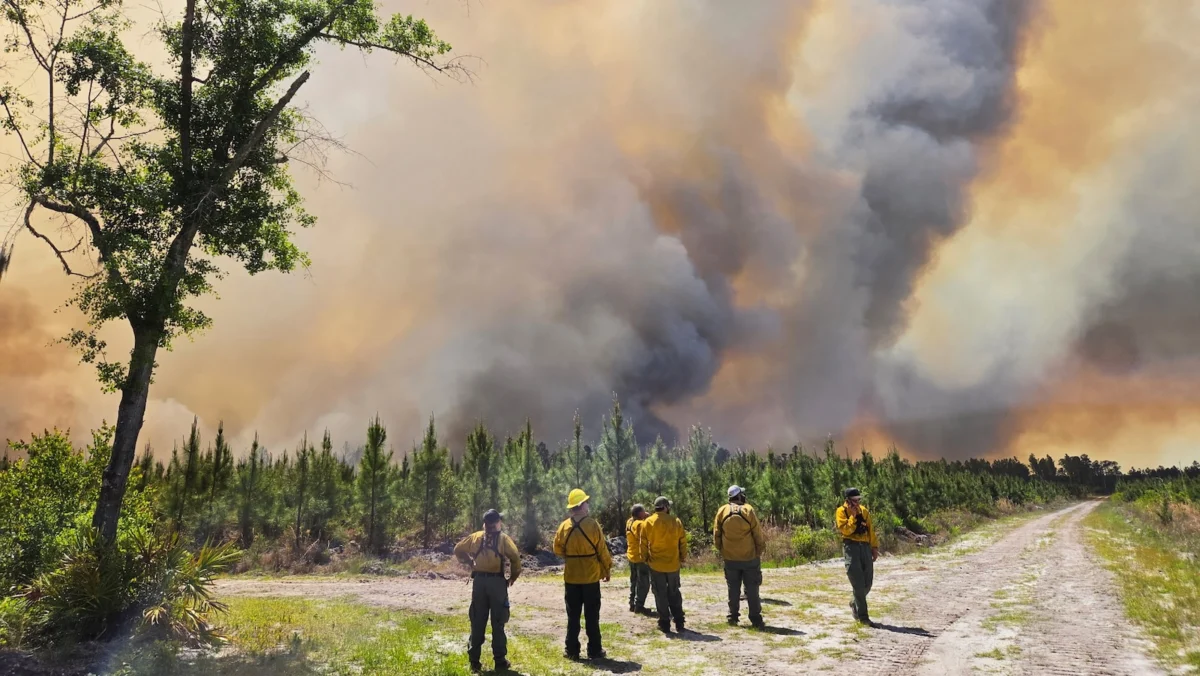
The state of Georgia is currently grappling with a rapidly escalating wildfire crisis that has consumed tens of thousands of acres, destroyed dozens of homes, and prompted a massive emergency response across nearly half the state’s counties. According to the latest data from the Georgia Forestry Association and state emergency management officials, wildfires are currently burning across more than 27,000 acres in southern Georgia. The severity of the situation led Governor Brian Kemp to declare a state of emergency for 91 counties, a move intended to mobilize state resources and provide much-needed support to local jurisdictions struggling to contain the blazes. As of mid-week, the fires continue to spread, fueled by a combination of historic drought conditions, unseasonably high temperatures, and a massive accumulation of dry fuel resulting from the remnants of Hurricane Helene.
The epicenter of the immediate humanitarian crisis is Brantley County, where the Brantley Highway 82 fire has exhibited erratic and aggressive behavior. What began as a manageable incident on Monday night quickly spiraled out of control. By Tuesday morning, the fire was estimated at a few hundred acres and was reported to be 75 percent contained. However, a shift in weather conditions, characterized by increased wind speeds and plummeting humidity, caused the fire to jump containment lines. By Wednesday morning, the Western Fire Chiefs Association reported that the fire had ballooned to 5,000 acres, with containment dropping to a mere 10 percent. The human cost of this specific blaze has been devastating, with local officials confirming that at least 54 homes have been destroyed in the path of the flames.
Brantley County Manager Joey Cason expressed the gravity of the situation during a press conference on Wednesday afternoon, highlighting the narrow escape of many residents. "I will be very honest with you and say it’s a miracle that there have not been any lives lost," Cason told reporters. The rapid onset of the fire forced residents to flee with little more than the clothes on their backs. In response, the Brantley County Board of Commissioners and several local religious organizations have established emergency shelter sites. These centers are not only providing housing for displaced families but have also become hubs for community donations, including food, water, and hygiene products for both victims and the hundreds of firefighters working on the front lines.
A Chronology of Escalation and Environmental Stressors
The current wildfire outbreak did not emerge in a vacuum; rather, it is the result of a compounding series of environmental events that have turned the Georgia landscape into a tinderbox. The timeline of the current emergency began in earnest over the weekend when the Pinelands Road fire ignited in Clinch County, situated near the Florida border. This fire has since become the largest active blaze in the region, spreading across more than 16,000 acres. Like the Brantley Highway 82 fire, the Pinelands Road fire remains only 10 percent contained as of Wednesday evening.
Both Clinch and Brantley counties share a geographical vulnerability: they sit on the periphery of the Okefenokee Swamp. Clinch County borders the swamp to the west, while Brantley lies to the northeast. While the Okefenokee is a wetland ecosystem, prolonged drought has lowered the water table significantly, allowing fire to penetrate deep into the peat and heavy vegetation that characterizes the area. When these swamp-adjacent forests catch fire, the density of the fuel makes containment exceptionally difficult for ground crews.
The environmental conditions driving these fires are categorized as "exceptional drought" by the U.S. Drought Monitor. This is the highest and most severe category in the federal monitoring system, indicating widespread crop and pasture losses and a high risk of fire. A large swath of South Georgia currently falls under this designation, while much of the remainder of the state is classified as being in "extreme drought." State Forester Johnny Sabo noted that the lack of moisture extends beyond the surface. "Under drought conditions, we have that much less water available either in the water table or in our swamps, ditches, drains, and lakes," Sabo explained. "So the wildfires can spread more rapidly because the natural barriers that would usually slow them down simply aren’t there."
The Hurricane Helene Connection
A critical and unique factor in this year’s fire season is the lingering impact of Hurricane Helene, which moved through the region earlier this fall. While the hurricane brought significant rainfall at the time, it also caused widespread timber damage, felling millions of trees across South Georgia’s commercially managed forests. As these downed trees have dried out over several weeks of drought, they have created a massive "fuel load" on the forest floor.
Erin Lincoln, director of the Center for Forest Business at the University of Georgia, emphasized that this debris is making current firefighting efforts much more dangerous and complex. "Many Georgia forests still have downed trees from Hurricane Helene, providing more potential fuel for large fires," Lincoln stated. These horizontal fuels allow fires to burn hotter and longer, making it difficult for bulldozers to create effective firebreaks and increasing the likelihood of "spotting," where embers are carried by the wind to start new fires miles away from the original front.
The economic implications are also significant. Georgia is the nation’s leading producer of commercial timber, and the loss of 27,000 acres—combined with the timber already damaged by the hurricane—represents a substantial blow to the state’s agricultural economy. Tim Lowrimore, president and CEO of the Georgia Forestry Association, characterized the situation as a "serious and evolving emergency," urging all Georgians to remain vigilant to prevent further ignitions.
Regional Impact and Public Health Concerns
The effects of the South Georgia wildfires are being felt far beyond the immediate fire zones. Hazy, smoke-filled air has migrated hundreds of miles north, reaching the Atlanta metropolitan area. On Wednesday, air quality in Atlanta was downgraded to "moderate," a level that can pose risks to individuals with respiratory conditions such as asthma or chronic obstructive pulmonary disease (COPD). Further south, in cities like Macon and Columbus, air quality reached "unhealthy" levels, prompting health officials to advise residents to limit outdoor activities.
The smoke from these fires contains fine particulate matter known as PM2.5, which can penetrate deep into the lungs and enter the bloodstream. With more than 100 fires being monitored across Georgia and northern Florida, regional health departments are on high alert. Florida officials are reporting similar drought-driven fire activity, leading to a coordinated interstate monitoring effort. While many of these smaller fires are being contained quickly, the sheer number of ignitions is straining regional resources.
In response to the heightened risk, the state has implemented a strict burn ban for central and south Georgia. This ban prohibits all outdoor burning, including leaf piles, campfires, and agricultural burning. State Forester Sabo pointed out that human activity remains the primary cause of fire starts. "Our number one cause of wildfires in the state are humans, unfortunately—people being careless," he said. Common culprits include improperly discarded cigarettes, sparks from lawn equipment, and debris fires that quickly escape control in the dry, windy conditions.
Strategic Outlook and Analysis
As the state of emergency continues, the Georgia Forestry Commission (GFC) and local fire departments are utilizing a variety of tactics to protect life and property. This includes the use of "Type 6" engines for rapid response, heavy bulldozers to cut fire lines down to the mineral soil, and aerial assets to drop water and fire retardant. However, the long-term outlook remains tied to the weather. Meteorologists suggest that significant, sustained rainfall is the only thing that will truly end the threat, and current forecasts do not show a major system arriving in the immediate future.
The current crisis serves as a stark example of how climate change is altering the landscape of disaster management in the Southeast. While wildfires are a natural part of the Georgia ecosystem, the increasing intensity and duration of droughts—coupled with more frequent high-intensity storms like Hurricane Helene—are creating a cycle of "compounding disasters." When a hurricane provides the fuel and a drought provides the spark, the resulting fires exceed the historical norms that local infrastructure was designed to handle.
For now, the focus remains on containment and recovery. The destruction of 54 homes in Brantley County is expected to be just the beginning of the damage assessments as crews gain access to previously evacuated areas. State officials are urging residents in the 91 affected counties to have an evacuation plan in place and to stay tuned to local emergency alerts. As Tim Lowrimore of the GFA noted, preventing additional fires is the most critical task for the general public, as every new ignition diverts precious resources away from the massive blazes currently threatening Georgia’s communities and natural resources.