The escalating military conflict involving the United States, Israel, and Iran has sent shockwaves through the international community, physically obstructing nearly one-fifth of the global supply of oil and liquefied natural gas (LNG). This geopolitical crisis, centered in the volatile corridors of the Middle East, has introduced a period of extreme price volatility and supply chain uncertainty. Yet, beneath the surface of this immediate supply shock, a deeper, structural transformation is taking hold. According to two landmark reports released this week by the International Energy Agency (IEA) and the energy think tank Ember, the world was already pivoting toward a future where fossil fuels are no longer the undisputed protagonists of the global energy narrative.
These reports suggest that the global economy has officially entered the "age of electricity." This transition is defined by a fundamental shift in how humanity powers its most essential functions—from transportation and climate control to heavy industry. While the current conflict has highlighted the fragility of fossil fuel dependencies, the data from 2025 reveals that the world is increasingly insulated by a surging renewable sector that is beginning to decouple economic growth from carbon emissions in ways previously thought impossible.
The 2025 Pivot: A Year of Renewable Dominance
The year 2025 has been characterized by analysts as a "banner year" for the energy transition. For the first time in the modern industrial era, the growth in global electricity demand was met entirely by carbon-free sources. This milestone is significant because it suggests that the world has reached a "peak" in fossil fuel use for electricity generation, not because of an economic downturn, but because of a structural preference for cleaner alternatives.
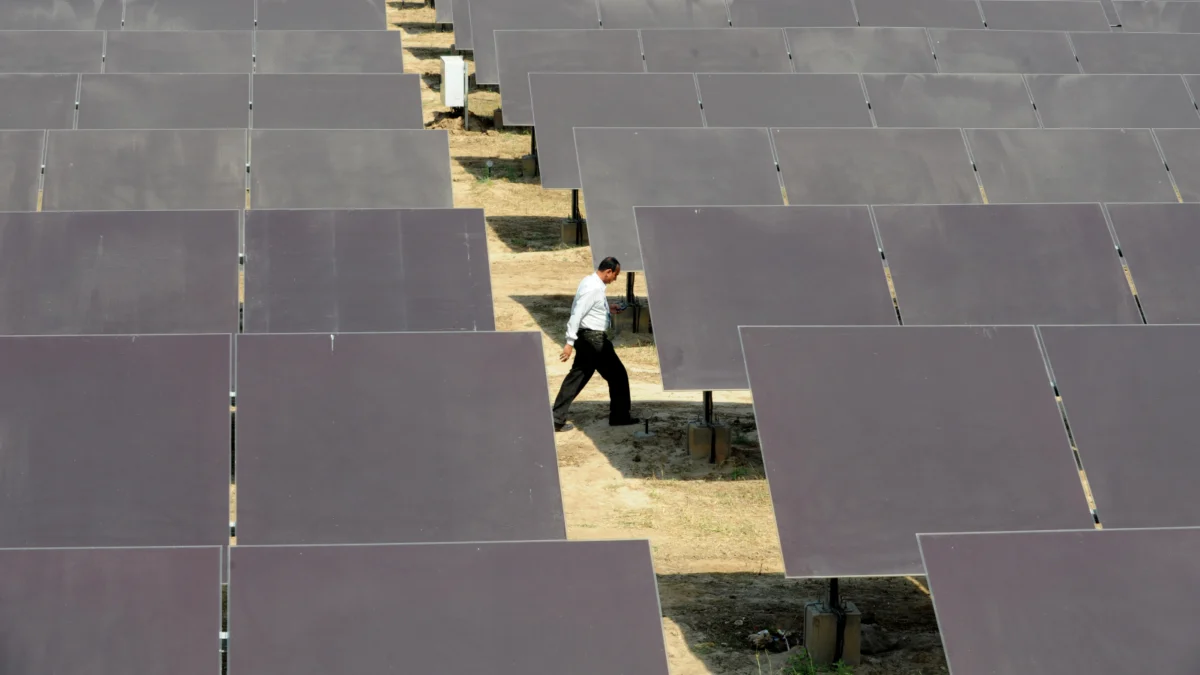
Solar energy emerged as the primary driver of this shift, accounting for the largest share of new capacity added to the global grid. When combined with wind, nuclear, and hydropower, the total generation from non-fossil sources exceeded the net increase in global demand. This achievement marks the transition from a theoretical goal to a functional reality: renewables are no longer just supplementing fossil fuels; they are beginning to actively displace them.
Daan Walter, a lead researcher at Ember, noted that the resilience of this trend is particularly striking given the robust state of the global economy in 2025. "This was a year when the economy boomed, and electricity demand grew very healthily," Walter stated. "And still, all that demand growth was met with renewables. We are seeing the machinery of the energy transition move into a higher gear."
Regional Divergence: The Rise of the Global South and the Developed World’s Struggle
One of the most surprising findings in the IEA and Ember reports is the shifting geography of the energy transition. Traditionally, the narrative of climate action has been one of developed nations leading the way while developing nations follow. However, 2025 saw a reversal of this dynamic.
In China and India—the world’s two most populous nations, which together account for 42 percent of global fossil-fueled power—2025 marked the first time this century that electricity generated from fossil fuels fell in both countries simultaneously. This decline was driven by an aggressive build-out of solar and wind infrastructure, supported by a massive drop in the cost of energy storage. The price of batteries, essential for balancing the intermittent nature of renewables, fell by a staggering 45 percent in 2025, following a 20 percent decline in 2024.
Conversely, advanced economies, including the United States and members of the European Union, faced unexpected setbacks. For the first time since the 1990s, emissions from developed countries grew faster than those from the developing world. In the United States, coal demand rose by 10 percent over the course of the year. This resurgence was fueled by a "perfect storm" of factors: a spike in natural gas prices that led utilities to revert to coal-fired generation, a series of severe winter storms across the Eastern Seaboard, and the rapid expansion of energy-intensive data centers required for the burgeoning artificial intelligence (AI) sector.
The Phenomenon of "Leapfrogging" in Emerging Markets
The reports highlight a trend known as "leapfrogging," where developing nations bypass older, carbon-intensive technologies in favor of modern, renewable ones. Indonesia serves as a prime example of this shift. In 2025, electric vehicles (EVs) accounted for more than 15 percent of new car sales in the country, a figure that surpasses the EV market share in the United States.
In many of these markets, consumers are purchasing EVs as their first-ever vehicles, skipping the internal combustion engine phase entirely. This rapid adoption is mirrored in the decentralized solar markets of Africa and Southeast Asia, where rural communities are gaining access to electricity through micro-grids rather than waiting for the expansion of traditional, coal-heavy national grids.
"The energy transition was conceived as something that is led by the developed world," Walter explained. "We’re now seeing leapfrogging across the world where actually developing economies are going faster in many ways than developed economies."
Chronology of the Energy Transition: 2020–2025
To understand the magnitude of the 2025 reports, it is necessary to view them through the lens of the last five years of energy policy and market fluctuations:
- 2020–2021: The COVID-19 pandemic caused a temporary dip in global emissions, but the subsequent recovery led to a sharp rebound in coal and gas use as industries scrambled to regain lost ground.
- 2022: The Russian invasion of Ukraine triggered a global energy crisis, forcing Europe to accelerate its "REPowerEU" plan, which prioritized wind and solar to reduce dependence on Russian gas.
- 2023: Solar PV installations reached record highs globally, and the cost of renewable technology began to reach parity with fossil fuels even without subsidies in many regions.
- 2024: Analysts observed a "plateauing" effect in fossil fuel demand. Battery costs dropped by 20 percent, making large-scale storage projects economically viable.
- 2025: Renewables officially overtake coal in global electricity generation. Despite record-high total emissions (rising 0.4 percent), the structural decline of fossil fuels in the power sector becomes evident.
The Geopolitical Context: War and the 20 Percent Bottleneck
The current conflict involving the U.S., Israel, and Iran has added a layer of urgency to the energy transition. With 20 percent of the world’s oil and LNG supply bottlenecked, global markets are facing a supply-side shock reminiscent of the 1970s oil embargoes. However, unlike the 1970s, the world now has a viable technological alternative.
The disruption in the Strait of Hormuz has intensified the "energy security" argument for renewables. Nations that are heavily dependent on imported fossil fuels are viewing the current volatility as a catalyst to further accelerate their domestic renewable energy programs. While the war has caused a short-term spike in the use of whatever fuel is available—including coal in the U.S.—it has also solidified the long-term economic case for an electricity-based economy that is not beholden to the stability of a single geographic region.
Implications for the Future: The AI Factor and Industrial Heat
Despite the progress in electricity generation, the IEA warns that the broader energy economy—which includes aviation, shipping, and heavy industrial heat—is not transitioning fast enough. Global carbon dioxide emissions reached a record high in 2025, largely because these "hard-to-abate" sectors still rely on the high energy density of liquid fuels and coal.
The rise of artificial intelligence has also introduced a new variable into the climate equation. The data centers required to train and run large language models are immense consumers of power. In the U.S., this new demand has put a strain on the grid, occasionally forcing the postponement of coal plant retirements to ensure reliability. The IEA report emphasizes that for the "age of electricity" to truly succeed in meeting climate goals, the efficiency of these new technologies must be prioritized alongside the greening of the grid.
Conclusion: A Structural Shift in Progress
The reports from the IEA and Ember provide a clear-eyed look at a world in flux. While the immediate headlines are dominated by the drums of war and the resulting volatility in oil prices, the underlying data points toward a more resilient and electrified future. The year 2025 will likely be remembered as the moment when the momentum of renewable energy became self-sustaining, driven by the economic powerhouses of the East and the technological innovations in energy storage.
The path ahead remains fraught with challenges, from the rising energy demands of AI to the geopolitical tensions threatening global trade. However, the "age of electricity" is no longer a distant vision; it is the current trajectory of the global economy. As fossil fuels become increasingly associated with both environmental risk and geopolitical instability, the shift toward a renewable-led power structure appears not only inevitable but essential for global stability.