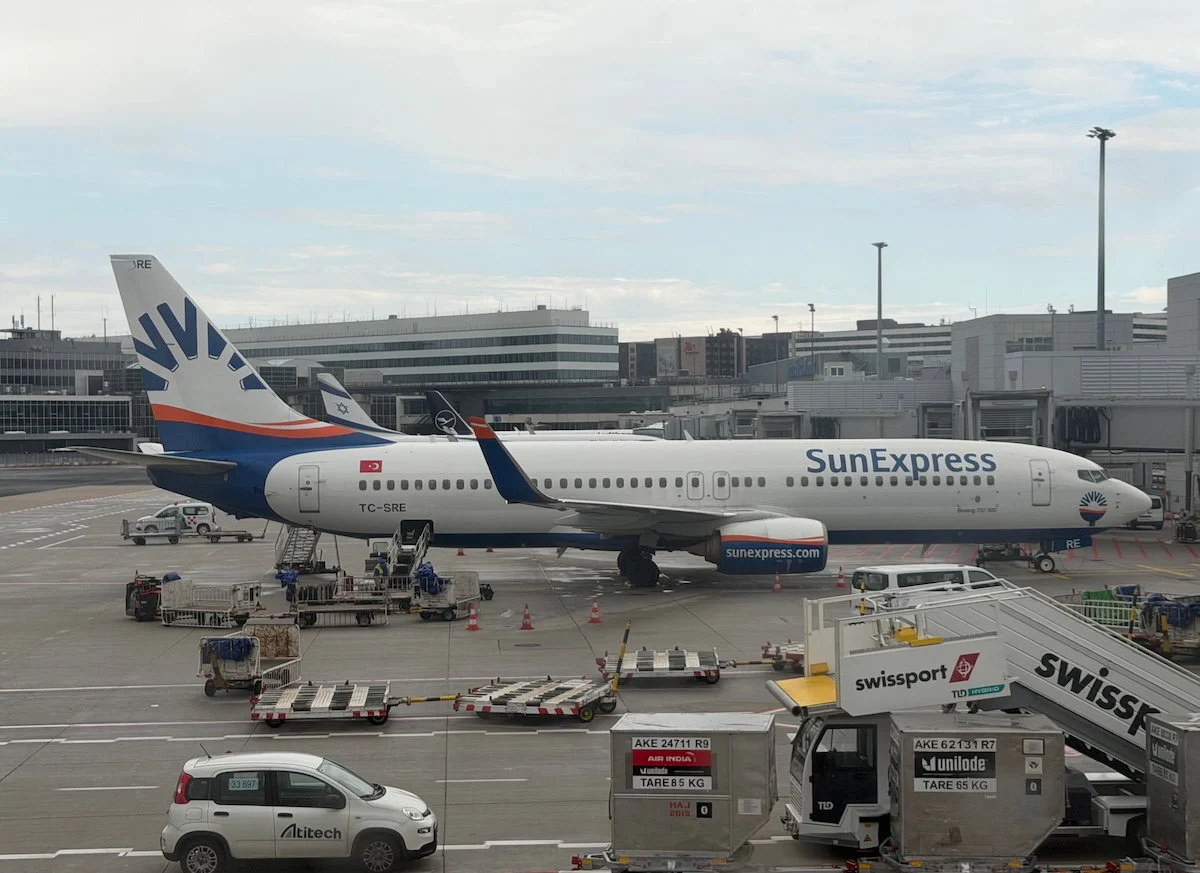
The German Federal Police at Dusseldorf Airport have initiated a multi-layered criminal investigation following a violent incident aboard a SunExpress flight originating from Samsun, Turkey. A 29-year-old German citizen of Turkish descent was arrested upon arrival on the morning of June 1, 2026, after a series of escalations that began with a refusal to occupy his assigned seat and culminated in the physical assault of a flight attendant and the verbal abuse of law enforcement officers. The incident, which highlights the intersection of religious observance, aviation safety, and international law, has drawn significant attention to the protocols airlines employ to manage unruly passengers and the legal consequences of such behavior within the European Union.
Detailed Chronology of the In-Flight Altercation
The flight, operated by SunExpress—a joint venture between Germany’s Lufthansa and Turkish Airlines—departed from Samsun-Çarşamba Airport (SZF) destined for Dusseldorf International Airport (DUS). According to witness statements and preliminary police reports, the conflict began shortly after boarding when the passenger identified his seat assignment. The 29-year-old man expressed immediate dissatisfaction upon realizing that his seat mate was a female passenger to whom he was not related.
The passenger reportedly cited his interpretation of Sharia law as the basis for his refusal to sit. He argued that remaining in close physical proximity to a woman who was not a family member or spouse would constitute a violation of his religious principles. In such scenarios, cabin crew members are typically trained to de-escalate through negotiation or, if capacity allows, by rearranging seating. However, as the aircraft prepared for departure or entered its cruising phase, the situation shifted from a verbal disagreement to physical violence.
When a female flight attendant attempted to mediate the dispute and explain the safety and logistical constraints of the flight’s seating chart, the passenger’s behavior turned aggressive. Reports indicate that the man struck the flight attendant in the face with a closed fist. Despite the assault, the crew managed to stabilize the cabin environment for the remainder of the journey, while the captain alerted ground authorities in Dusseldorf to the presence of a violent passenger on board.
Arrival and Confrontation with Law Enforcement
At approximately 7:00 AM, SunExpress flight ground operations were met by units of the German Federal Police (Bundespolizei) at the gate in Dusseldorf. Officers boarded the aircraft to escort the suspect from the plane and document the assault. While the passenger initially appeared to cooperate with the physical removal, the interaction deteriorated during the initial questioning and processing.
Believing that the German officers did not understand his native language, the suspect began shouting a series of insults in Turkish. This tactic proved to be a significant tactical error for the suspect, as one of the responding officers was fluent in Turkish. The officer immediately identified the derogatory remarks, which were directed at the dignity and authority of the law enforcement team. Under German law, the verbal abuse of officers is not merely a breach of conduct but a specific criminal offense that carries tangible penalties. Consequently, the individual faces charges of both physical assault (Körperverletzung) and insult (Beleidigung).

Legal Framework: Assault and Insult Under the German Penal Code
The legal ramifications for the 29-year-old are expected to be severe, as German jurisprudence takes a firm stance on both violence against service workers and the disrespect of state authority. The charge of assault is governed by Section 223 of the German Penal Code (Strafgesetzbuch – StGB), which stipulates that anyone who physically maltreats another person or causes harm to their health can be punished with imprisonment for up to five years or a fine. Given that the assault took place on a flight attendant—a professional responsible for the safety of dozens of passengers—prosecutors may argue for a more stringent application of the law.
Furthermore, the charge of "insult" under Section 185 of the StGB is a unique aspect of the German legal system compared to the United States or the United Kingdom. In Germany, "Beleidigung" is a criminal offense. While often dismissed in other jurisdictions as protected speech, in Germany, an insult that attacks the honor of another person can lead to a fine or imprisonment for up to one year. When directed at police officers, these charges are pursued with particular vigor to maintain the integrity of public order. The suspect’s confession to the assault, provided during the initial police intake, further solidifies the prosecution’s case, despite the subsequent verbal outbursts.
Religious Observance vs. Aviation Protocol
This incident has reignited discussions regarding the accommodation of religious beliefs in public and commercial spaces. While many religions have guidelines regarding the interaction between unrelated men and women, the aviation industry operates under strict international safety standards that often prioritize weight and balance, manifest accuracy, and crew instructions over individual seating preferences.
Legal experts and aviation analysts note that while passengers are entitled to their sincerely held religious beliefs, the burden of accommodation typically lies with the individual if those beliefs require a deviation from standard operating procedures. SunExpress, like many low-cost and leisure carriers, offers passengers the option to purchase an "extra seat" for personal comfort or privacy. Had the passenger pre-purchased an empty middle seat, the physical proximity he found objectionable could have been avoided entirely within the framework of airline policy.
There is a noted irony in the suspect’s defense; while he claimed that sitting next to a woman violated his religious purity, he chose to engage in direct, violent physical contact with a female crew member. This contradiction is likely to be highlighted in judicial proceedings to undermine any defense based on religious necessity or "state of emergency" (Notstand) justifications.
The Rise of Unruly Passenger Incidents
The Samsun-to-Dusseldorf incident is part of a broader, concerning trend in global aviation. According to data from the International Air Transport Association (IATA), there has been a significant uptick in "unruly passenger" reports since 2021. In 2022, there was one reported incident for every 568 flights, an increase from one in every 835 flights in 2021. The most common categorizations for these incidents include non-compliance with safety instructions, verbal abuse, and physical assault.
The European Union Aviation Safety Agency (EASA) has launched several campaigns, such as "Not on My Flight," to combat this trend. These initiatives emphasize that crew members are primarily safety professionals, not just service providers. The assault on the SunExpress flight attendant is particularly egregious as it occurred in a confined environment where the crew’s ability to maintain order is essential for the survival of all passengers in the event of an emergency.

Broader Impact on the Aviation Industry and Security
For SunExpress, a carrier that specializes in "visiting friends and relatives" (VFR) traffic between Germany and Turkey, such incidents pose a logistical and reputational challenge. The SZF-DUS route is a vital link for the Turkish-German diaspora, particularly those traveling from the Black Sea region to the industrial hubs of North Rhine-Westphalia. Maintaining a safe and respectful cabin environment is paramount for the airline’s continued success in this competitive market.
The incident also raises questions about pre-flight screening. While the passenger’s religious objections may not have been apparent during security checks, the transition from a seating dispute to a physical punch suggests a level of volatility that airlines are increasingly seeking to identify before takeoff. If the assault had occurred while the aircraft was still on the ground in Samsun, the passenger would likely have been offloaded immediately under the authority of the pilot-in-command, potentially preventing the mid-air trauma experienced by the crew and witnesses.
Potential Outcomes and Judicial Consequences
As the investigation continues, the 29-year-old suspect remains under the jurisdiction of the Dusseldorf authorities. In addition to the criminal charges, he faces the high probability of being placed on a "No-Fly" list, which would effectively ban him from SunExpress and potentially other Lufthansa Group carriers.
Aviation security experts suggest that the civil liability for such an incident could be as damaging as the criminal penalties. The airline may seek to recover costs associated with the delay, the medical treatment of the flight attendant, and the psychological counseling that is often required for crew members following a physical assault.
The case serves as a stark reminder of the legal and social expectations placed on international travelers. In a globalized world, the intersection of cultural values and secular laws requires a level of tolerance and adherence to safety protocols that this passenger failed to meet. The German judicial system will now determine the appropriate measure of accountability for an individual who transformed a routine flight into a scene of violence and legal confrontation. Professional aviation bodies continue to monitor the case, advocating for the maximum penalty to serve as a deterrent against future acts of air rage.