
The American higher education landscape is currently navigating a period of profound volatility as federal student loan policies undergo a seismic shift, leaving thousands of graduate students, particularly those in health care and psychology, unable to finalize their academic futures. At the heart of this disruption is the recent legislative reclassification of graduate-level programs, which has effectively curtailed the borrowing capacity of students pursuing advanced degrees. For aspiring professionals like Mitzie Westgate, a 21-year-old exercise science major at the College of Charleston, the ambiguity surrounding these federal loan limits has transformed the transition from undergraduate to graduate school from a strategic milestone into a high-stakes gamble.
Westgate’s ambition to earn a doctorate in occupational therapy is driven by a personal commitment to support children with disabilities, a goal she shares with her cousin who lives with cerebral palsy. However, as she prepares for the next academic cycle, the reality of her financial future remains obscured by a legal and bureaucratic tug-of-war. The federal government’s decision to remove dozens of graduate programs from the “professional” designation—thereby imposing strict annual and lifetime borrowing caps—has forced students to reconsider their choice of institution, potential debt burdens, and the feasibility of completing their education without resorting to high-interest private lending.
The Legislative Shift: From Grad PLUS to Restricted Lending
The crux of this crisis lies in the expiration and modification of the Grad PLUS loan program, which previously allowed graduate students to borrow up to the total cost of attendance at their respective universities. Under the new regulatory framework that took effect on July 1, the federal government has implemented a tiered structure for borrowing. Most graduate programs are now capped at $20,500 annually, with a lifetime limit of $100,000. Only a select group of 11 professional programs are permitted a higher threshold of $50,000 per year, totaling $200,000.
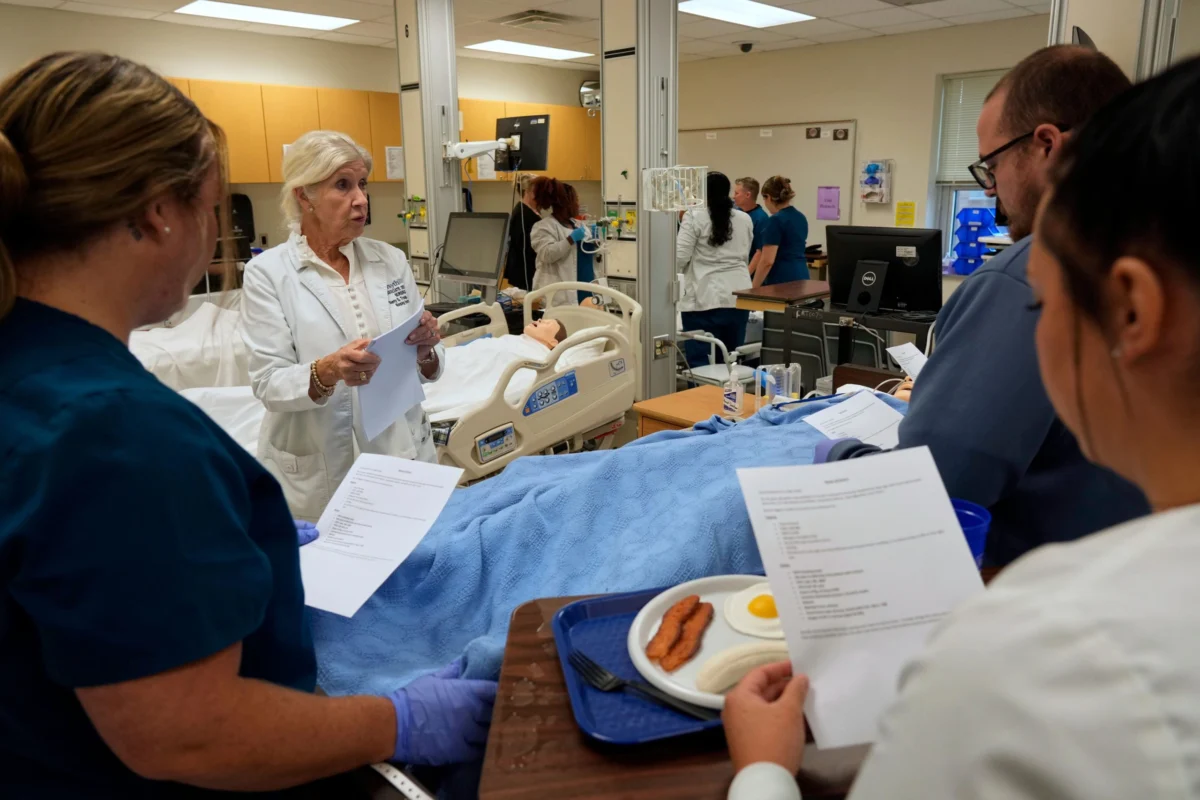
This reclassification has disproportionately affected fields that are critical to the nation’s infrastructure, specifically nursing, occupational therapy, and counseling. By narrowing the scope of what the Department of Education defines as a “professional” degree, the government has essentially signaled that many essential service-based master’s and doctoral degrees do not warrant the same level of federal support as medical or dental programs.
The implementation of these rules has been further complicated by a legal challenge initiated by various health care and educational associations. A federal judge’s decision to suspend the enforcement of these restrictions until December has created a "policy vacuum." For students currently applying for the 2027-28 academic year, this means that programs that appear eligible for higher loan limits today could potentially face immediate funding cuts depending on the court’s final ruling.
Economic Implications and the Private Lending Market
As federal support wanes, the burden of financing advanced education is shifting toward the private sector. However, financial experts and industry analysts suggest that private lenders are not necessarily prepared—or willing—to fill the void. Unlike federal loans, which offer standardized interest rates and income-driven repayment options, private loans are subject to rigorous credit-based underwriting.
Mark Kantrowitz, a noted expert in student financial aid, observes that private lenders are increasingly focused on targeting graduate students in fields with high expected salary returns, such as medicine or law. Students in fields like social work or psychology, which may have lower immediate earning potential despite their high societal value, may find themselves at a disadvantage.
The American Enterprise Institute (AEI) has highlighted a critical economic mismatch: many of the graduate programs affected by the new loan limits are also those with high tuition costs. Because these degrees do not always lead to significant salary premiums immediately upon graduation, lenders are wary of the risk. “Students attending more expensive programs do not, on average, earn substantially more after graduation,” an AEI report noted. “In these fields, higher debt often reflects higher tuition prices rather than higher returns.”
This creates a precarious situation for students. If private lenders tighten their standards, students with lower credit scores or those without co-signers may find themselves completely locked out of the programs they have been accepted into. Furthermore, the shift toward private debt introduces risks that were largely mitigated by federal programs, including variable interest rates and the potential for predatory lending practices that capitalize on a student’s desperation to complete their degree.
The Human Toll: Voices from the Field
The uncertainty is not limited to prospective students; it is currently impacting those already entrenched in their studies. Kayce Cordray, a 44-year-old doctoral candidate in nursing practice at Oral Roberts University, warns that these limitations threaten the stability of the entire nursing workforce.
“It truly does limit the people who can complete their degrees,” Cordray said. “We are facing a real nursing shortage and a real rural health care shortage. We’re not even going to be able to get registered nurses if we don’t have faculty. It’s a domino effect.”
For many graduate students, particularly those who are parents or primary caregivers, the financial burden is not just about tuition—it is about the opportunity cost of time. Many students in nursing or public health programs are juggling full-time professional roles or family responsibilities. The possibility of having to repay private loans while still enrolled in school, as opposed to the standard federal deferment period, acts as a significant deterrent. For students like Gracie Hayworth, a student in an online master’s of public health program at Dartmouth, the reality of this financial pressure is already forcing a reassessment of future career paths.
Institutional Responses and the Future of Tuition Pricing
In response to the shifting financial landscape, some universities have begun to pivot. A small number of wealthy, well-endowed institutions have introduced internal low-interest loan programs to bridge the gap left by federal limits. Others have begun to curate “preferred-lender” lists, attempting to guide students toward more reputable, transparent private financing options.

A more significant, albeit speculative, outcome is the potential for downward pressure on tuition. There is a growing school of thought that if students can no longer afford the price of admission through federal loans, institutions will be forced to reduce their costs to remain competitive. Some observers, such as Preston Cooper of the AEI, point to the University of Pennsylvania’s educational leadership program as a case study, noting that if cheaper, nearby alternatives like Temple or Drexel universities offer the same credentials at a lower price point, the prestige-driven pricing model of elite institutions may become unsustainable.
However, many in the higher education sector remain skeptical of this "market correction" theory. Sarah Sattelmeyer of the think tank New America argues that there is little evidence of a widespread, systemic reduction in graduate tuition. Instead, institutions appear to be in a state of paralysis, struggling to provide guidance to prospective students who are caught in the middle of a shifting regulatory environment.
A Path Forward or a Systemic Crisis?
As the December deadline for the judicial resolution of the loan limit lawsuit approaches, the academic community remains in a state of heightened anxiety. The lack of clarity has left admissions officers, financial aid directors, and students in a bind. Megan Walter of the National Association of Student Financial Aid Administrators described the current climate as a "policy vacuum" defined by "whiplash," emphasizing that the immediate need is for a definitive resolution that allows for long-term planning.
For Mitzie Westgate, the goal remains clear: she wants to enter the field of occupational therapy to advocate for those who cannot advocate for themselves. Yet, as she sits down to finalize her applications, she is forced to weigh the prestige of institutions like the Medical University of South Carolina against the safer, more affordable option of a local program in Rhode Island.
The broader implications of these federal loan limits extend far beyond the balance sheets of universities. By restricting access to graduate education in vital fields, the government may inadvertently stifle the development of the next generation of health care providers, educators, and social service workers. As the nation continues to face critical shortages in these essential sectors, the cost of limiting access to graduate education may ultimately be borne by the public, as the supply of trained professionals fails to keep pace with the growing demand for their services. For now, the future of advanced learning in America rests on a precarious, and as yet unresolved, financial precipice.








Leave a Reply