
The Unfolding Saga of NVIDIA GeForce GTX: A Legacy of Performance and Innovation
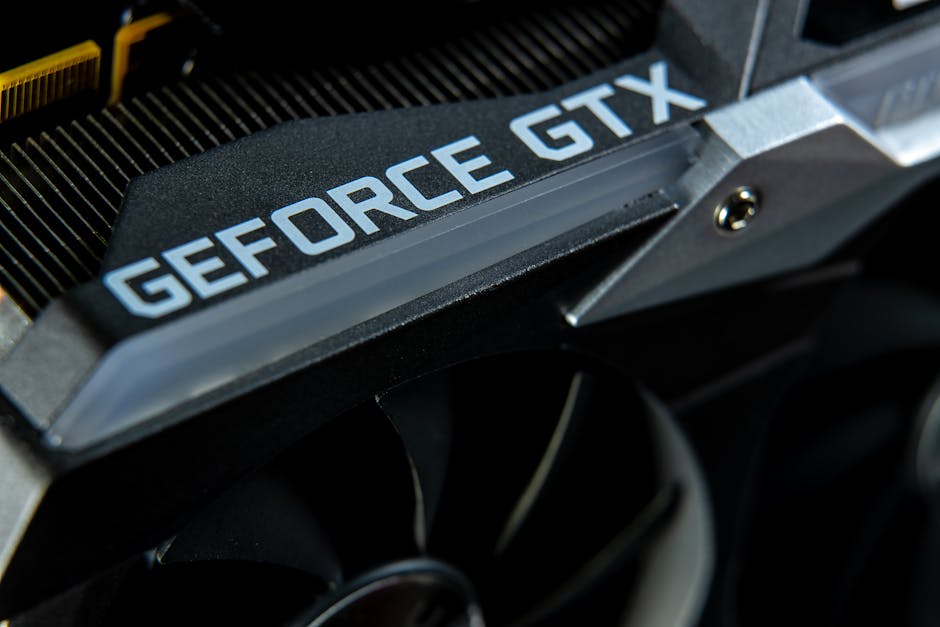
The NVIDIA GeForce GTX series represents a cornerstone of PC gaming and professional graphics for over two decades, a lineage marked by relentless innovation, performance benchmarks, and a significant impact on the evolution of visual computing. From its inception, the GTX brand was envisioned as NVIDIA’s premium offering, pushing the boundaries of what was computationally possible in real-time rendering. This ambition fueled a rapid succession of architectural advancements and feature sets, each iteration aiming to deliver a more immersive and visually rich experience to gamers and professionals alike. The early days saw the GTX brand emerge as a beacon of high-end performance, directly challenging the status quo and forcing competitors to accelerate their own development cycles. The very existence of a dedicated "GTX" tier signaled a commitment to enthusiasts, those willing to invest in the bleeding edge for unparalleled graphical fidelity. This strategic positioning not only solidified NVIDIA’s market leadership but also cultivated a dedicated community of users who eagerly anticipated each new generation, associating the GTX moniker with power, speed, and cutting-edge technology. The evolution of the GTX series is not merely a chronological account of graphics card releases; it is a narrative woven into the very fabric of digital entertainment and professional visualization, demonstrating how hardware capabilities directly influence creative possibilities and user experiences.
The genesis of the GeForce GTX brand can be traced back to the early 2000s, a period when 3D graphics were rapidly maturing. NVIDIA’s initial foray into this premium segment was not with a card explicitly branded "GTX," but rather through its flagship models that established the performance ceiling. However, the true emergence of the GTX branding solidified with the GeForce 7 Series. The GeForce 7800 GTX, launched in 2005, was a pivotal moment. It wasn’t just a faster card; it represented a significant leap in programmability and shader performance, crucial for the increasingly complex visual effects appearing in games. This era saw the adoption of unified shader architecture, a paradigm shift that allowed the GPU to dynamically allocate its processing power to various tasks, from vertex manipulation to pixel shading, leading to more fluid animations and detailed textures. The 7800 GTX’s success validated NVIDIA’s architectural choices and set the stage for the GTX brand to become synonymous with top-tier graphics. Its competitive advantage stemmed from its efficient design and robust feature set, outperforming competitors and establishing a clear performance hierarchy. This early success laid the groundwork for the GTX brand’s enduring legacy.
The subsequent generations of GeForce GTX cards built upon this foundation with remarkable consistency. The GeForce 8 Series, particularly the 8800 GTX, introduced in 2006, was another groundbreaking release. It was the first DirectX 10-capable GPU on the market, enabling developers to leverage new graphical features and effects that were previously impossible. This marked a significant architectural overhaul, featuring a massive increase in shader cores and a more streamlined approach to parallel processing. The 8800 GTX became an icon of its time, a testament to NVIDIA’s commitment to pushing visual boundaries. Its raw power allowed for unprecedented levels of detail, lighting, and environmental effects, fundamentally changing the way games looked and felt. The adoption of DirectX 10 was not just an incremental upgrade; it was a foundational shift that unlocked new creative avenues for game designers, and the 8800 GTX was the hardware that made it accessible to consumers. This generation solidified NVIDIA’s position as the undisputed leader in high-performance graphics, and the GTX branding became an aspiration for gamers worldwide.
The GTX lineage continued its relentless march forward with subsequent architectural advancements. The Fermi architecture, introduced with the GeForce 400 series, was a particularly ambitious undertaking. While it faced some initial criticisms regarding power consumption and heat, it introduced significant improvements in raw computational power and laid the groundwork for future advancements in GPGPU (General-Purpose computing on Graphics Processing Units) capabilities. The Fermi-based GTX 480, for instance, was a powerhouse that offered a substantial performance uplift over its predecessors, showcasing the potential for GPUs to tackle more than just graphics. This period saw NVIDIA actively explore the broader applications of its GPU technology, moving beyond gaming into scientific simulations, data analysis, and machine learning. The focus on programmable shaders and parallel processing inherent in the GTX architecture proved to be exceptionally well-suited for these computationally intensive tasks, further diversifying the appeal and utility of the GTX brand.
The Kepler architecture, arriving with the GeForce 600 series, marked a return to efficiency and a refined approach to performance. Cards like the GTX 680 delivered exceptional frame rates with significantly improved power efficiency compared to Fermi. This generation focused on optimizing shader performance and memory bandwidth, allowing for smoother gameplay at higher resolutions and settings. The Kepler architecture was a masterclass in balancing raw power with practical considerations, making high-end gaming more accessible and sustainable for consumers. This focus on efficiency didn’t come at the expense of performance; rather, it demonstrated NVIDIA’s ability to innovate in multiple dimensions, proving that cutting-edge graphics didn’t have to come with an exorbitant power bill.
The Maxwell architecture, starting with the GeForce 700 series and fully realized in the 900 series, was another transformative step. The GTX 980 and its variants introduced significant architectural improvements, focusing on delivering more performance per watt. This generation was characterized by its advanced power management features and the introduction of technologies like VCE (Video Coding Engine) for more efficient video encoding. Maxwell architecture was a significant leap in terms of raw performance and efficiency, allowing for smoother gameplay at higher resolutions and settings. This period also saw the continued refinement of features like Dynamic Super Resolution (DSR), which allowed games to be rendered at a higher resolution internally and then downscaled, providing a sharper image even on lower-resolution displays. The GTX brand under Maxwell became synonymous with a refined, powerful, and efficient graphics solution.
The Pascal architecture, launched with the GeForce 10 series, was a monumental leap forward, particularly with the introduction of the GTX 1080. This generation embraced TSMC’s 16nm FinFET process, enabling a significant increase in transistor density and clock speeds. Pascal brought about the era of HDR (High Dynamic Range) gaming and significantly boosted performance in virtual reality (VR) experiences, which were rapidly gaining traction. The GTX 10 series cards were a revelation, offering performance that was often double that of the previous generation, making 4K gaming a more realistic proposition for many. The focus on raw computational power and the efficient implementation of new rendering techniques set a new standard for visual fidelity. This generation was particularly important in solidifying the GTX brand as the go-to choice for cutting-edge gaming and immersive experiences.
The Turing architecture, introduced with the GeForce RTX 20 series, marked perhaps the most significant paradigm shift in the history of the GTX brand, as it transitioned to the "RTX" moniker, signifying the introduction of real-time ray tracing. While still retaining the "GTX" heritage in its DNA, the RTX cards introduced dedicated RT Cores for ray tracing and Tensor Cores for AI-powered features like DLSS (Deep Learning Super Sampling). This was a move towards fundamentally changing how light and shadows were rendered in games, creating unprecedented levels of realism. The GTX 2080 Ti, and its predecessors, showcased the power of real-time ray tracing, enabling incredibly lifelike reflections, global illumination, and realistic lighting effects that were previously only achievable in offline rendering. DLSS, in particular, became a game-changer, allowing for higher frame rates by intelligently upscaling lower-resolution rendered images, a crucial step in making ray tracing viable for mainstream gaming.
Following Turing, the Ampere architecture, powering the GeForce RTX 30 series, further refined and expanded upon the capabilities of ray tracing and DLSS. Cards like the RTX 3080 and RTX 3090 delivered substantial performance gains over their Turing counterparts, making 4K gaming at high refresh rates more achievable than ever before. Ampere also introduced improved RT Cores and Tensor Cores, leading to even more impressive ray tracing effects and more efficient DLSS performance. This generation cemented the RTX branding as the dominant force in high-end graphics, building upon the legacy of the GTX series by pushing the boundaries of what was visually possible in real-time. The generational leap in performance and efficiency demonstrated NVIDIA’s continued commitment to innovation and its ability to deliver truly next-generation gaming experiences. The RTX 30 series cards became highly sought after, showcasing the enduring appeal of NVIDIA’s premium graphics offerings.
The latest in the lineage, the Ada Lovelace architecture powering the GeForce RTX 40 series, represents another significant leap. This generation focuses on increased shader throughput, improved RT Cores, and enhanced Tensor Cores for even more advanced AI capabilities. The RTX 4090, in particular, has pushed the boundaries of performance to new heights, offering an experience that was previously unimaginable. Ada Lovelace continues the trend of pushing visual fidelity and enabling more complex and realistic in-game environments. The architectural advancements in Ada Lovelace aim to unlock new levels of realism and performance, further solidifying NVIDIA’s position at the forefront of graphics technology. The continuous evolution of the GTX (now RTX) series signifies an ongoing commitment to providing gamers and professionals with the most powerful and feature-rich graphics solutions available on the market. The journey from the early GTX cards to the cutting-edge RTX offerings is a testament to NVIDIA’s enduring vision and its impact on the digital landscape.





Leave a Reply