
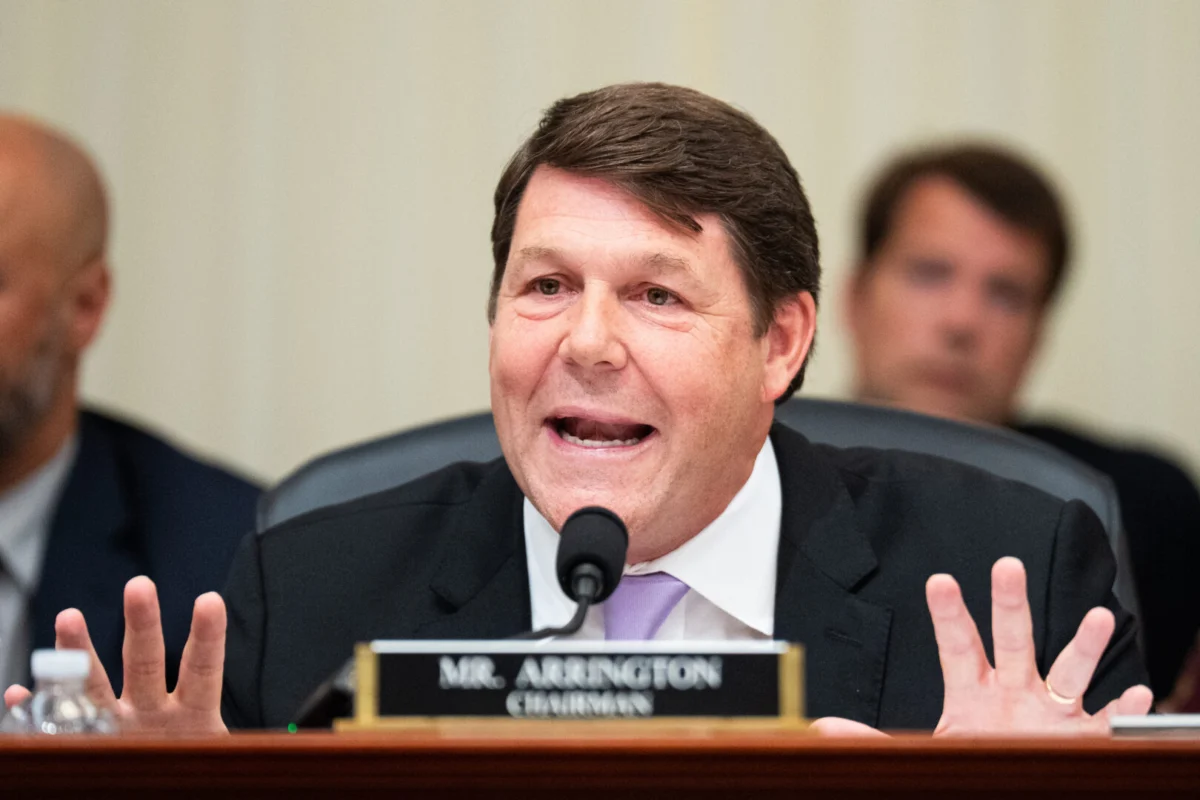
The House Budget Committee convened in Dallas, Texas, this past Monday, marking a significant departure from standard legislative procedure. In the committee’s first field hearing in three decades, lawmakers gathered to address the urgent and escalating crisis of the United States national debt, which has now eclipsed $40 trillion. The hearing served as a high-profile platform for Chairman Jodey C. Arrington, R-Texas, to advocate for the creation of a formal fiscal commission—a bipartisan body designed to propose structural solutions to the nation’s long-term budgetary imbalances.
The choice of Dallas for this venue, while the House remains in recess, underscored the committee’s desire to step outside the partisan friction of Washington, D.C., to engage with the economic realities facing the broader American public. For Chairman Arrington, the message was clear: the current trajectory of federal spending is not merely a political nuisance, but an existential threat to national stability.
The Accelerating Debt Crisis: A Historical Perspective
During his opening remarks, Arrington framed the crisis through the lens of historical velocity. "Just for perspective, it took our nation nearly 200 years to accumulate the first $1 trillion of debt, and today we add a trillion dollars to the national debt every five months," Arrington noted. This rate of accumulation has surged in recent years, fueled by a combination of pandemic-era stimulus, mandatory entitlement spending, and rising interest costs on existing debt.
To understand the scale of the challenge, one must look at the trajectory of the debt-to-GDP ratio. In 1980, the federal debt held by the public was approximately 26% of GDP. By the end of 2023, that figure had climbed to nearly 97%. According to projections from the Congressional Budget Office (CBO), if current laws remain unchanged, the debt-to-GDP ratio is on track to reach 166% by 2054. This trend creates a "crowding out" effect, where interest payments on the debt consume an increasing portion of federal revenue, leaving less room for discretionary investments in defense, infrastructure, and innovation.
A Rare Bipartisan Alignment
Perhaps the most notable takeaway from the Dallas hearing was the alignment between Chairman Arrington and the panel’s ranking Democrat, Rep. Brendan F. Boyle of Pennsylvania. In a polarized Congress, the two lawmakers exhibited a rare degree of consensus regarding the need for a non-partisan or bipartisan framework to tackle the debt.
Boyle expressed his support for taking the committee’s work on the road, suggesting that public engagement is vital to creating the political "courage" necessary to make difficult choices regarding tax reform and entitlement adjustments. "I think that this should be the first of a number of budget committee hearings that we take on the road to show the American public the substantive work that we do in this committee," Boyle remarked. His openness to the commission model, combined with his potential to chair the committee should the Democratic party gain a majority in the November elections, suggests that the fiscal commission proposal could have a longer shelf life than previous attempts.
Expert Testimony: The View from Former Officials
The committee heard testimony from a bipartisan trio of experts: former Defense Secretary Leon Panetta, former Sen. Joe Manchin III, and former Sen. Rob Portman. Each brought a unique perspective on the intersection of fiscal policy and national governance.
Leon Panetta, who served as White House budget director under President Bill Clinton and as a chairman of the House Budget Committee, focused heavily on the national security implications of the debt. "To think about engaging in conflict at a time when our fiscal situation is so dire raises a lot of concerns," Panetta stated. His argument centers on the principle that national strength is derived from economic strength. A government burdened by massive interest payments is, in his view, a government that lacks the fiscal "surge capacity" required to respond to global security threats or economic shocks.
Former Senator Rob Portman, a Republican with extensive experience in budget negotiations, focused on the mechanics of a successful commission. Drawing from his experience in the Senate, Portman emphasized that any commission must be "statutory" and designed to prevent it from being "amended to death." He argued that for a commission to succeed, it requires a "fast-track" legislative process—similar to the Base Realignment and Closure (BRAC) process—that forces Congress to vote on a comprehensive package of reforms without the ability to strip away politically sensitive components.
Chronology of Legislative Stagnation
The push for a fiscal commission is not a new concept; rather, it is a recurring attempt to resolve an enduring stalemate. The history of such efforts is marked by both hope and failure:
- 2010: President Obama established the National Commission on Fiscal Responsibility and Reform (the "Simpson-Bowles Commission"). While it proposed significant changes, it failed to garner the necessary votes for legislative implementation.
- 2011: The Budget Control Act created the Joint Select Committee on Deficit Reduction, commonly known as the "Super Committee." Tasked with finding $1.5 trillion in savings, the committee ultimately ended in a deadlock, leading to the implementation of automatic, across-the-board spending cuts known as "sequestration."
- 2023-2024: Bipartisan legislation to create a new fiscal commission was introduced in both the House and the Senate. Despite broad bipartisan interest at the committee level, the bills have remained largely dormant, caught in the broader legislative gridlock of the 118th Congress.
The Skeptical Dissent
Not all lawmakers are convinced that a commission is the correct path forward. Ways and Means Chairman Jason Smith, R-Mo., offered a sharp critique during the hearing, arguing that the creation of a commission effectively absolves Congress of its constitutional duty.
"We really don’t need a commission to tell us to do our job," Smith argued. "We just need to do it. We could do it right now if we just came together." Smith’s perspective reflects a common strain of skepticism among rank-and-file members who fear that commissions are merely "political cover" for politicians who do not want to take responsibility for unpopular decisions, such as raising taxes or reforming Social Security and Medicare.
Analysis: The Path Ahead and Potential Implications
The challenges facing any potential fiscal commission are immense. Structurally, the primary drivers of the federal deficit—Social Security, Medicare, and interest on the debt—are the most politically sensitive issues in American politics. Any commission that proposes significant adjustments to these programs faces immediate backlash from base voters and special interest groups.
Furthermore, the "buy-in" problem mentioned by Portman remains a hurdle. For a commission to have any real-world impact, party leadership in both the House and the Senate must agree to a process that bypasses the traditional, amendment-heavy legislative path. This requires a level of institutional trust that has been largely absent in recent years.
The broader implication of this hearing is that while the political will to solve the debt crisis remains fragile, the economic pressure is mounting. The $40 trillion figure serves as a sobering benchmark that is increasingly difficult for lawmakers to ignore. Whether the Dallas hearing is a precursor to a new, disciplined approach to fiscal policy or simply another iteration of rhetorical engagement depends on whether leadership in both parties can translate the committee’s findings into a statutory mandate.
As the country approaches the end of the current fiscal year, the debate over the commission will likely intensify. The committee’s decision to move beyond the Beltway suggests that there is a growing recognition that the status quo is unsustainable. However, history suggests that until Congress finds a way to reconcile the need for long-term structural reform with the immediate demands of short-term political survival, the nation’s fiscal trajectory will continue to be defined by what it avoids rather than what it achieves.









Leave a Reply