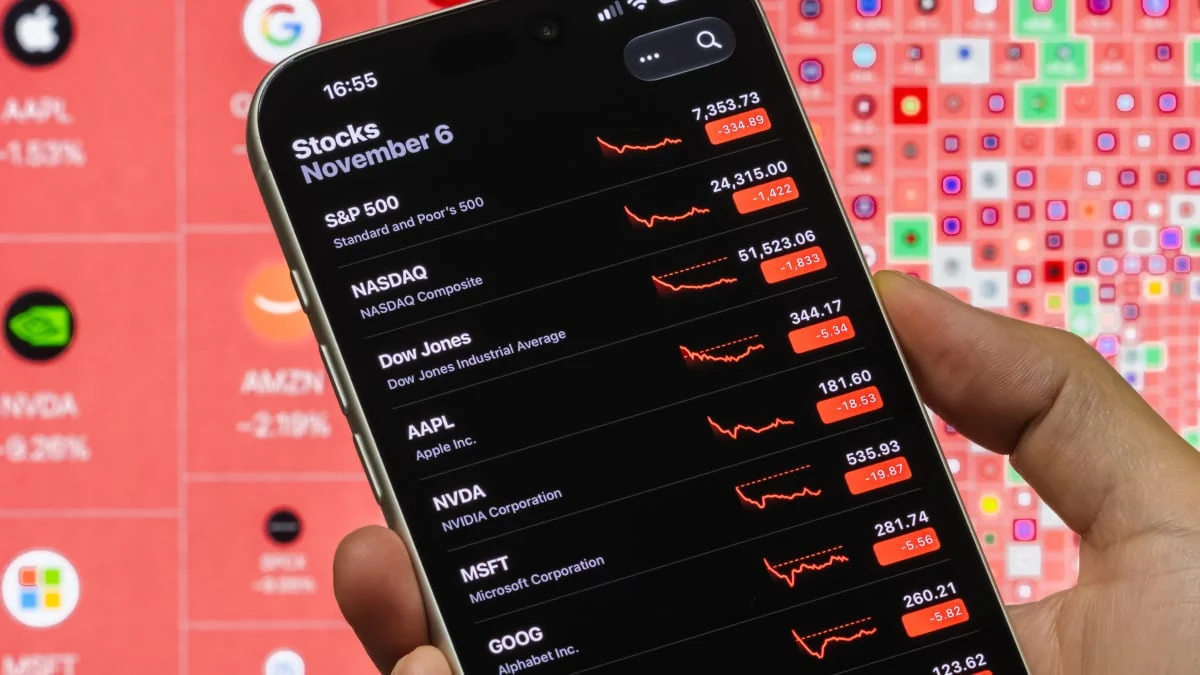
The tech-heavy Nasdaq 100 Index, which tumbled 6.3 percent on Thursday—marking its most severe single-day decline in six years—managed to claw back 1.9 percent in Friday’s early trading. This modest rebound provides a sense of relief to investors who were rattled by the aggressive liquidation of high-growth assets. However, market analysts caution that while the upward momentum is a welcome sign, it represents only a partial recovery of the significant capital wiped out during Thursday’s downturn.
The Political Catalyst: Election Results and Regulatory Fears
The primary driver behind the current market instability is the outcome of the U.S. midterm elections, which resulted in a sweeping success for the Democratic Party. For months, the tech industry has been operating under the assumption of a more deregulated environment, with many prominent tech leaders, including Tesla and SpaceX CEO Elon Musk, publicly aligning themselves with President Donald Trump and the Republican platform.
The sudden shift in the legislative outlook has introduced a new layer of risk for investors. Democratic candidates, who campaigned on platforms emphasizing stricter oversight of big tech, antitrust enforcement, and aggressive climate policies, are now poised to hold significant sway over federal policy. Of particular concern to the market is the future of the Artificial Intelligence (AI) industry. Throughout the campaign, several prominent Democratic figures argued that the rapid, unchecked deployment of AI infrastructure poses risks to both labor markets and environmental sustainability.
The market’s anxiety was compounded on Wednesday when Senator Bernie Sanders formally called for a national moratorium on the construction of new data centers. This proposed legislative hurdle is viewed as a direct threat to the AI industry’s expansion, which relies heavily on massive, energy-intensive data centers to train large language models and support generative AI platforms.
Market Volatility and Sectoral Response
The sell-off was broad, but the impact was most acute among companies at the vanguard of the AI revolution. Nvidia, which has been a primary beneficiary of the AI hardware boom, saw its share price suffer considerably on Thursday. By Friday, however, investor sentiment had shifted toward opportunistic buying. Nvidia’s stock rose by 7 percent, and SpaceX saw a corresponding increase of 6.1 percent. Despite these gains, both companies remain well below their pre-sell-off valuations, indicating that the market is still processing the long-term implications of a potentially hostile regulatory environment.
The recovery was not limited to AI-adjacent firms. Intel, which has been navigating its own set of internal challenges, saw a notable 8.9 percent increase in its share price. Similarly, Airbnb, often viewed as a bellwether for consumer-driven tech services, surged 11.7 percent. These gains suggest that institutional investors are beginning to differentiate between companies that are vulnerable to specific AI-related legislation and those that are being unfairly punished by a general, panic-induced market retreat.
Chronology of the Market Disruption
The current market cycle began with high expectations leading up to the midterms. Following the election results on Tuesday, Wednesday served as a day of digestion, where the market began to account for the possibility of a "Democratic wave." By Thursday, the realization that the regulatory landscape for tech was likely to change led to a widespread panic, triggering automated sell-offs and a rapid exodus from tech-focused exchange-traded funds (ETFs).
The 6.3 percent drop in the Nasdaq 100 on Thursday serves as a historical marker. It was a rare event that echoed the market turbulence of 2018, underscoring the depth of the current investor anxiety. Friday’s recovery, while steady, is being interpreted by analysts as a "recalibration" rather than a definitive return to the bullish trends that characterized much of the previous fiscal year.
The Data Center Dilemma: Environmental and Economic Concerns
The proposal for a data center moratorium, spearheaded by Senator Sanders and supported by various environmental groups, highlights a growing tension between technological innovation and infrastructure limitations. Data centers are notoriously power-hungry; as AI models grow in complexity, the demand for electricity has surged. Critics argue that this consumption threatens to undermine national climate goals, while tech companies argue that such restrictions would force AI development to migrate to jurisdictions with more favorable regulatory regimes, potentially harming American technological hegemony.
Economists are now closely watching how these policy proposals will interact with existing chip-manufacturing subsidies. The "CHIPS and Science Act," which provided billions in incentives to build domestic semiconductor factories, was largely built on bipartisan support. However, if the political climate shifts toward placing significant barriers on the end-users of those chips—specifically the AI labs and data center operators—the incentive to expand manufacturing capacity in the U.S. may diminish.
Broader Implications for the Tech Sector
Beyond the immediate price fluctuations, the sector is facing a structural shift in how it must engage with Washington. For the better part of the last decade, tech companies—particularly the "Magnificent Seven"—have enjoyed a period of relative policy leniency. The current volatility is a signal that this era may be closing.
Investors are now forced to factor in a "political risk premium" when evaluating tech stocks. This involves calculating the likelihood of new antitrust legislation, increased taxation, and strict compliance costs related to data privacy and AI safety protocols. As a result, the market is likely to remain volatile until there is more clarity on the specific legislative agenda that the new Democratic majority will prioritize.
Furthermore, the dependence on global supply chains for AI hardware adds another layer of complexity. With trade tensions persisting and the possibility of further protectionist policies, companies are caught in a pincer movement: facing domestic regulatory pressure on one side and potential supply chain disruptions on the other.
Analyzing the Recovery
The recovery observed on Friday is likely driven by "dip buying," a common phenomenon where investors view a sharp drop in stock prices as a temporary deviation from the asset’s intrinsic value. Tech stocks have historically been resilient, often bouncing back after short-term political or macroeconomic shocks. However, the current situation is complicated by the fact that the shock is not just macroeconomic—like an interest rate hike—but specifically focused on the operational viability of the industry’s most profitable segment: AI.
Market participants are expected to watch the upcoming Congressional sessions closely. Any signals from leadership regarding the severity of proposed AI regulations will likely dictate whether the recovery continues or if the market enters a period of prolonged stagnation.
In the immediate term, the tech sector appears to be attempting to find a new equilibrium. While the enthusiasm that fueled record-breaking growth in the early months of the year has been tempered by the reality of a changing political landscape, the underlying demand for digital transformation remains a powerful force. Investors are now tasked with the difficult job of determining which tech firms have the institutional strength to survive a more regulated future and which may see their business models fundamentally altered by the new legislative reality.
As the markets close on Friday, the prevailing sentiment is one of cautious optimism tempered by a newfound respect for the influence of the ballot box on market performance. The technology sector, long seen as an unstoppable engine of growth, has been reminded that it does not operate in a vacuum, but is inextricably linked to the national political discourse. The coming weeks will be crucial in defining whether this week’s events were merely a temporary correction or the beginning of a more enduring shift in the market’s relationship with Silicon Valley.