
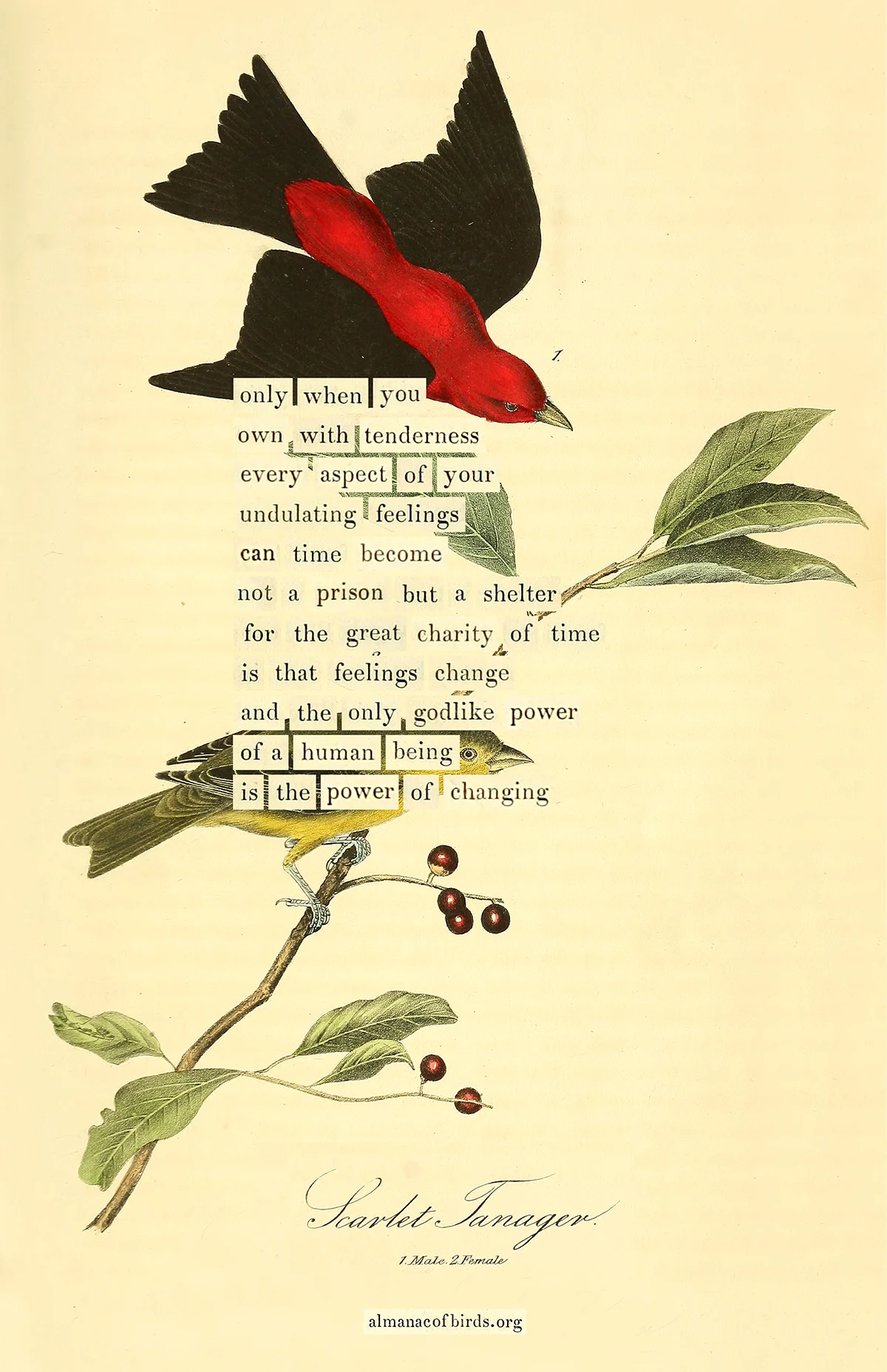
The paradox of human existence lies in the fundamental tension between the biological necessity of evolution and the psychological craving for permanence. While the universe operates as a continuous transmutation of energy and matter, human consciousness frequently retreats into a defensive posture, attempting to manufacture stasis in a reality defined by flux. This resistance to change, often manifesting as a preference for familiar suffering over the perceived risk of transformation, serves as a primary driver of psychological distress. Ursula K. Le Guin, the prolific American author and philosopher of speculative fiction, addressed this ontological struggle with particular clarity in her 1971 novel, The Lathe of Heaven. By examining the fallacy of equilibrium and the destructive nature of total stability, Le Guin provided a framework for understanding why the human "self-canceling, centerpoised personality" views change as a threat rather than a vitalizing force.
The Ontological Paradox of Human Stability
The human inclination toward the "settled" life was famously critiqued by Ralph Waldo Emerson, who posited that hope resides only in the state of being "unsettled." This sentiment suggests that growth is inherently disruptive. Octavia Butler, a contemporary of Le Guin, later codified this reality in her Earthseed parables, asserting that change is the only lasting truth and, by extension, a divine force. Despite these philosophical warnings, the modern individual often mistakes stasis for equilibrium and complacency for contentment.
In The Lathe of Heaven, Le Guin explores this theme through the character of George Orr, a man whose dreams have the power to alter reality, and Dr. William Haber, a psychiatrist who attempts to harness this power to "improve" the world. The conflict between Orr’s acceptance of existence and Haber’s desire for calculated control serves as a microcosm of the human struggle against the inherent unpredictability of life. Le Guin’s narrative suggests that the attempt to eliminate conflict and change is not a path to peace, but a path to entropy—the heat-death of the soul.
Historical and Literary Context of The Lathe of Heaven
Published in 1971, The Lathe of Heaven emerged during a period of significant social and political upheaval in the United States. The era was defined by the Vietnam War, the civil rights movement, and the burgeoning environmental movement—all of which represented massive, often violent shifts in the American status quo. Le Guin, already established as a major voice in science fiction following the success of The Left Hand of Darkness (1969), used the genre to probe the limits of human agency.
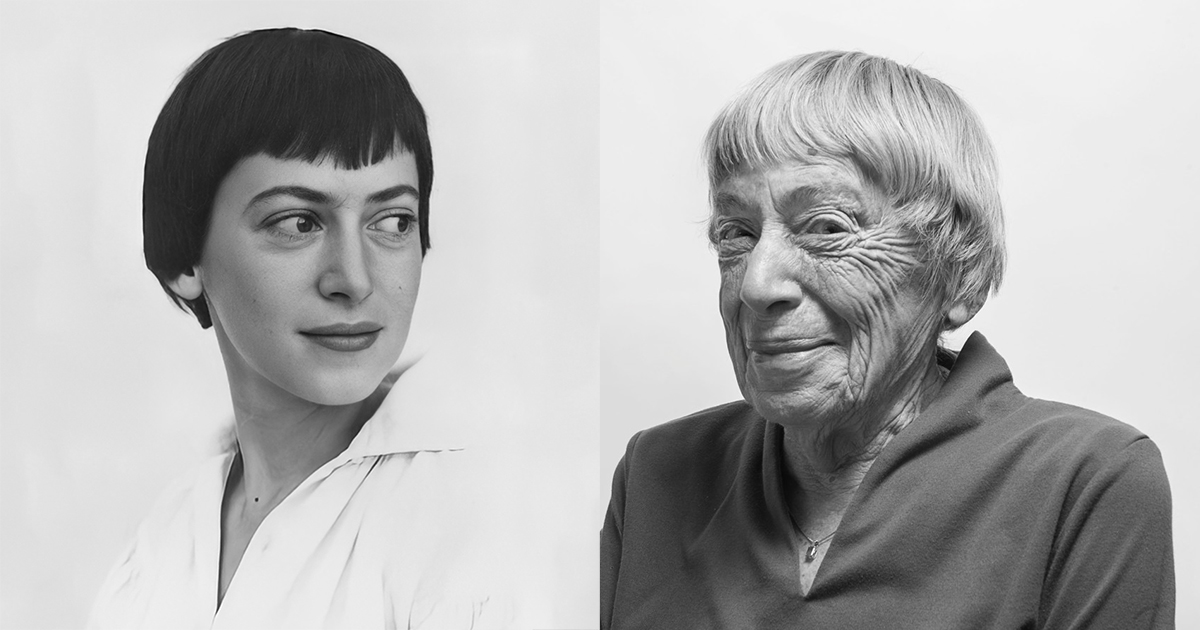
Unlike the "hard" science fiction of the mid-20th century, which often celebrated man’s technological mastery over nature, Le Guin’s work was deeply rooted in Taoist philosophy. The Lathe of Heaven specifically draws from the writings of Chuang Tzu. The title itself refers to the "lathe of heaven," a metaphor for the natural processes of the universe that operate regardless of human will. By situating her characters in a near-future Portland, Oregon, plagued by overpopulation and climate collapse, Le Guin highlighted the futility of trying to "fix" reality through rigid, top-down control.
The Scientific Foundation: Entropy and the Heat-Death of Stasis
Le Guin’s philosophical arguments are bolstered by the principles of thermodynamics. In the novel, a character argues that the end of change is synonymous with the end of life: "When things don’t change any longer, that’s the end result of entropy, the heat-death of the universe." In physics, the Second Law of Thermodynamics states that in an isolated system, entropy—or disorder—always increases. However, in biological terms, life is a localized reversal of entropy; it is a process of constant energy exchange and structural reorganization.
From a biological standpoint, stasis is death. The human body replaces nearly all its cells over a period of seven to ten years. The brain’s neuroplasticity allows for the constant rewiring of synaptic connections in response to new experiences. Therefore, the psychological desire to remain "unchanged" is a direct contradiction of the body’s physical reality. Le Guin suggests that the more an organism—or a society—interrelates and conflicts, the more "life" it contains. Lack of balance, in this context, is not a failure but a sign of vitality.
Psychological Underpinnings: Why the Mind Rejects Transformation
Modern psychology provides data that explains the "defensive viewpoint" Le Guin identified. The "Status Quo Bias," a term coined by William Samuelson and Richard Zeckhauser in 1988, describes the human tendency to prefer the current state of affairs, even when an alternative offers better outcomes. This is often driven by "loss aversion," where the perceived pain of losing what one currently has is stronger than the perceived pleasure of gaining something new.
Furthermore, the amygdala, the brain’s fear center, often interprets change as a threat to survival. This neurological hardwiring served an evolutionary purpose in stable environments but becomes a "self-directed instrument of suffering" in a rapidly evolving modern world. Le Guin’s remedy involves a process of "detachment"—encouraging the individual to view their own perspective objectively. By recognizing that life is a process rather than a static object, the individual can lower their defensive barriers and engage with reality more authentically.

Chronology of Philosophical Influence: From Heraclitus to Butler
The concept that "you can’t step into the same river twice" originates with the pre-Socratic philosopher Heraclitus, who argued that "Panta Rhei" (everything flows). Le Guin’s work acts as a bridge between this ancient Greek thought and modern speculative philosophy.
- 500 BCE (Heraclitus): Establishes change as the fundamental essence of the universe.
- 4th Century BCE (Chuang Tzu): Introduces Taoist concepts of "wu wei" (non-action or effortless action), which heavily influenced Le Guin’s protagonist, George Orr.
- 1841 (Ralph Waldo Emerson): Publishes "Circles," arguing that the soul’s growth requires the constant breaking of old boundaries.
- 1971 (Ursula K. Le Guin): Publishes The Lathe of Heaven, warns against the hubris of seeking a static utopia.
- 1993 (Octavia Butler): Publishes Parable of the Sower, articulating the "God is Change" theology.
This chronology demonstrates a consistent intellectual lineage that challenges the human obsession with safety and permanence.
Official Responses and Cultural Legacy
The Lathe of Heaven remains one of Le Guin’s most critically acclaimed works, frequently cited for its prescience regarding environmental degradation and the ethics of psychiatric intervention. In 1980, the novel was adapted into a highly successful television film by WNET (PBS), which Le Guin herself helped produce. The film’s popularity underscored the public’s resonance with the story’s themes of powerlessness and the dangers of "playing God."
Literary critics have noted that Le Guin’s work serves as a necessary corrective to the "hero’s journey" narrative common in Western literature. While the traditional hero seeks to change the world through force, Le Guin’s characters often find strength in yielding and adaptation. In a 2014 speech at the National Book Awards, Le Guin emphasized that authors of speculative fiction are "realists of a larger reality," capable of imagining alternatives to the "way we live now" and the "untenable" structures we cling to out of fear.
Contemporary Implications: Navigating a Volatile Century
In the 21st century, the resistance to change has taken on new dimensions. The rapid acceleration of artificial intelligence, the shifting geopolitical landscape, and the escalating climate crisis have created a state of "permacrisis." In this environment, Le Guin’s advice to "stick your neck out of your shell" is more than a poetic sentiment; it is a pragmatic necessity for survival.

The "huge gamble against the odds" that Le Guin describes—the act of living and loving despite the lack of safety—is the only antidote to the paralysis of anxiety. Data from mental health studies suggests that individuals with higher "psychological flexibility"—the ability to stay in the present moment and adapt to changing demands—report lower levels of depression and higher life satisfaction. This mirrors Le Guin’s assertion that "the more things go on moving… the more life."
Conclusion: The Necessity of Intellectual and Emotional Agility
The Lathe of Heaven stands as a profound refutation of the central fallacy of human resistance: the belief that we can, or should, be safe. Le Guin’s work suggests that the search for a "safe" life is a search for a non-existent state. By embracing change as the fundamental constant of reality, individuals can move from a defensive, "self-canceling" posture to one of active participation in the process of existence.
As the world continues to undergo radical transmutations, the lessons found in Le Guin’s 1971 novel remain essential. To live fully is to accept the lack of balance, to embrace the conflict of growth, and to recognize that the only true equilibrium is the one found in motion. By detaching from the ego’s demand for stasis, one can finally begin to live not safely, but fully, in the "river" of a changing universe.










Leave a Reply