
The Genesis of a Minimalist Icon: The Carosello Era
To understand the rise of La Linea, one must examine the unique landscape of Italian television in the mid-20th century. Between 1957 and 1977, RAI (Radiotelevisione Italiana) aired a nightly ten-minute advertising segment known as Carosello. Unlike modern commercials, Carosello was governed by strict regulations: the "advertisement" had to be a piece of entertainment—a short play, a cartoon, or a musical number—and the product being sold could only be mentioned at the very end.
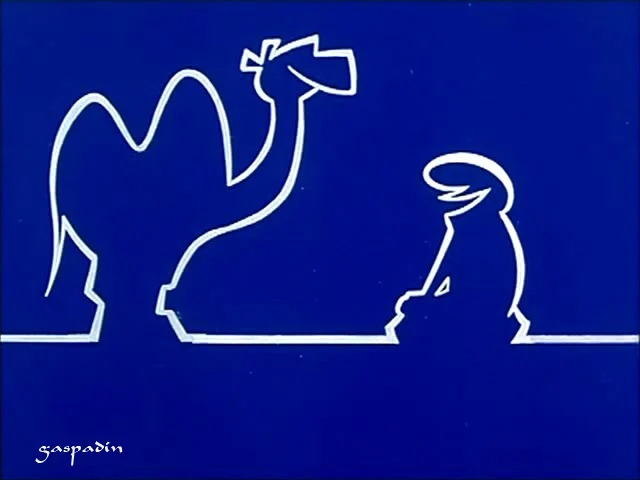
In 1969, Osvaldo Cavandoli, a seasoned animator who had previously worked with the Pagot brothers (the creators of Calimero), proposed a character for the Lagostina cookware company. The character, then known as "Agostino Lagostina," was a silhouette integrated into a single line. The brilliance of the concept lay in its economy; the character’s frustrations and triumphs were inextricably linked to the line that sustained him. When the character encountered a gap or an obstacle, he would turn to the "real" world—the hand of the animator—to draw him a solution. This meta-narrative element, where the creation interacts with the creator, became the show’s signature trope.
The initial shorts were so successful that by 1971, the character was decoupled from the cookware brand and rebranded simply as La Linea. This transition allowed Cavandoli to explore more complex themes and scenarios, eventually producing approximately 90 episodes over a 15-year period.
The Artistic Philosophy of Osvaldo Cavandoli
Cavandoli’s work is often cited by graphic designers as a masterclass in visual communication. The character of La Linea lacks facial features other than a prominent nose and a large mouth, yet his body language is remarkably expressive. The "single line" technique was not merely a stylistic choice but a functional constraint that dictated the rhythm of the storytelling.
The animator’s process involved using a white grease pencil on a series of cells, ensuring that the character’s feet never left the horizon line unless he was jumping or falling. This maintained the illusion of a continuous stroke. The backgrounds were equally functional; a shift from blue to red signaled a transition from calm to rage, providing a psychological map for the viewer that bypassed the need for complex scenery.
Industry analysts point to this minimalism as a primary factor in the show’s international longevity. Because the visual information was so focused, it did not age in the way that more detailed, era-specific animations did. Furthermore, the lack of a traditional "set" made the character appear to exist in a timeless, abstract space, making it easily adaptable to any culture.
The Language of Gibberish: The Contribution of Carlo Bonomi
While the visual style of La Linea was revolutionary, its auditory identity was equally critical to its success. The character was voiced by Carlo Bonomi, a prolific voice actor who would later gain international fame as the voice of Pingu. Bonomi provided La Linea with a "language" known as Grammelot—a stream of improvised gibberish, onomatopoeia, and occasional fragments of Lombard dialect.
This linguistic choice was a strategic masterstroke. Because the character did not speak a formal language, there was no need for dubbing or subtitling in international markets. La Linea spoke the universal language of emotion: his "chattering" communicated frustration, joy, impatience, and curiosity through tone and tempo alone. Whether he was ogling a passerby, attempting to play a classical piano, or engaging in a heated argument with the animator’s hand, the audience understood his intent perfectly.
Bonomi’s performance was often recorded before the animation was finalized, allowing Cavandoli to time the character’s exaggerated movements to the staccato rhythms of the voice track. This synergy created a character that felt intensely alive and volatile, a "zesty" everyman whose temper was as thin as the line he was drawn from.
Chronology and Global Expansion
The history of La Linea can be divided into three distinct phases of production and distribution:
- The Lagostina Years (1969–1971): The character serves as the mascot for "Carosello" segments. Eight episodes were produced during this period, focusing on the character’s interactions with cookware and domestic life.
- The Independent Era (1971–1986): Following the character’s popularity, Cavandoli produced five series of shorts. These were sold to television networks worldwide, including ZDF in Germany, TV3 in France, and various networks in the United States and Canada. During this time, La Linea won numerous awards at animation festivals in Annecy and Zagreb.
- The Legacy and Revival Period (1986–Present): Although regular production of new episodes ceased in the mid-80s, the character never left the public consciousness. In the 1990s and 2000s, La Linea was utilized in high-profile advertising campaigns for brands like Mazda and J.Crew. In 2005, the character appeared in the music video for Jamiroquai’s "(Don’t) Give Hate a Chance" and later in Gigi D’Agostino’s "The Riddle," introducing the character to a new generation of digital consumers.
Technical Analysis: The Interaction of Creation and Creator
One of the most sophisticated elements of La Linea is its use of the fourth wall. In almost every episode, the character reaches the end of the line—the literal edge of the drawn world—and demands assistance. A human hand, holding a pencil, enters the frame to draw a bridge, a car, a ladder, or an umbrella.
This interaction serves as a fact-based analysis of the relationship between an artist and their work. The character is often ungrateful or demanding, leading to a comedic conflict where the animator "punishes" the character by drawing him into a hole or erasing his path. This meta-fictional approach was ahead of its time, predating the self-referential humor that would later define postmodern animation like The Simpsons or Family Guy.
The technical execution of these scenes required precise synchronization between the live-action hand (often Cavandoli’s own) and the animated line. This blend of mediums added a layer of depth to the two-dimensional world, grounding the abstract character in a physical reality.
Broader Impact and Cultural Implications
The impact of La Linea extends beyond mere entertainment. It has been studied in the context of "universal design" and semiotics. In an increasingly globalized world, La Linea serves as a model for how to communicate complex narratives with minimal resources.
In the realm of psychology, the character has been described as a representation of the human ego—constantly moving forward, frequently frustrated by unforeseen obstacles, and entirely dependent on a "higher power" (the animator) to navigate the void. This relatable struggle is what allowed the show to resonate across disparate cultures, from the Iron Curtain-era Eastern Bloc to the capitalist markets of Western Europe.
Furthermore, the show’s "bawdy" humor—often involving slapstick violence or suggestive situations—maintained a level of sophistication that appealed to adults as much as children. By keeping the visuals "chaste" through the use of silhouettes and lines, Cavandoli could explore adult themes of desire and existential dread without triggering the censorship standards of the 1970s.
Conclusion: The Enduring Horizon
Osvaldo Cavandoli passed away in 2007 at the age of 87, but his "Little Man" continues to walk the white line. In the digital age, La Linea has found a second life on platforms like YouTube, where collections of the original shorts garner millions of views. The character’s simplicity makes it perfectly suited for the short-form video consumption habits of modern audiences.
The legacy of La Linea is a reminder that in the world of art and communication, less is often more. By utilizing a single line, a few blocks of color, and a voice of gibberish, Cavandoli created a masterpiece of human expression. As contemporary animation moves toward increasingly complex 3D rendering and hyper-realism, La Linea stands as a permanent monument to the power of the sketch—a testament to the fact that a good idea, when executed with modesty and precision, can truly live forever.








Leave a Reply