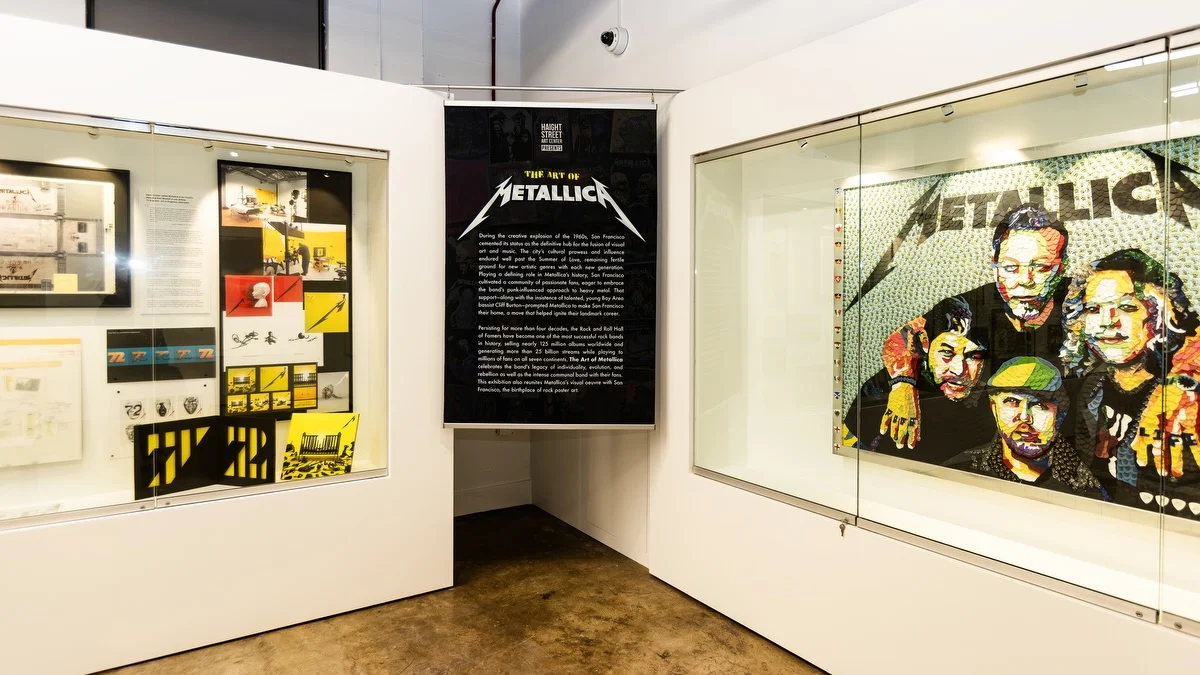
The Haight Street Art Center has officially unveiled its latest exhibition, The Art of Metallica, a comprehensive retrospective dedicated to the visual history and graphic design evolution of one of the most influential heavy metal bands in history. Located in the heart of San Francisco—a city that serves as the spiritual and historical home of the group—the exhibit provides a deep dive into the intersection of aggressive music and high-concept visual art. By showcasing the evolution of the band’s aesthetic, the center highlights how Metallica’s visual identity has been as pivotal to their global branding as their complex guitar riffs and thundering percussion.
The exhibition opened its doors on November 5, 2026, and is scheduled to remain open to the public through January 10, 2027. Visitors can experience the gallery Thursdays through Sundays, between the hours of 12 p.m. and 6 p.m.
The Historical Significance of the Venue
The selection of the Haight Street Art Center for this retrospective is far from incidental. San Francisco holds a legendary status in the annals of music history, particularly regarding the development of psychedelic rock posters in the 1960s. By hosting a Metallica-focused exhibit, the center draws a deliberate line between the city’s historical counterculture roots and the rise of thrash metal.
Kelly Harris, Executive Director of the Haight Street Art Center, emphasized the symbiotic relationship between the city and the band. "San Francisco has always been a place where art and music fuel one another, and it feels fitting that this exhibition lands here, steps from Haight Street’s own history as the birthplace of rock poster art," Harris stated during the opening reception. She added, "Metallica’s story is San Francisco’s story—a band embraced early by this city’s community of fans, whose visual identity has grown right alongside its music. We’re honored to bring that legacy home."
A Visual Chronology: From Underground to Global Icon
The exhibit serves as a curated timeline of the band’s visual evolution, tracing their trajectory from the early 1980s underground thrash scene to their status as stadium-filling icons. For long-time enthusiasts and graphic design scholars alike, the collection offers rare insights into the creative processes that defined albums like Kill ‘Em All, Master of Puppets, and The Black Album.
The displays include original sketches, screen-printed posters, album cover concepts, and stage design renderings. The evolution of the iconic Metallica logo—designed by James Hetfield himself—is a central focal point, illustrating how the band balanced the raw, DIY ethos of the early thrash movement with the polished, high-production branding required for global arena tours. This visual documentation allows attendees to witness how the band’s imagery adapted to changing cultural landscapes while maintaining a consistent core of intensity and rebellion.
Supporting Data: The Business of Music Branding
The impact of Metallica’s visual branding cannot be overstated. Throughout their four-decade career, the band has maintained one of the most recognizable logos and aesthetic profiles in the music industry. Data from merchandise revenue reports and concert production budgets consistently show that Metallica’s visual branding is a massive driver of consumer engagement.
By prioritizing high-quality visual art—often collaborating with renowned artists and illustrators—Metallica elevated the standard for heavy metal merchandise. The exhibit at the Haight Street Art Center serves as a reminder that the band’s "M72" world tour and various residencies are not just musical events, but highly orchestrated sensory experiences where lighting, stage design, and graphic art are inseparable from the performance itself.
The Current Landscape: A Busy Season for Metallica
The timing of the exhibit coincides with an incredibly active period for the band. As they continue to bridge the gap between classic rock sensibilities and modern technological innovation, their touring schedule remains as rigorous as ever.
Currently, the band is in the final stages of their fall residency at the Las Vegas Sphere, a venue that represents the cutting edge of concert technology. The residency, titled "Life Burns Faster," has garnered critical acclaim for its immersive visual components, which effectively utilize the venue’s massive wraparound screen to elevate the audience’s experience. Following this current stint, the band is scheduled to return to the Sphere in January 2027, marking a significant commitment to this high-tech performance space.
Furthermore, the band’s touring itinerary for the coming year is already robust. With upcoming shows at the Mohegan Sun Arena in Connecticut later this month, followed by an extensive North American leg of their "M72" world tour in May and June of 2027, Metallica remains a dominant force in the global live entertainment sector. The "M72" tour, known for its unique "in-the-round" stage design, further underscores the band’s commitment to visual spectacle, mirroring the themes explored in the San Francisco exhibition.
Implications for the Future of Music Exhibits
The success of the "Art of Metallica" exhibit poses interesting questions about how legacy bands can maintain relevance and engage with their audience beyond the concert stage. As the music industry continues to shift toward digital consumption, physical, curated experiences like the one at the Haight Street Art Center provide a tangible connection that streaming services cannot replicate.
Industry analysts suggest that such exhibits serve several functions:
- Heritage Preservation: They archive the history of bands that were once considered ephemeral, treating them with the same cultural reverence as classical composers or visual artists.
- Community Engagement: They provide a localized point of contact for a global fanbase, fostering a sense of community among disparate groups of listeners.
- Intellectual Property Expansion: By framing album art as fine art, the band reinforces the value of their brand, effectively creating new revenue streams through high-end merchandise and exclusive, limited-edition collaborations.
Conclusion and Visiting Information
For fans and art aficionados, "The Art of Metallica" is a testament to the longevity of the band and the power of visual communication. By contextualizing the band within the broader artistic history of San Francisco, the exhibit elevates Metallica’s contributions to a higher cultural plane.
As the exhibition continues its run through early 2027, the Haight Street Art Center expects high foot traffic, particularly as fans travel to the city for the band’s upcoming touring commitments. Those interested in attending are encouraged to check the official Haight Street Art Center website for the most current information regarding admission, special events, and gallery updates.
Whether one is a devotee of the band’s thrash-era technicality or an admirer of their long-standing commitment to professional graphic design, the exhibition offers a rare, comprehensive look at the visual engine that has powered one of the most successful musical careers in the history of the genre. With the "M72" tour continuing to push the boundaries of what is expected from a rock performance, this exhibit stands as a timely and necessary documentation of how Metallica became, and remains, a defining icon of modern music.