
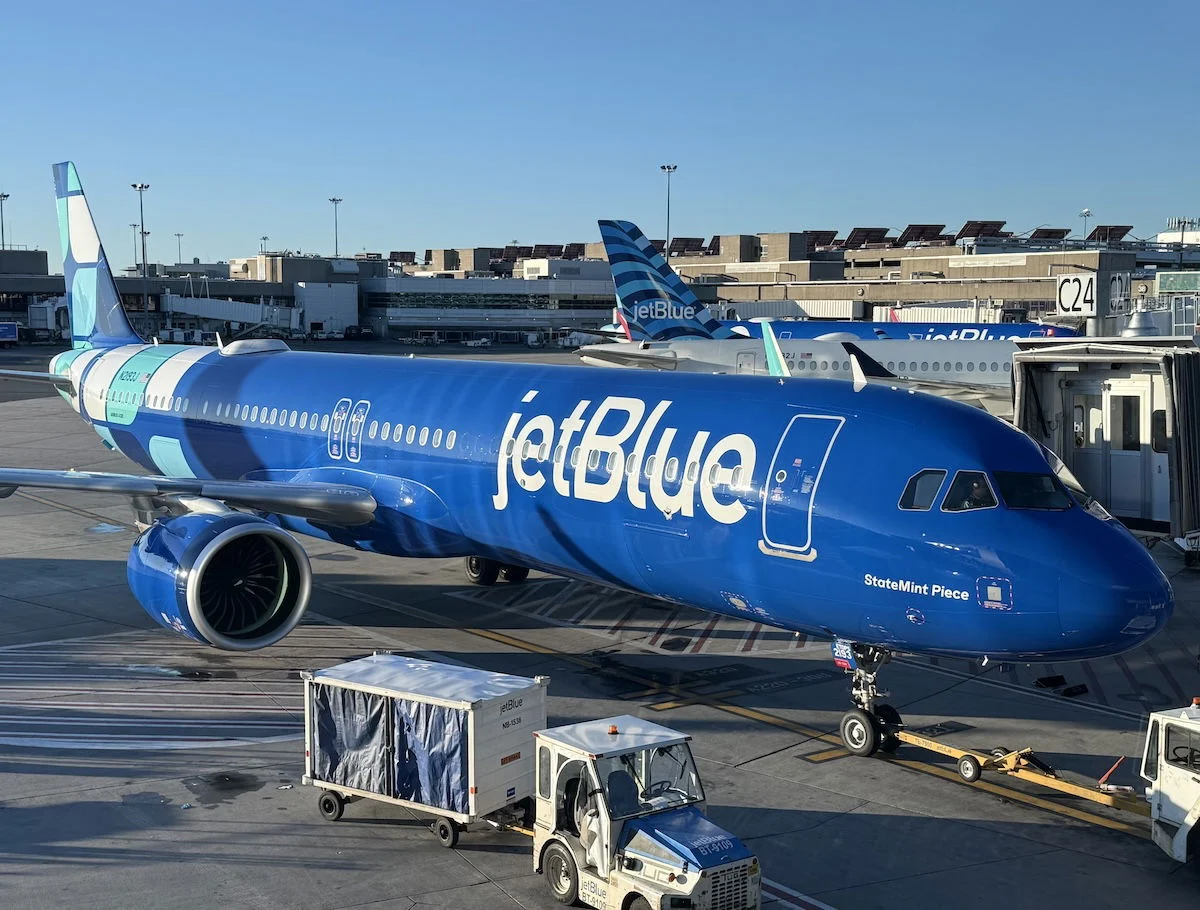
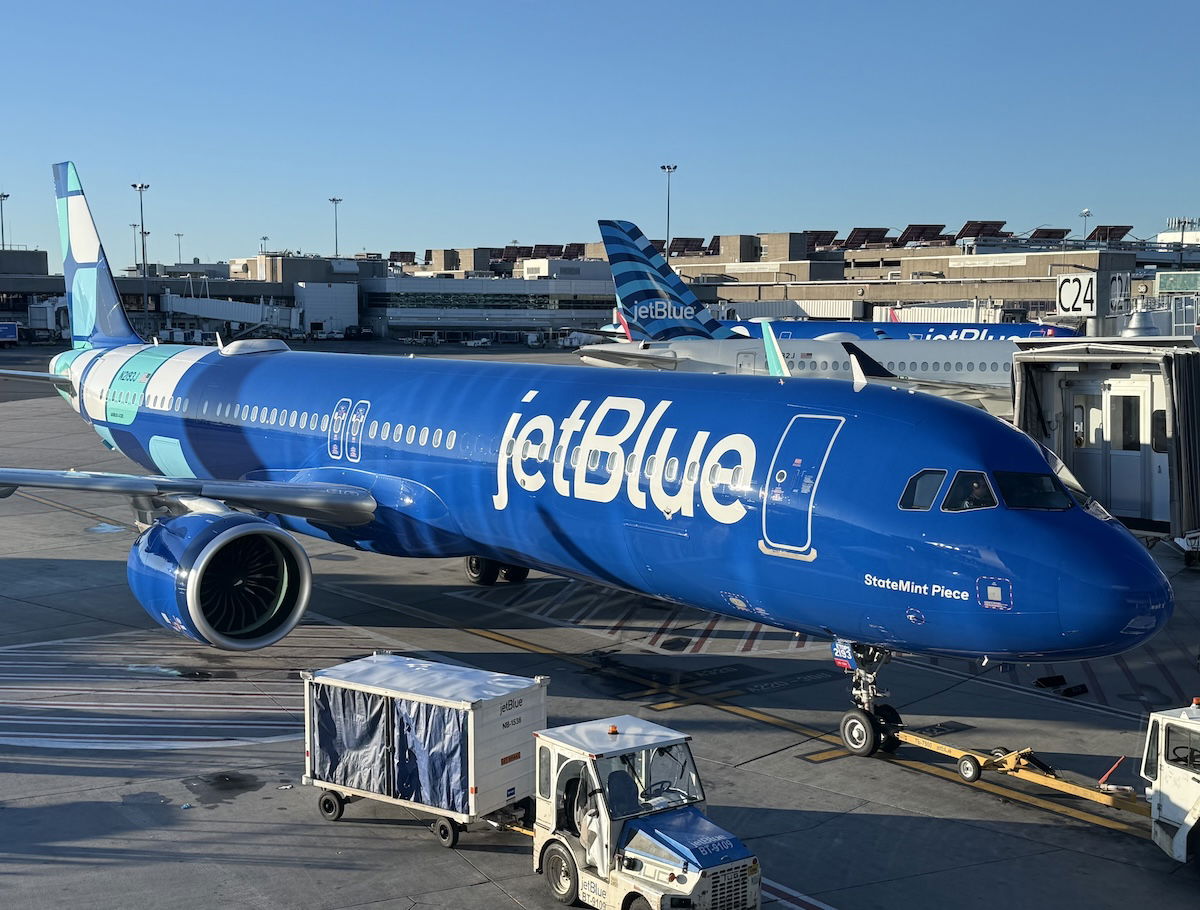
JetBlue Airways is currently navigating one of the most turbulent periods in its 26-year history, facing a confluence of high operating costs, a heavy debt burden, and a rapidly shifting regulatory landscape. As the carrier explores potential merger partners to secure its long-term viability, industry experts and former insiders have raised significant concerns regarding the airline’s ability to remain independent or even avoid restructuring through Chapter 11 bankruptcy. The discourse surrounding the airline’s future reached a new peak following candid remarks from its founder, David Neeleman, who suggested that the company’s financial trajectory may be unsustainable under current market conditions.
The speculation comes at a time when the broader U.S. aviation industry is reconsidering the necessity of consolidation. With major carriers like United Airlines and American Airlines evaluating strategic shifts, and the federal government’s stance on antitrust enforcement potentially evolving, JetBlue finds itself at a critical crossroads. The airline, which once disrupted the industry with its "humanity in travel" ethos, is now grappling with the harsh realities of a capital-intensive industry where scale often dictates survival.
David Neeleman’s Somber Assessment of JetBlue’s Financial Health
David Neeleman, the serial airline entrepreneur who founded JetBlue in 1998 and served as its CEO until 2007, recently provided a pessimistic outlook on the carrier’s prospects. Speaking to pilots at his current venture, Breeze Airways, on April 14, 2026, Neeleman highlighted the severity of JetBlue’s financial distress. Although Neeleman has not held an executive role at JetBlue for nearly two decades, his insights carry weight due to his deep understanding of the carrier’s foundational structure and the broader low-cost carrier (LCC) market.
Neeleman’s assessment centered on a recent report from JP Morgan analyst Jamie Baker, which projected dire outcomes for the airline if fuel prices remain elevated. According to Baker’s estimates, based on a fuel price of $4.50 per gallon, JetBlue could face annual losses exceeding $1.3 billion. Neeleman noted that such a loss would likely exhaust the carrier’s liquidity and necessitate a bankruptcy filing. Furthermore, the airline’s debt, which currently stands at roughly $9 billion, is becoming increasingly expensive to service. Neeleman pointed out that the airline is already paying over $600 million in annual interest, a figure that could climb to $800 million if additional financing is required to cover operational deficits.
The founder’s comments suggest that JetBlue’s "nose is just above the water," and that its strategic decision to double down on hubs like Fort Lauderdale has yet to yield the financial stability required to weather a high-fuel environment. While Neeleman expressed a desire for the airline’s success, his analysis paints a picture of a company with "very few options" left on the table.
The Merger Landscape: United, American, and the Regulatory Factor
JetBlue’s search for a merger partner has become public knowledge, but the pool of interested suitors appears to be narrowing. While United Airlines has emerged as a primary contender, internal concerns regarding JetBlue’s debt profile may hinder a deal. Sources close to United’s leadership indicate that CEO Scott Kirby is wary of absorbing $9 billion in liabilities, even if the acquisition offers strategic advantages in key markets like New York’s John F. Kennedy International Airport (JFK).
Intriguingly, Kirby has also floated the possibility of a merger with American Airlines to the Trump administration. This "wild card" suggestion is interpreted by some analysts as a tactical move to "clear the decks" for a JetBlue acquisition by reducing regulatory resistance to industry consolidation. However, the viability of an American-JetBlue tie-up is viewed skeptically by many, given American’s own ongoing struggles to define its domestic competitive strategy and its recent history of failed partnerships, such as the Northeast Alliance (NEA), which was struck down by federal courts.
Other major players appear disinterested. Alaska Airlines, currently focused on its own integration efforts with Hawaiian Airlines, is not seen as a buyer for JetBlue. Similarly, Southwest Airlines, which typically operates a monocultural fleet of Boeing 737s, would face immense logistical hurdles in integrating JetBlue’s Airbus-heavy fleet and its premium "Mint" service.
A Chronology of Challenges: From the NEA to the Spirit Merger Failure
To understand JetBlue’s current predicament, it is necessary to examine the series of strategic setbacks the airline has faced over the past five years.
- 2020–2023: The Northeast Alliance (NEA): JetBlue entered into a code-sharing and slot-swapping agreement with American Airlines to compete more effectively against Delta and United in New York and Boston. However, the Department of Justice (DOJ) sued to block the alliance, arguing it reduced competition. In 2023, a federal judge ordered the alliance to be dissolved.
- 2022–2024: The Pursuit of Spirit Airlines: In a bid to achieve immediate scale, JetBlue launched a hostile takeover bid for Spirit Airlines, eventually winning a bidding war against Frontier. The deal was valued at $3.8 billion. However, in early 2024, the DOJ successfully blocked the merger on antitrust grounds, arguing it would eliminate a key "ultra-low-cost" competitor and lead to higher fares.
- 2024–2025: Strategic Pivot and Leadership Changes: Following the failed Spirit merger, JetBlue’s leadership underwent significant changes. The airline began a "back to basics" strategy, focusing on its core strengths in the Northeast and its profitable Mint premium product, while simultaneously cutting underperforming routes in markets like Los Angeles and South America.
- 2026: The Current Liquidity Crisis: Despite cost-cutting measures, the combination of high interest rates, rising labor costs, and volatile fuel prices has pushed the airline’s debt-to-equity ratio to concerning levels, leading to the current speculation regarding its survival.
Supporting Data: The Economics of an Ailing Carrier
The financial metrics cited by analysts highlight the precariousness of JetBlue’s position. In an industry where profit margins are notoriously thin—often hovering between 3% and 5% for successful carriers—a $1.3 billion projected loss is catastrophic for a company of JetBlue’s size.
- Debt Load: With $9 billion in total debt, JetBlue’s leverage is among the highest in the U.S. airline sector. This debt was largely accrued through fleet modernization and the heavy capital expenditures required to maintain a premium service level that distinguishes it from budget competitors.
- Interest Coverage: At $600 million to $800 million in annual interest payments, a significant portion of JetBlue’s operating cash flow is diverted away from reinvestment and toward debt service. This limits the airline’s ability to upgrade its fleet or invest in the customer experience, which is its primary competitive advantage.
- Fuel Sensitivity: JetBlue’s fleet, while modern, remains highly sensitive to fuel price fluctuations. Unlike larger legacy carriers that have more robust hedging programs or more diverse international networks to offset domestic fuel costs, JetBlue’s domestic-heavy focus makes it vulnerable to spikes in West Texas Intermediate (WTI) crude prices.
The Strategic Importance of JetBlue’s Assets
Despite its financial woes, JetBlue remains a highly attractive target for the right buyer. The airline possesses "crown jewel" assets that are nearly impossible to replicate in the current aviation environment.
Chief among these are its slots and gates at JFK and Boston Logan International (BOS). In the highly congested Northeast corridor, these slots represent significant barriers to entry for competitors. For an airline like United, which has long sought to bolster its presence at JFK after a period of reduced operations, acquiring JetBlue would provide an instant, dominant footprint in the nation’s largest aviation market.
Furthermore, the JetBlue "Mint" product is widely regarded as the best domestic business-class experience in the United States. Integrating this product and its associated loyal customer base would provide a legacy carrier with a turnkey solution for capturing high-yield premium traffic.
Broader Industry Implications and the Regulatory Outlook
The fate of JetBlue will likely serve as a bellwether for the future of the U.S. airline industry. Delta Air Lines CEO Ed Bastian has publicly stated his belief that the industry is entering a new era of consolidation. The "Big Four" carriers (Delta, United, American, and Southwest) currently control approximately 80% of the domestic market, and the struggles of mid-tier carriers like JetBlue and Alaska suggest that the "middle ground" of the industry is increasingly difficult to occupy.
The regulatory environment remains the ultimate wildcard. While the Biden administration took a hardline stance against airline mergers, the current political climate—and the potential for a change in administration—could lead to a more permissive antitrust policy. Proponents of consolidation argue that allowing a carrier like JetBlue to be acquired by a stronger partner is preferable to a chaotic bankruptcy that could result in a significant reduction in service and job losses.
If JetBlue were to enter Chapter 11, it would likely use the process to shed debt, renegotiate aircraft leases, and potentially emerge as a leaner, more attractive acquisition target. However, as noted by industry observers, the time required for a bankruptcy restructuring could cause JetBlue to miss the current "window" for a strategic merger, leaving it vulnerable in an increasingly competitive landscape.
Conclusion: A Turning Point for the "Boutique" Major
JetBlue Airways stands at a defining moment. The airline that once redefined the passenger experience with live television, extra legroom, and high-end service is now fighting for its financial life. Whether through a white-knight acquisition by a legacy carrier or a painful restructuring process, the JetBlue of the future will likely look very different from the carrier founded by David Neeleman nearly three decades ago.
As the industry watches for the next move from United’s Scott Kirby or a potential shift in federal policy, one thing remains clear: the status quo is no longer an option for JetBlue. The coming months will determine whether the carrier can navigate its way through its current debt crisis or if it will become the latest chapter in the long history of U.S. airline consolidation. For passengers, employees, and investors, the stakes could not be higher.










Leave a Reply