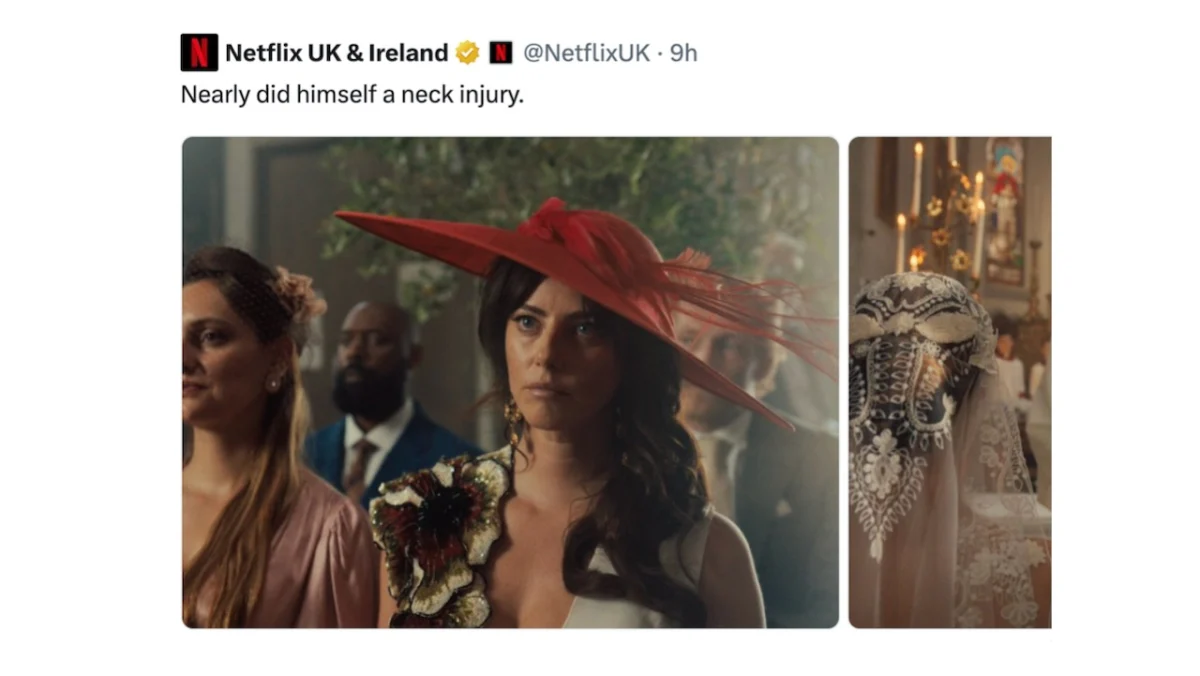
In an era defined by hyper-polarized digital discourse, the intersection of pop culture and political vitriol has reached a new zenith. On September 10, 2026, the Netflix UK & Ireland social media team published a seemingly innocuous post on X (formerly Twitter) featuring a clip from the second season of the popular crime drama series The Gentlemen. Within hours, the post became the epicenter of a localized firestorm as prominent influencers within the MAGA (Make America Great Again) movement accused the streaming giant of mocking the recent assassination of political commentator Charlie Kirk. The controversy serves as a quintessential case study in how algorithmic echo chambers and the speed of social media can distort benign entertainment content into perceived political weaponry.
Anatomy of a Misunderstanding
The controversy stems from a short video clip shared by Netflix’s official UK account. The footage depicts a scene from the second season of The Gentlemen, created by Guy Ritchie, featuring characters Eddie (portrayed by Theo James) and Isabella (Benedetta Porcaroli). In the scene, Eddie is standing at the altar for his wedding to the Italian countess when he glances back to observe Susie (Kaya Scodelario) exiting the cathedral. The caption accompanying the video, "Nearly did himself a neck injury," was a direct, literal observation of the character’s rapid head movement.
However, the rapid-fire nature of political commentary on X saw this caption and visual sequence recontextualized. Because the post appeared in the immediate wake of the news regarding the assassination of Charlie Kirk—a polarizing figure in American conservative circles—a subset of influencers suggested that the "neck injury" reference was a thinly veiled, derogatory allusion to the physical nature of the attack on Kirk. Despite the total absence of firearms, political symbols, or context related to the assassination in the clip, the accusation gained significant traction, prompting a wave of angry replies, calls for boycotts, and claims of institutional bias against the streaming service.
Chronological Breakdown of the Event
The timeline of the incident illustrates the velocity at which digital misinformation travels.
- September 10, 2026 (Approx. 10:00 AM GMT): Netflix UK & Ireland shares the clip from The Gentlemen to highlight a popular scene from the show’s second season.
- September 10, 2026 (Approx. 1:00 PM GMT): Several high-profile accounts within the conservative sphere begin to circulate the post, alleging it constitutes a "sick joke" regarding the recent violence against Charlie Kirk.
- September 10, 2026 (Approx. 4:00 PM GMT): The post experiences a significant surge in engagement, primarily driven by "quote-tweets" and "replies" from users who had not watched the series, thus lacking the context of the character’s interaction.
- September 10, 2026 (Evening): Fact-checkers and fans of the series begin to post the full context of the clip, clarifying that the scene focuses on the dramatic tension between Eddie and Susie, not any real-world political event.
The Influence of Algorithmically Driven Outrage
The backlash against Netflix is not an isolated incident but rather indicative of a broader sociological phenomenon known as "context collapse." In this environment, content creators post for a specific audience—in this case, fans of Guy Ritchie’s gritty, stylized crime drama—while the platform’s algorithm pushes that content to a much broader, heterogeneous audience. When a user who is deeply embedded in a specific political subculture sees a piece of content that contains even the vaguest linguistic ambiguity, the brain’s confirmation bias often fills in the gaps.
Data from social media analytics firms suggests that "outrage cycles" typically peak within four to six hours of the initial spark. By the time the accurate context is provided, the primary narrative—that a corporate entity is mocking a political figure—has already been cemented in the minds of many. This phenomenon is exacerbated by the monetization of high-engagement, high-controversy posts, which incentivize influencers to perpetuate such narratives regardless of their factual basis.
The Role of Corporate Communication in a Volatile Climate
For multinational corporations like Netflix, the challenge of maintaining a social media presence in the current climate is immense. Historically, brand accounts operated with a degree of levity, using pop-culture references to drive engagement. However, as the political landscape has become more contentious, even the most neutral marketing materials are now subject to intense scrutiny.
Industry experts note that corporate social media teams are increasingly forced to operate with extreme caution. The decision by Netflix to post a clip from The Gentlemen was standard marketing procedure designed to bolster viewership for the series. The fact that this could be interpreted as a political statement highlights the precariousness of modern brand management. There is no evidence to suggest that the Netflix social media team had any knowledge of, or intent to comment on, the Charlie Kirk assassination. The timing was entirely coincidental, yet in the eyes of the outraged, coincidence is often interpreted as malice.
Broader Implications for Political Discourse
The fallout from this incident raises critical questions regarding the health of digital discourse. When political movements view every piece of cultural output through the lens of partisan warfare, the middle ground for shared experience shrinks. Entertainment, which has long served as a cultural "town square," is increasingly being Balkanized.
Furthermore, the implications for the creators of such content are profound. If artists and writers must fear that their work will be weaponized or misinterpreted as a political commentary on real-world violence, it may stifle creativity. The artistic intent of The Gentlemen—a series focused on the intricacies of the British aristocracy and the criminal underworld—is inherently disconnected from the daily realities of American political punditry. Yet, the border between these two worlds is becoming increasingly porous.
Fact-Based Analysis of the Scene
To clear up the confusion regarding the source material, it is necessary to examine the scene in question with an objective lens. The interaction between Theo James’s character and Kaya Scodelario’s character is a pivotal moment of romantic and professional tension within the narrative arc of the show. The "neck injury" comment is a classic example of dry, British observational humor typical of Guy Ritchie’s dialogue. It is entirely contained within the internal logic of the show.
At no point in the scene is there any mention of politics, violence, or assassination. The characters are situated within a formal, religious setting, and the focus of the camera work is exclusively on the emotional reaction of the actors involved. By analyzing the scene frame by frame, it becomes clear that the allegations of political mockery are factually groundless. The controversy serves as a reminder of the importance of media literacy; in the age of the "quote-tweet," verifying the source of a video before reacting to it is a responsibility that many social media users have largely abandoned.
Conclusion: The Cost of Misinformation
The incident involving Netflix and the MAGA influencer sphere is a sobering reflection of the current state of digital communication. While the streaming service is unlikely to suffer long-term damage from this specific controversy, the ease with which a false narrative took hold demonstrates the vulnerability of public discourse to coordinated misinformation.
As the 2026 election cycle approaches and the political temperature in the United States continues to rise, the likelihood of similar incidents is high. The speed at which misinformation can be manufactured and disseminated far outpaces the speed at which it can be corrected. For the average consumer, the lesson is clear: in an age where everything is potentially political, the ability to distinguish between artistic expression and political intent is more critical than ever. The irony remains that while influencers were busy decrying a perceived slight, they were actually fueling a cycle of outrage that detracted from the very discourse they claim to hold dear. The Netflix post was, and remains, nothing more than a clip from a television show—a fact that seems to have been lost in the digital static of a deeply divided nation.