
The Maine Legislature has made history by passing LD 307, a landmark piece of legislation that establishes the nation’s first state-level moratorium on the development of large-scale data centers. The bill, which successfully cleared both the House and Senate this week, prohibits state and local authorities from approving any new data center projects with an expected electricity demand of 20 megawatts or greater. This suspension of development is slated to remain in effect until at least October 2027, providing the state with a three-year window to evaluate the long-term impacts of these energy-intensive facilities on Maine’s power grid, environment, and local economies.
The measure now moves to the desk of Governor Janet Mills. While the Governor has not yet publicly committed to signing the bill, the legislative momentum behind LD 307 reflects a growing national anxiety regarding the rapid expansion of the digital infrastructure required to power artificial intelligence and cloud computing. Maine’s decision marks a pivotal moment in the intersection of technology and public policy, as states begin to grapple with the physical and environmental footprints of the "cloud."
Legislative Chronology and Political Context
The journey of LD 307 through the Maine State House was marked by intense debate and a clear partisan divide. The bill was introduced by State Representative Melanie Sachs, a Democrat from Freeport, who argued that the state’s current regulatory framework is ill-equipped to handle the unique demands of "hyperscale" data centers. These facilities, often operated by tech giants like Amazon, Google, and Microsoft, can consume as much electricity as a small city.
The Maine House of Representatives passed the bill with a 79-62 vote, followed by the Senate, which approved it 21-13. During the floor debates, proponents characterized the moratorium as a necessary "pause button." They emphasized that Maine currently hosts about ten relatively small data centers, but the state is increasingly being scouted for larger projects that could overwhelm local resources.
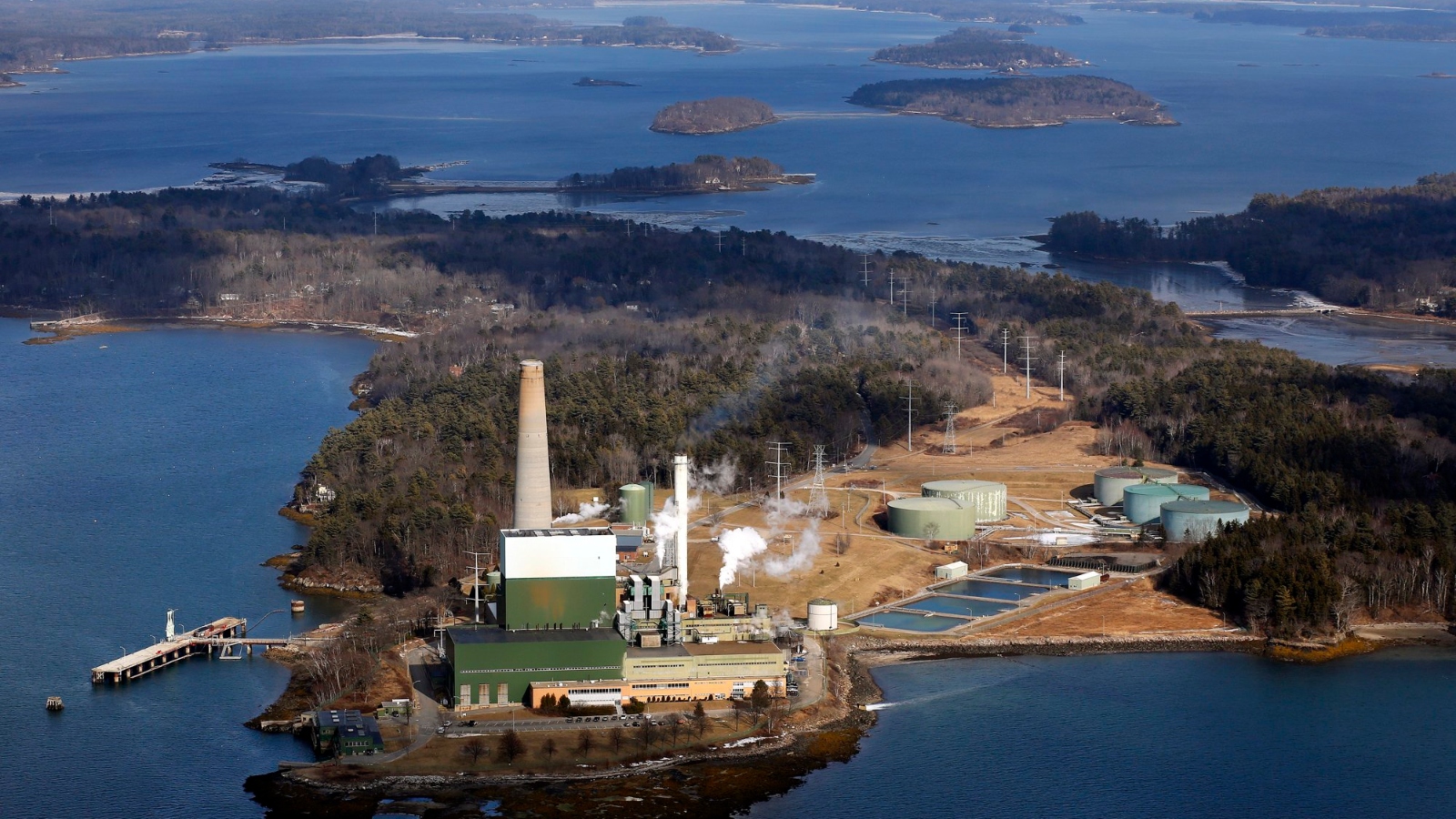
Conversely, Republican lawmakers and business advocacy groups voiced strong opposition. State Senator Matt Harrington argued that the moratorium sends a negative signal to the global tech industry, potentially driving billions of dollars in investment to neighboring states. Harrington specifically pointed to ongoing discussions regarding data center developments in the communities of Sanford and Jay—the latter involving the potential redevelopment of a former paper mill site—as projects that could be jeopardized by this legislative freeze.
The Governor’s office had previously suggested that the bill should include an exemption for the Jay project, which is seen as a vital economic lifeline for a town hit hard by the decline of the paper industry. However, the final version of the bill passed without such an exemption, leaving the fate of that specific redevelopment in limbo as Governor Mills reviews the legislation.
The Data Center Energy Crisis: Supporting Data and Grid Impact
The primary driver behind LD 307 is the staggering energy demand of modern data centers. According to a report by the Federal Energy Regulatory Commission (FERC), U.S. data centers accounted for more than 50 gigawatts of electricity demand as of 2023. To put this figure in perspective, it is approximately double the peak demand of the entire New England power grid, which serves six states, including Maine.
The 20-megawatt threshold established by the Maine moratorium is significant. A 20-megawatt facility can consume enough electricity to power roughly 15,000 to 20,000 homes. As the tech industry pivots toward generative artificial intelligence, the energy intensity of these facilities is skyrocketing. AI processing requires specialized chips, such as Nvidia’s H100 GPUs, which consume significantly more power than traditional server processors.
Analysts warn that without proper regulation, the influx of data centers could lead to:
- Grid Instability: Rapid load growth can strain transmission lines and outpace the construction of new power plants.
- Increased Electricity Rates: In many jurisdictions, the cost of upgrading the grid to accommodate large industrial users is passed on to residential ratepayers.
- Carbon Goal Setbacks: Maine has ambitious statutory goals to decrease greenhouse gas emissions. A sudden surge in fossil-fuel-reliant energy demand from data centers could undermine the state’s transition to renewable energy.
Representative Sachs noted that Maine is attempting to learn from the "cautionary tales" of states like Virginia, where "Data Center Alley" in Loudoun County now processes an estimated 70 percent of the world’s internet traffic. In those regions, the sheer density of data centers has led to public outcries over noise pollution, high-voltage transmission line expansion, and the consumption of massive amounts of water for cooling.
Environmental Concerns and Resource Management
Beyond electricity, the environmental impact of data centers extends to water consumption. Large facilities often rely on evaporative cooling systems to prevent servers from overheating. A single large-scale data center can consume hundreds of thousands of gallons of water per day, often competing with local agricultural and residential needs.
In Maine, where environmental conservation is a core part of the state’s identity and economy, the prospect of such resource-intensive development has met with localized resistance. Sarah Woodbury, legislative director for Maine Conservation Voters, noted that several Maine communities have already rebelled against proposed data center projects. "Voters do not want these facilities in their backyard without a clear understanding of the costs," Woodbury stated.
The moratorium mandates the creation of a special council tasked with evaluating these concerns. This council will spend the next three years investigating the impact of data centers on water tables, local noise levels, and the state’s long-term climate goals. Their findings will be used to draft a comprehensive regulatory framework that will dictate how—and if—large-scale data centers can operate in Maine after 2027.
A National Movement: Maine as the Tip of the Spear
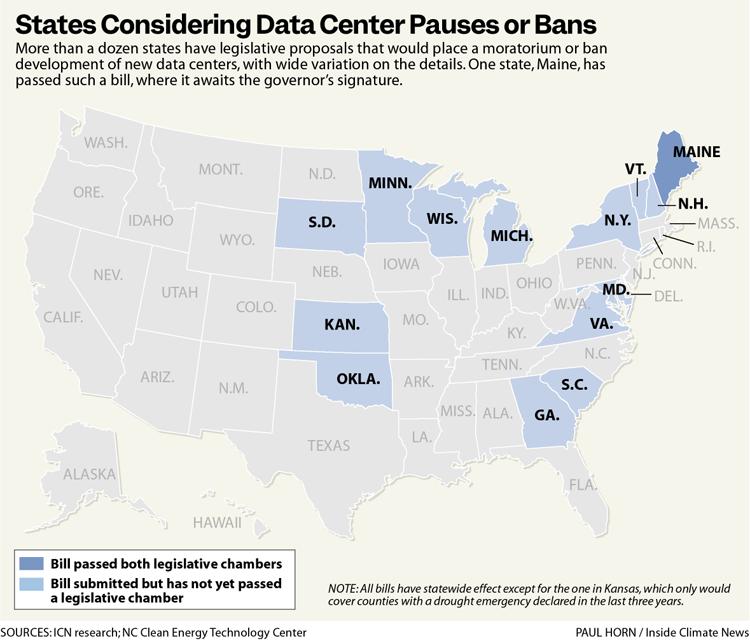
While Maine is the first to pass a statewide moratorium, it is far from alone in its skepticism. At least 13 other states have introduced legislative proposals this year to pause, tax, or more strictly regulate data center development.

In Minnesota, lawmakers are considering a bill that would require data centers to meet strict energy efficiency standards and utilize carbon-free energy sources. In Illinois, where data centers have historically been welcomed with generous tax incentives, a growing backlash from community groups has led to discussions about a similar development pause.
The movement has even reached the federal level. U.S. Senator Bernie Sanders (I-VT) and Representative Alexandria Ocasio-Cortez (D-NY) recently proposed a national moratorium on AI-specific data centers. They argue that the societal risks—ranging from job displacement to environmental degradation—outweigh the immediate economic benefits of rapid AI expansion.
Anthony Elmo, a researcher for the watchdog organization Good Jobs First, suggests that the politics of data centers are rapidly evolving. "This is no longer just a partisan issue," Elmo said. "While Republicans generally favor deregulation, we are seeing bipartisan pushback when these projects threaten local resources or lead to higher utility bills for constituents."
Economic Implications and the Future of Maine’s Tech Sector
The debate over LD 307 highlights a fundamental tension in modern economic development: the desire for high-tech investment versus the need for sustainable growth. Opponents of the moratorium warn that Maine risks being left behind in the "AI Revolution." They argue that data centers provide high-paying construction jobs and significant property tax revenue for small towns.
However, critics point out that once the construction phase is complete, data centers are notoriously light on permanent employment. A facility that costs $1 billion to build might only employ 30 to 50 full-time staff members. This "job-to-investment ratio" is often much lower than that of traditional manufacturing or healthcare facilities.
The three-year pause will allow Maine to determine how to attract the right kind of digital investment—projects that are compatible with the state’s existing infrastructure and environmental standards. The special council is expected to explore "green" data center requirements, such as mandating the use of waste heat for local industrial processes or requiring facilities to provide their own on-site renewable energy and storage.
Conclusion: A Model for State Sovereignty in the Digital Age
As the world becomes increasingly reliant on digital services, the physical infrastructure of the internet can no longer be ignored by state regulators. Maine’s LD 307 represents a proactive attempt to assert state sovereignty over a tech industry that has long operated with minimal local oversight.
The outcome of this moratorium will be closely watched by legislators across the country. If Maine successfully uses this time to craft a balanced regulatory environment, it could serve as a blueprint for other states looking to protect their residents and resources from the unintended consequences of the AI boom.
For now, the tech industry must wait. The "Gold Rush" for data center space in New England has hit a significant roadblock in the Pine Tree State, signaling that the era of unchecked digital expansion may be coming to an end. Whether Governor Mills signs the bill or allows it to become law without her signature, the message from Maine is clear: the future of the cloud must be sustainable, or it will not be built at all.