
Main Facts
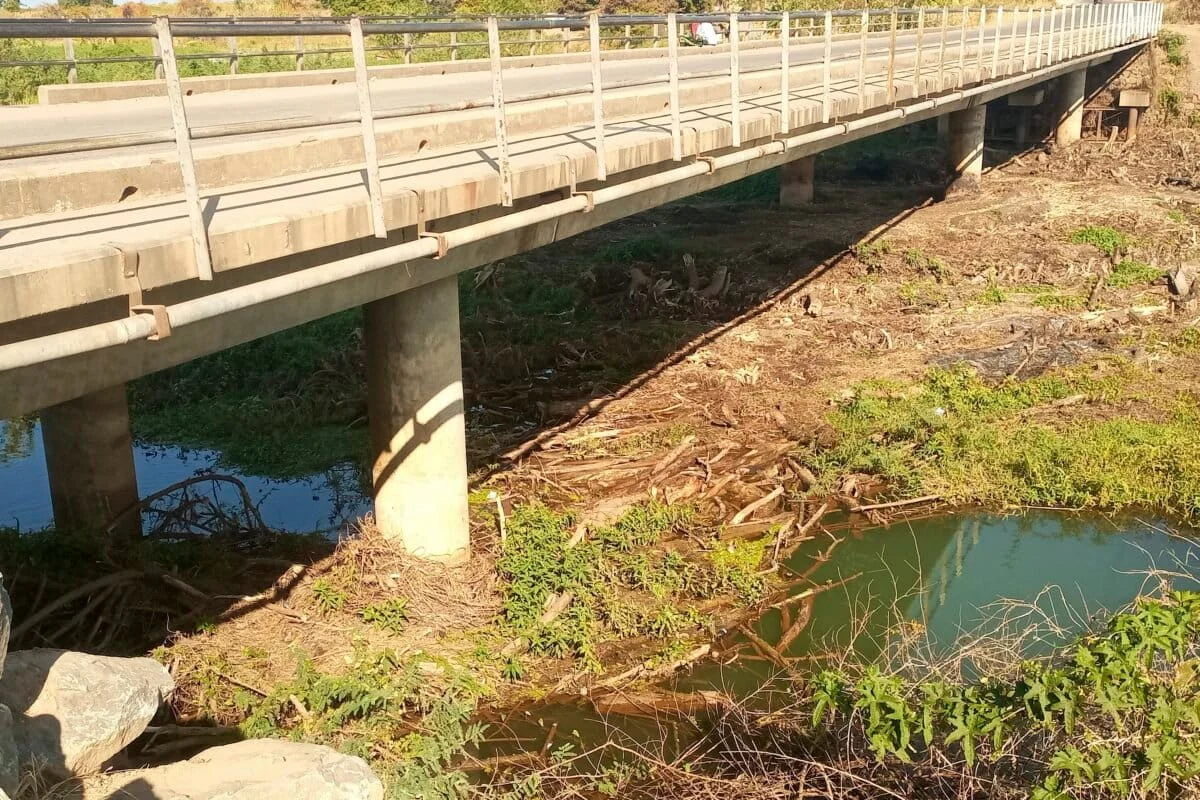
Chia Lagoon, the largest body of water of its kind in Malawi, is currently facing an unprecedented ecological and humanitarian crisis. A colossal mass of floating weeds and accumulated debris has formed near the water body’s main outlet, effectively choking off vital waterways and crippling the local economy. Seven months after the conclusion of the traditional rainy season, agricultural fields that are typically dry or capable of absorbing seasonal runoff remain heavily submerged.
This unnatural water retention has severely disrupted the production of irrigated staple crops, including maize and rice. Concurrently, local fishers find themselves cut off from traditional fishing grounds as dense mats of vegetation obstruct boat navigation channels. The blockage occurs at a critical geographic bottleneck on the western shoreline of Lake Malawi, where the lagoon drains through a narrow channel. The resulting backflow of water has transformed productive farmlands into stagnant marshes, rotting crops in the ground and deepening food security concerns for thousands of rural inhabitants who rely directly on the lagoon’s ecosystem for their survival.
Chronology of the Crisis
The unfolding emergency is tied to a specific timeline of severe weather events and environmental shifts that began late last year:
- December 2025: Chia Lagoon achieves formal recognition as a Key Biodiversity Area (KBA), highlighting its exceptional ecological value due to its rich populations of birds, fish, plants, reptiles, and amphibians. Weeks later, the first wave of heavy flooding hits the region.
- January 2026: A second, intense wave of flooding sweeps across central Malawi. Heavy torrential rains in the highlands send high-velocity runoff tearing through the catchment area.
- February 2026: Following the peak of the rainy season, large masses of uprooted weeds, aquatic plants, and terrestrial debris begin to accumulate massively at the narrow outlet where Chia Lagoon empties into Lake Malawi.
- Mid-2026 to Present: Despite the rainy season ending months prior, the trapped water fails to recede. Local farmers and fishers report continuous economic losses as fields remain waterlogged and boat routes stay blocked by stubborn floating vegetation mats.
Supporting Data and Demographic Impact
The crisis at Chia Lagoon reaches far beyond localized inconvenience, threatening a densely populated watershed that forms the backbone of the regional economy in Malawi’s central Nkhotakota district.
Geographically, Chia Lagoon spans approximately 1,700 hectares (4,200 acres). Direct survival around the lagoon depends heavily on its natural bounty: more than 7,800 households rely on the water body for small-scale farming—cultivating rice, cassava, and maize—as well as artisanal fishing and traditional bird hunting. When expanding the scope to the wider river network and catchment area that feeds into the lagoon, the stakes are exponentially higher, supporting over 55,000 agriculturalists whose livelihoods are now indirectly or directly compromised by the disruption of the hydrological cycle.
Local Voices and Eyewitness Accounts
Communities on the ground report an entirely unprecedented scenario that defies historical local experience. Ali Maulidi, who serves as the chairman for an association representing more than 1,000 commercial and artisanal fishers in the Nkhotakota district, expressed profound dismay over the current conditions.
"We have never seen anything like this," Maulidi stated during a phone interview. He emphasized the severe toll the waterlogged soils are taking on long-term crops, noting that matured cassava plants have begun to rot directly in the fields before farmers could harvest them. "We don’t understand what is happening here; but we’re worried because it’s greatly affecting us."

Scientific researchers attempting to study the area have encountered identical logistical barriers. Earlier in the year, a team of scientific researchers—including Dr. Tiwonge Mzumara-Gawa, an ecologist at the Malawi University of Science and Technology—faced immense difficulty accessing parts of the lagoon while conducting field research on regional land-use patterns within the watershed.
Scientific Analysis and Environmental Implications
While the study led by Mzumara-Gawa was not initially designed to investigate aquatic weeds, preliminary observations by scientific experts offer a compelling theory regarding the root causes of the disaster. According to Mzumara-Gawa, the surrounding landscape has undergone severe environmental degradation characterized by accelerated deforestation, aggressive farmland expansion, and rising settlement growth.
Furthermore, local agriculturalists have progressively encroached upon the officially designated ecological boundaries of the lagoon, converting natural wetland buffers into cultivated plots.
"It’s like this place should be wetland and nobody should be cultivating here," Mzumara-Gawa explained. "But people are cultivating there and… contributing to all of this silt that’s coming into the marsh. So that is my greater theory."
The ecologist points to a destructive synergy between human-induced landscape degradation and extreme weather phenomena. Because the catchment area has lost its natural vegetation cover and sponge-like wetland retention capacity, floodwaters generated during the dual flooding events of December 2025 and January 2026 traveled downward with unprecedented velocity and destructive force.
This high-speed runoff likely tore through riverbanks and uprooted vast quantities of aquatic plants from the lagoon bed, funneling them toward the narrow outlet where they formed an impenetrable plug. "So, maybe this rainwater coming from the high lands came in with a lot of force," Mzumara-Gawa noted, reflecting on the sheer scale of the debris. "Because when I saw the size of it, I was like, oh this is huge. How could this break away just like that?"
Broader Implications and Future Outlook
The choking of Chia Lagoon serves as a stark warning regarding the fragile intersection of climate volatility, ecological degradation, and rural livelihoods in East Africa. As a newly designated Key Biodiversity Area, the lagoon’s ecosystem is uniquely vulnerable to anthropogenic pressures.
The accumulation of floating weeds is not merely a physical obstruction to boats and farming plots; it represents a symptom of systemic environmental unravelling within the broader Nkhotakota watershed. Without coordinated governmental and community interventions to clear the outlet blockage, manage siltation, and enforce sustainable land-use zoning around the wetland borders, communities in the region face persistent economic hardship, dwindling food supplies, and long-term ecological decline.








Leave a Reply