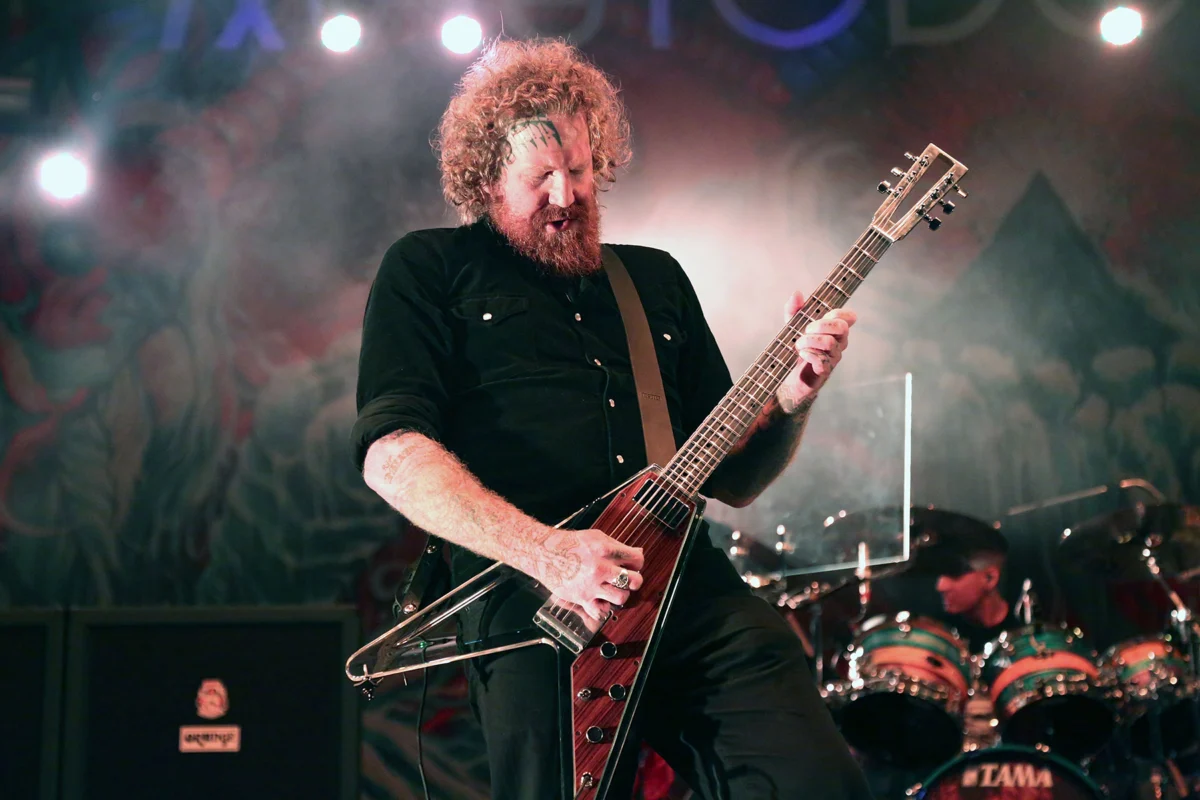
The legal battle between the members of the Grammy-nominated heavy metal band Mastodon and the estate of their late co-founder and former guitarist, Brent Hinds, has entered a critical new phase. In a comprehensive 20-page legal memorandum filed in court, the members of Mastodon have officially requested that a judge dismiss major portions of the lawsuit brought against them by Billy Hinds, the father of the late musician, who is acting as the representative of the estate. The legal defense challenges the foundational claims made by the plaintiff, disputing personal liability, clarifying the circumstances surrounding a disputed business buyout, and defending the use of Hinds’s likeness on the cover art of the band’s latest studio album, Marrow Deep.
The underlying dispute highlights the complex intersection where artistic collaboration, corporate structure, and personal tragedy collide. According to legal documents obtained by media outlets, Mastodon’s defense team is systematically picking apart the phrasing, legal theories, and structural assertions of the original complaint filed by the Hinds estate in September. As the legal proceedings move forward, the case raises significant questions about corporate governance within musical groups structured as limited liability companies, the rights of estates regarding a deceased artist’s public image, and the protocols required when parting ways with a founding member.
Deconstructing the Legal Defense: Personal Liability and Corporate Structure
At the core of Mastodon’s recent filing is the argument that the individual members of the band—recognized publicly as a cohesive musical unit—should not be held personally and individually accountable for the corporate and business disputes alleged in the lawsuit. Mastodon operates as a formal corporate entity structured as a limited liability company (LLC). According to the band’s legal counsel, this corporate veil protects individual members from personal financial and legal liability concerning the operational decisions and internal business affairs of the enterprise.
The defense argues that even if the allegations put forth by the Hinds estate were accepted as factual for the sake of argument, large swaths of the complaint’s core legal theories fundamentally fail to state a legally cognizable claim. Consequently, the band’s lawyers maintain that these sections must be dismissed immediately. By emphasizing the separation between individual musicians and the corporate entity, the defense aims to insulate the band members from personal exposure, shifting any potential administrative or financial scrutiny back to the corporate framework rather than targeting the livelihoods of the individual artists.
Furthermore, the defense takes direct aim at the allegations surrounding a corporate "buyout process" intended to divest Hinds of his business interests in Mastodon prior to his passing. The estate’s original complaint contended that Hinds retained a 25 percent ownership interest in the band at the time of his death, arguing that his departure from the group had not been legally formalized before he tragically passed away in August 2025.
Mastodon’s legal team counters that any informal offers or preliminary discussions regarding a buyout originating from one of the band’s subsidiary companies did not constitute a legally binding obligation forcing the group to execute the transaction under the terms perceived by the estate. Additionally, the defense asserts that an estate cannot unilaterally dictate or invent its own purchase price for such a transaction after the fact. The filing points out a glaring omission in the plaintiff’s argument, noting that the complaint fails to allege an agreed purchase price and does not even demonstrate that Hinds himself offered a specific purchase price when he initially requested to be bought out of his business interests.
The Image Controversy: Marrow Deep Album Cover and Fiduciary Duties
One of the most emotionally charged aspects of the lawsuit involves the utilization of Brent Hinds’s likeness on the cover art of Mastodon’s recently released album, Marrow Deep. The estate’s initial complaint accused the band of a breach of fiduciary duty and illegal conversion—colloquially understood as theft—arguing that the group misappropriated Hinds’s image and stripped him of his rightful ownership stake without appropriate authorization or compensation.
Mastodon’s legal memorandum offers a robust defense against these specific assertions. Regarding the allegation of a breach of fiduciary duty concerning the album artwork, the defense maintains that the estate has entirely failed to establish or prove the existence of a specific fiduciary relationship that would legally restrict the band from featuring their longtime former bandmate’s image on the cover of their latest musical project. The band’s representatives stand firmly by their creative decision, arguing that honoring their late collaborator through visual representation on the album is both artistically valid and legally permissible under the existing legal frameworks governing the band’s operational history.
On the issue of conversion, the defense categorically rejects the notion that the band unlawfully seized or stole Hinds’s 25 percent ownership interest. While acknowledging that the estate’s complaint alleges Mastodon purported to redeem those financial interests and declined to recognize the estate’s claimed rights, the defense emphasizes a critical legal distinction: the complaint lacks any factual allegation that Mastodon physically seized, fraudulently transferred, or unlawfully withheld actual stock certificates, official corporate ledgers, or any other tangible documents formally embodying Hinds’s ownership stakes. Without evidence of tangible interference with physical property or legal instruments, the charge of conversion cannot legally stand, according to the band’s lawyers.
Moreover, the defense scrutinizes the precise wording of the complaint regarding future restrictions on Hinds’s image. The legal team argues that the estate is attempting to improperly dictate Mastodon’s future conduct rather than seeking legitimate legal guidance regarding its own administrative responsibilities. By attempting to place blanket prohibitions on how the band can utilize Hinds’s likeness moving forward, the estate is overstepping its legal boundaries, according to the memorandum.
A Timeline of Tragedy and Disagreement: The Background of the Dispute
To fully understand the current legal friction, it is necessary to examine the chronology of events leading up to the courtroom showdown. Brent Hinds was a foundational pillar of Mastodon, serving as a primary guitarist, vocalist, and songwriter since the group’s formation in Atlanta, Georgia, in the late 1990s. Alongside Brann Dailor, Bill Kelliher, and Troy Sanders, Hinds helped shape the landscape of modern heavy metal, guiding Mastodon to critical acclaim, numerous Grammy nominations, and a dedicated global fan base.
However, internal professional and business pressures eventually led to a parting of ways. In March 2025, Mastodon and Brent Hinds mutually decided to part ways professionally, formally separating the guitarist from active participation in the band’s touring and recording operations. Over the subsequent months, discussions regarding the formal buyout of Hinds’s corporate and business interests within the band’s corporate structure took place.
Tragedy struck in August 2025 when Brent Hinds passed away unexpectedly, sending shockwaves through the global rock and metal communities. At the time of his untimely death, the complex legal and administrative paperwork finalizing his formal exit from the band and the corresponding financial settlement had not yet been fully executed.
Following his passing, Mastodon attempted to resolve the lingering financial matters with the late musician’s family. The band reportedly issued a check for $80,000 intended to represent Hinds’s calculated financial share and finalize the buyout of his business interests. Citing concerns over the fairness and legitimacy of the valuation, Billy Hinds and the estate’s legal representatives refused to cash the check, choosing instead to escalate the matter into a formal legal challenge.
In September 2025, the estate officially filed its multi-faceted lawsuit in court, alleging wrongful business practices, failure to properly formalize the separation prior to death, and grievances over intellectual property and image usage. At the time the lawsuit became public, Mastodon released a public statement expressing deep sorrow that a private family and business disagreement had spilled out into the public eye. The band strongly denied any allegations of ill intent, asserting their deep affection for their departed friend and declaring their intention to vigorously defend what they characterized as a meritless lawsuit.
Broader Implications for the Music Industry
As this legal battle progresses through the court system, its implications extend far beyond the specific parties involved. The dispute serves as a cautionary tale for bands operating as formal business entities, highlighting the critical importance of executing clear, timely, and legally binding separation and buyout agreements whenever a founding member departs. In the fast-paced world of professional music, informal understandings and delayed paperwork can leave massive vulnerabilities for estates and surviving band members alike when unexpected tragedies occur.
Furthermore, the case touches upon sensitive precedents regarding posthumous rights of publicity and the use of an artist’s likeness by their former creative partners. As bands continue to release new material following the departure or passing of key members, the legal boundaries governing tribute, commemorative artwork, and commercial exploitation of a deceased artist’s image will continue to be heavily scrutinized by courts.
As of press time, representatives for Mastodon have declined further public comment beyond their official legal filings and prior statements. Similarly, legal counsel representing Billy Hinds and the Brent Hinds estate has not immediately responded to renewed requests for comment from media outlets regarding the latest motion to dismiss. With the defense formally requesting that a judge throw out the core pillars of the lawsuit, the next move rests in the hands of the presiding judge, who will ultimately determine whether the case proceeds toward trial or is dismantled based on the rigorous technical distinctions raised by the band’s legal team.