
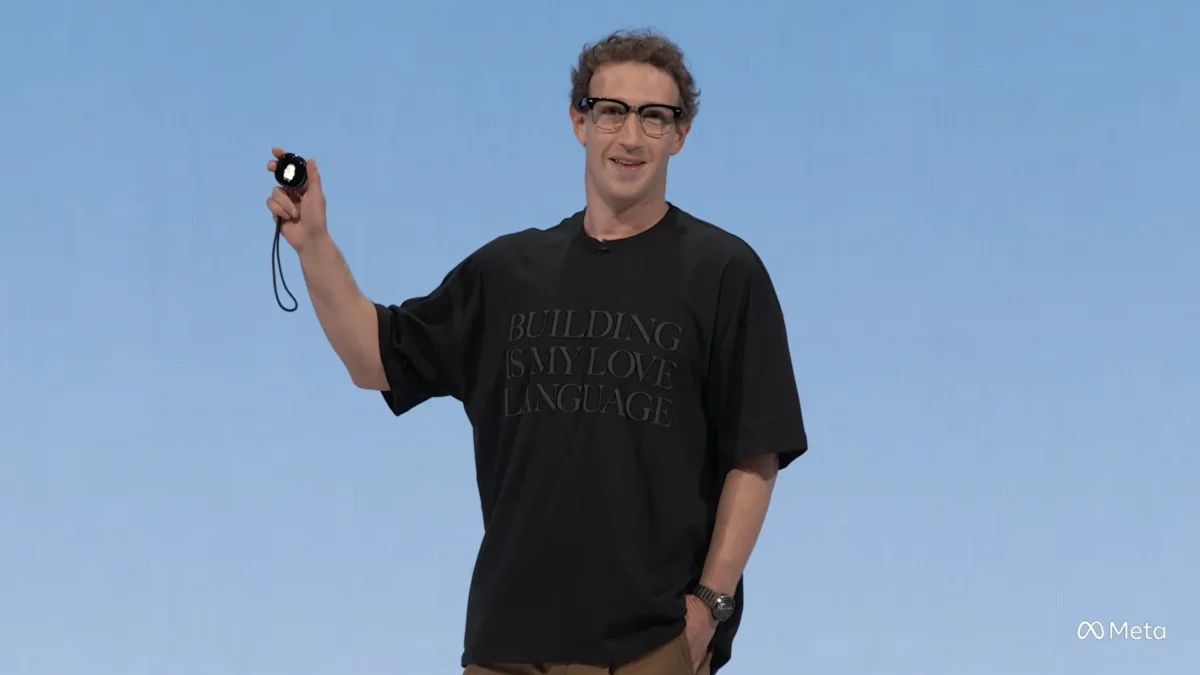
Meta Platforms Inc. has officially expanded its artificial intelligence hardware footprint beyond the realm of wearable technology. During the closing moments of the Meta Connect 2026 keynote, CEO Mark Zuckerberg introduced the Muse Charm, a compact, handheld device designed to serve as a dedicated interface for Muse, the company’s flagship AI assistant. By offering a tactile, always-on alternative to smart glasses, Meta is positioning the Charm as an accessible entry point for users who prioritize convenience and portability in their interactions with generative AI.
The announcement represents a significant shift in Meta’s hardware strategy. While the company has invested heavily in optical solutions like its Ray-Ban Meta smart glasses, the Muse Charm acknowledges that a subset of the consumer market remains hesitant to adopt facial wearables. By creating a device that fits in the palm of one’s hand—reminiscent of the aesthetic popularized by the Tamagotchi craze of the late 1990s—Meta is betting that the utility of its AI agent will transcend the form factor.
The Evolution of the Muse Ecosystem
The debut of the Muse Charm was meticulously orchestrated during the keynote presentation. Earlier in the event, Zuckerberg demonstrated the capabilities of the Muse assistant by engaging in a natural-language conversation with an AI personality he dubbed "Agrippa." During the dialogue, Zuckerberg discussed the conceptual development of a hardware companion, which was revealed minutes later to be the Muse Charm.
At its core, Muse is designed to function as a personal agent rather than a simple chatbot. According to Meta’s technical specifications, the assistant is capable of setting long-term goals, brainstorming creative ideas, and executing multi-step tasks in the background. Users are afforded a high degree of agency, with the ability to customize the personality, tone, and voice of the assistant to suit their preferences. This modular approach to AI interaction reflects a broader industry trend toward "agentic" systems—AI that does not just respond to queries but proactively manages digital workflows.
Meta has confirmed that Muse will operate on a freemium model. While basic interactions will be available to all users at no cost, advanced features and specialized capabilities will be gated behind a subscription tier. Furthermore, Zuckerberg hinted at a potential future revenue stream involving transaction facilitation, where Meta could collect a nominal fee when the assistant successfully completes commercial tasks on behalf of the user, such as booking services or processing retail orders.
A Chronology of Meta’s AI Ambitions
The launch of the Muse Charm is the latest milestone in a multi-year effort by Meta to transition from a social media conglomerate to an AI-first powerhouse.
- 2023: Meta intensifies its focus on Llama large language models, releasing open-weight versions that become industry standards for developers.
- 2024: The company integrates AI features into its existing social apps, including Instagram and Facebook, while simultaneously refining its hardware portfolio.
- 2025: The market sees a consolidation of AI hardware, marked by the rapid rise and subsequent withdrawal of high-profile "AI pin" devices. Meta observes these failures, noting the lack of a cohesive ecosystem as a primary barrier to consumer adoption.
- September 2026: Meta Connect serves as the platform for the unveiling of the Muse assistant and the Muse Charm, signaling the company’s readiness to compete directly in the standalone AI hardware market.
Market Context: The Challenge of Standalone AI Gadgets
The landscape into which the Muse Charm is entering is notoriously difficult. The year 2024 served as a cautionary tale for the consumer technology sector, as standalone AI hardware products—most notably the Humane Ai Pin and the Rabbit R1—faced intense scrutiny. Both devices struggled with latency issues, limited battery life, and, most critically, a lack of "killer app" utility that justified their price tags and the inconvenience of carrying an additional device. By mid-2025, the Humane Ai Pin was effectively discontinued, leading many analysts to suggest that the category of "AI-only hardware" was fundamentally flawed.
Meta’s approach differs from its predecessors in two vital ways: integration and ecosystem. Unlike the Humane or Rabbit devices, which were built on experimental software stacks, the Muse Charm is a physical extension of an already functioning, robust AI ecosystem. It runs the exact same Muse engine that powers Meta’s smart glasses. This interoperability ensures that if a user performs a task on their glasses, the context remains consistent when they switch to the Charm. This "continuity of intent" is expected to be a primary differentiator for the device.
Strategic Implications and Industry Analysis
Industry analysts view the Muse Charm as a strategic hedge against the potential stagnation of the wearable market. While smart glasses provide a hands-free experience, they are subject to social stigma, regulatory hurdles, and battery constraints. A handheld device, by contrast, is socially unobtrusive and allows for more complex input methods, such as a screen or tactile controls, should Meta choose to include them in future iterations.
From a financial perspective, the Muse Charm represents a long-term play on "agentic commerce." If Meta can successfully embed Muse into the daily habits of millions of users, the company can position itself as a middleman for digital commerce. If the assistant becomes the primary interface for ordering food, scheduling appointments, or purchasing goods, the commission-based model mentioned by Zuckerberg could generate significant high-margin revenue that is independent of Meta’s traditional advertising business.
However, the hardware remains unproven. Without a declared price point, consumers are left to speculate whether the device will be positioned as a budget-friendly entry-level product or a premium accessory. The company has stated that further details, including full technical specifications and a definitive launch price, will be disclosed in the coming weeks ahead of the scheduled holiday release in December.
The Human-AI Interface: A New Frontier
The design philosophy behind the Muse Charm emphasizes the "always-on" nature of modern AI. By keeping the device in a pocket or worn on a lanyard, users are encouraged to treat the AI as a constant companion. This shift toward persistent, ambient computing is a departure from the "open-app" model of the smartphone era, where a user must manually navigate to a specific software tool to initiate a request.
Critics, however, raise valid concerns regarding data privacy and the ubiquity of microphones in such devices. Meta has yet to provide a detailed briefing on the privacy architecture of the Muse Charm, specifically regarding how it handles voice data and where the processing—local versus cloud—occurs. Given Meta’s historical challenges with data management, the success of the Muse Charm will likely hinge on the company’s ability to build trust with a consumer base that is increasingly skeptical of "always-listening" hardware.
Looking Ahead
As the industry looks toward the holiday season, the Muse Charm will be one of the most closely watched pieces of consumer technology in recent memory. If it succeeds, it will prove that there is a viable market for dedicated AI hardware when supported by a mature software ecosystem. If it fails, it may signal the end of the current wave of standalone AI gadgets, forcing manufacturers to retreat into the more secure confines of smartphones and tablets.
Meta’s commitment to this device is clear. By linking it directly to the Muse assistant and integrating it into the core messaging of its annual developer conference, the company has staked a portion of its reputation on the belief that consumers are ready for a new way to interact with the digital world. Whether the Muse Charm becomes a staple of the modern pocket or another footnote in the history of experimental tech remains to be seen, but its arrival confirms that the race to define the interface of the AI age is far from over.
For now, the technology sector waits for the granular details—the price, the specific processing power, and the breadth of third-party integrations—that will determine whether the Muse Charm is merely a novelty or the beginning of a genuine hardware revolution. As December approaches, all eyes will be on how Meta balances its ambition for AI dominance with the practical realities of consumer hardware adoption.








Leave a Reply