
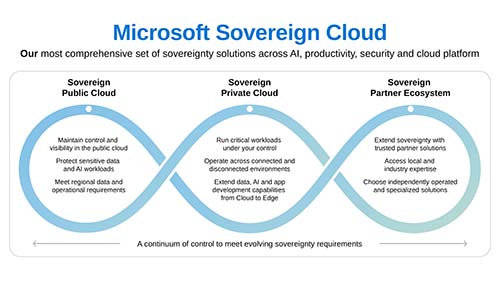
As global enterprises and public-sector organizations rapidly accelerate the integration of artificial intelligence into their core infrastructure, the questions surrounding data governance, geographic residency, and operational sovereignty have reached a critical juncture. In response to these escalating demands, Microsoft has announced a sweeping expansion of its sovereign cloud ecosystem. Unveiled by Douglas Phillips, president and chief technology officer of Microsoft Specialized Clouds, this latest suite of enhancements is engineered to provide government agencies, highly regulated industries, and multinational corporations with unprecedented command over their digital environments. The updates bridge the gap between leveraging cutting-edge cloud-native AI capabilities and maintaining strict adherence to regional data compliance mandates.
The announcement arrives at a pivotal moment for cloud computing and enterprise technology. For years, organizations operating in sensitive sectors faced a difficult compromise: either embrace the scalable innovation of public cloud architectures—often at the expense of absolute territorial data control—or remain tethered to rigid, isolated legacy systems that struggle to support modern computational demands. Microsoft’s latest initiative attempts to dismantle this false dichotomy, delivering a comprehensive framework that spans public clouds, private infrastructure, and complex hybrid partner ecosystems. By introducing granular administrative controls, regional access oversight, and decentralized encryption capabilities, the tech giant aims to reassure compliance officers and IT administrators alike that digital sovereignty and advanced automation can coexist.
The Genesis of Modern Digital Sovereignty and the Push for Control
The concept of digital sovereignty has evolved significantly over the past decade. Initially focused narrowly on data residency—ensuring that information generated within a specific geographic jurisdiction remained physically stored within that territory—the definition has expanded exponentially. Today, true digital sovereignty encompasses operational transparency, immunity from extraterritorial legal reach, control over encryption keys, and the autonomy to manage critical software stacks without reliance on foreign-based administrative personnel.
This evolution has been catalyzed by both geopolitical shifts and the exponential rise of enterprise artificial intelligence. As governments across Europe and other heavily regulated regions implement stringent frameworks like the General Data Protection Regulation (GDPR) and the European Union’s emerging Artificial Intelligence Act, technology providers are compelled to adapt their architectures. Microsoft’s recent announcements directly address these regulatory pressures, signaling a maturation in how hyperscale cloud providers approach the delicate balance between global scale and local compliance.

Centralizing Management with the Sovereign Control Panel
Among the most anticipated components of Microsoft’s latest rollout is the Sovereign Control Panel, slated to enter public preview at the upcoming Microsoft Ignite conference. Accessible directly through the Azure portal, this centralized dashboard is designed to alleviate one of the most persistent pain points for enterprise IT teams: fragmented visibility.
In complex multi-cloud and hybrid deployments, tracking compliance drift and ensuring uniform policy enforcement across diverse workloads can consume vast amounts of administrative time. The Sovereign Control Panel serves as a single pane of glass, allowing administrators to monitor data sovereignty settings continuously, detect compliance vulnerabilities in real time, and proactively identify operational risks before they manifest into regulatory infractions. By consolidating these governance metrics, Microsoft is lowering the administrative friction associated with maintaining rigorous security postures in distributed environments.
Geographic Oversight and Transparent Administrative Access
Concerns regarding remote administrative access have long been a primary friction point for international cloud adoption. Organizations outside the United States often express apprehension regarding the potential access of their sensitive data and production systems by foreign engineering personnel. To mitigate these concerns, Microsoft is introducing innovative structural safeguards specifically tailored for European operations.
The newly introduced Data Guardian feature establishes a mandatory paradigm of localized oversight. Under this protocol, when Microsoft engineers require access to specific production systems located within the European Union and the European Free Trade Association (EFTA), that access must be supervised and validated by personnel physically and legally based within the same region. This geographic tethering ensures that access requests are vetted through a lens familiar with local regulatory nuances and privacy expectations.
Complementing Data Guardian is the Production Touch Ledger. This system generates immutable, tamper-resistant audit logs tracking every instance of administrative interaction with sensitive production environments. By providing organizations with a transparent, cryptographically secure ledger detailing who accessed their systems, when the access occurred, and what specific actions were performed, Microsoft is injecting a new standard of accountability into cloud administration. Enterprises no longer need to rely solely on vendor trust; they are equipped with verifiable cryptographic proof of system integrity.
Decentralizing Security Through Advanced Encryption Controls
Data encryption has traditionally served as the bedrock of cloud security, yet the control of encryption keys has frequently remained in the hands of the cloud service provider. Recognizing that true sovereignty requires ultimate authority over cryptographic keys, Microsoft has announced the general availability of external key management powered by Azure Managed HSM.
This capability empowers organizations to maintain their primary encryption keys on physical hardware that they exclusively own and manage entirely outside of Microsoft’s cloud infrastructure. By decoupling key lifecycle management from the hosting environment, enterprises retain the ability to instantly revoke access to their data at any moment, rendering the underlying stored information unreadable to any outside entity—including the cloud provider itself. This level of cryptographic autonomy is expected to satisfy the most stringent requirements of defense agencies, central banks, and critical infrastructure operators.
Expanding Sovereign Private Cloud and Hybrid Capabilities
While public cloud scalability remains attractive, many organizations require complete isolation for their most sensitive workloads, operating either in disconnected environments or under strictly controlled private network topologies. To address this reality, Microsoft is significantly broadening its Sovereign Private Cloud portfolio.

The expansion introduces robust tools designed to support fully disconnected or hybrid operations via Azure Local. Among the notable additions are GitHub Enterprise Local and GitHub Copilot with locally hosted AI models. These integrations allow development teams to leverage advanced code-generation and AI-assisted engineering workflows entirely on-premise, ensuring that proprietary source code and intellectual property never traverse the public internet or leave the organization’s physical perimeter. Furthermore, additional data services are being deployed to Azure Local, enabling enterprises to run modern, containerized databases and analytics engines locally while retaining architectural compatibility with the broader Azure ecosystem.
Addressing the Frontier of Autonomous AI Security
The unveiling of these sovereign cloud controls does not occur in a vacuum; it is part of a broader, synchronized re-evaluation of enterprise security across Microsoft’s entire product portfolio. As artificial intelligence transitions from passive advisory tools to autonomous, action-oriented agents, traditional perimeter defenses are proving insufficient.
In tandem with its sovereign cloud announcements, Microsoft has expanded Project Perception, an initiative specifically engineered to address the emerging security risks posed by what the company classifies as "agentic insiders." Unlike traditional human insiders or static software scripts, modern AI agents possess the capability to autonomously access sensitive information, evaluate complex business logic, and execute operational commands without continuous human intervention.
To govern this new class of digital actors, Project Perception introduces the concept of Guardian Agents. These specialized, purpose-built security agents operate continuously in the background, tasked with monitoring the behavior of other AI systems, evaluating their decision-making processes in real time, and actively intervening if an agent’s actions begin to drift into risky or unauthorized territory.
Hayete Gallot, executive vice president of Microsoft Security, emphasized the philosophical shift necessitated by this technology during a recent briefing. "Monitoring and securing those agents must become continuous," Gallot noted, highlighting that static, point-in-time compliance checks are fundamentally inadequate in an era of autonomous machine workflows.

Bridging Sovereignty and Artificial Intelligence
The juxtaposition of Project Perception and the sovereign cloud expansion reveals a coherent, two-pronged enterprise strategy. While Project Perception addresses the behavioral risks associated with autonomous AI systems—focusing on what AI agents are permitted to do—the sovereign cloud updates address the structural and geographical questions: where those systems execute, who maintains administrative jurisdiction over them, and how the underlying data is protected from external compromise.
Douglas Phillips underscored this synergy, pointing out that the mainstream adoption of artificial intelligence has compressed timelines and raised the stakes for enterprise risk management. As organizations deploy intelligent systems across sensitive business processes, healthcare networks, and critical national infrastructure, the tolerance for ambiguity regarding data governance drops to zero. By embedding rigorous oversight directly into the architecture of specialized clouds, Microsoft is attempting to position itself as the foundational platform of choice for risk-averse institutions entering the AI era.
Industry Implications and the Future of Regulated Cloud Markets
The long-term implications of Microsoft’s strategic pivot are profound for the global technology market. For enterprise CIOs, CISOs, and compliance officers, these updates signal a shift away from piecemeal security patches toward integrated, architecture-level compliance solutions. As regulatory bodies worldwide scrutinize the intersection of cloud computing, cross-border data flows, and machine learning, vendors that fail to offer verifiable operational transparency risk losing access to lucrative government and financial sector contracts.
Competitors in the hyperscale cloud market—including Amazon Web Services and Google Cloud—have likewise been investing in sovereign offerings, particularly in Europe. Microsoft’s aggressive push, highlighted by innovations like the Sovereign Control Panel, regionalized engineering oversight, and locally hosted AI models via Azure Local, raises the competitive bar significantly.

Ultimately, Microsoft’s comprehensive update reflects a maturing cloud industry coming to terms with the fragmentation of the global digital landscape. By offering organizations the tools to enforce strict geographic boundaries, retain absolute cryptographic control, and continuously monitor autonomous AI agents, the company is attempting to prove that the promise of cloud-driven innovation does not need to come at the expense of national security, regulatory compliance, or digital autonomy.