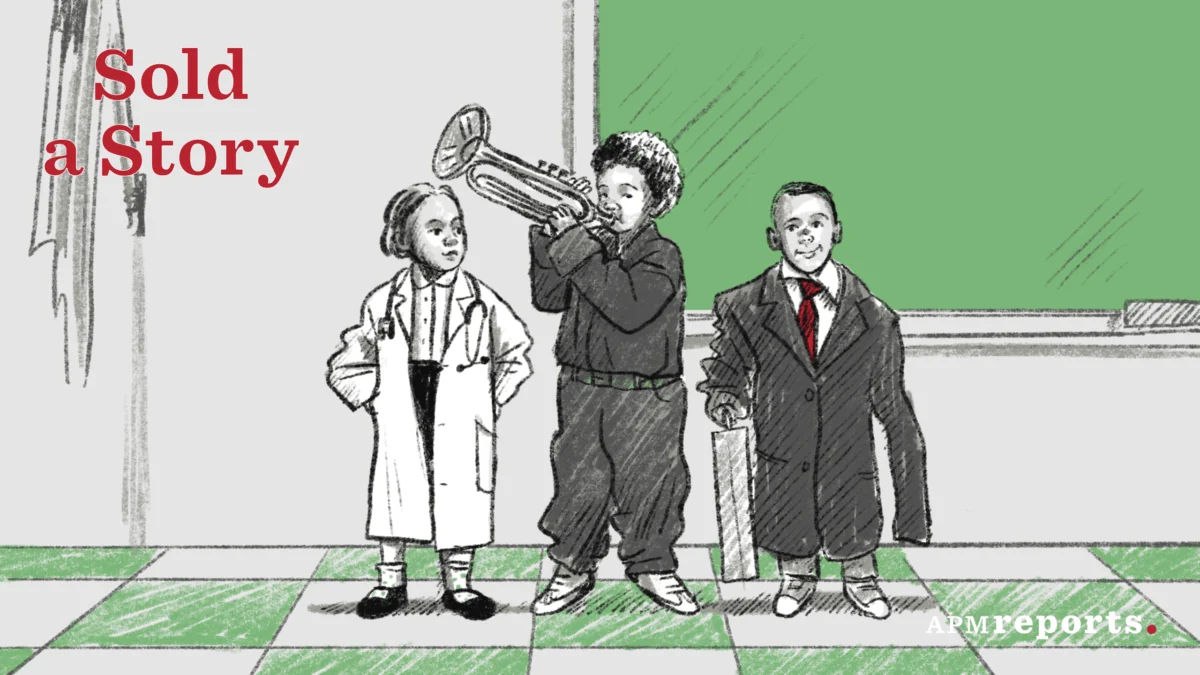
The intersection of pedagogical theory, socioeconomic disparity, and instructional methodology has long been a flashpoint in American education. At the center of this ongoing debate is the efficacy of "Direct Instruction" (DI)—a structured, scripted approach to teaching that prioritizes explicit skill mastery over more nebulous, student-led discovery models. In a recent installment of the investigative podcast Sold a Story, produced by APM Reports, the narrative shifts from the national reading crisis to the specific, high-stakes environment of a Houston elementary school. Through the lens of principal Thaddeus Lott, the episode explores the transformative power of rigorous curriculum in underserved communities, raising fundamental questions about equity, teacher agency, and the persistent achievement gap.
The Houston Experiment: A Case Study in Direct Instruction
In the heart of a predominantly Black, low-income neighborhood in Houston, Thaddeus Lott faced the perennial challenges that define many urban school districts: systemic underfunding, high teacher turnover, and student populations grappling with the stressors of poverty. Rather than relying on traditional pedagogical trends that often favor creative autonomy, Lott implemented a strict regimen of Direct Instruction.
Direct Instruction, developed in the 1960s by Siegfried Engelmann, operates on the principle that if a student has not learned, the teacher has not taught. The model relies on carefully scripted lessons, rapid-fire student-teacher interactions, and frequent assessment to ensure mastery of foundational skills before moving to more complex concepts. In Lott’s school, this approach led to a rapid and dramatic turnaround. Students who were previously labeled as "at-risk" began to achieve literacy and numeracy scores that not only surpassed their own previous baselines but eventually eclipsed the performance of students in affluent, suburban districts.
The Skepticism of Success
The sheer magnitude of the academic gains reported at Lott’s school sparked immediate controversy. In education reform, "too good to be true" is a common refrain when data shows massive improvements in a short period. Critics often argued that such gains were the result of "teaching to the test" or an over-reliance on rote memorization that would ultimately stifle critical thinking. However, proponents of Lott’s methods argue that this skepticism is often rooted in elitist assumptions. They posit that there is a tendency to view rigid, structured learning as "drudgery" when applied to low-income Black children, while viewing the same structural rigor in elite private schools as "discipline" and "academic excellence."
The episode of Sold a Story interrogates this tension. It asks whether the resistance to DI is based on genuine pedagogical concern or a subconscious bias that prevents educators from utilizing proven, albeit highly structured, tools for students who need them most.
The Chronology of the Reading and Instruction Debate
To understand the weight of Lott’s results, one must look at the broader timeline of American instructional methodology.
- 1960s–1970s: The inception of Direct Instruction via Project Follow Through, the largest and most expensive educational experiment in U.S. history. Results consistently showed that DI was the most effective method for improving reading and math scores among disadvantaged students.
- 1980s–1990s: The rise of "Whole Language" instruction, which de-emphasized phonics and explicit skill instruction in favor of exposure to literature and student-led inquiry.
- 2000s: The "Reading Wars" intensify, with the federal government eventually commissioning the National Reading Panel (2000), which concluded that systematic, explicit phonics instruction is essential.
- 2010s–2020s: The "Science of Reading" movement gains national momentum, fueled by findings that many common literacy curricula were failing to teach children how to decode words effectively.
- 2026: Sold a Story continues its investigative deep dive, highlighting that while reading instruction is finally receiving the scrutiny it deserves, the broader issue of how we teach—and who we trust to teach—remains unresolved.
Data-Driven Reality: The Impact of Explicit Teaching
The efficacy of structured instruction is backed by a significant body of meta-analyses. Research from the Hattie Effect Size rankings, which synthesizes thousands of studies, consistently places direct instruction among the most effective interventions for student achievement. In high-poverty settings, the data is particularly compelling. A 2018 study on structured curricula in urban schools found that when teachers shifted from discovery-based models to explicit, systematic instructional sequences, achievement gaps in mathematics and reading narrowed by an average of 15% within the first academic year.

Yet, despite this data, implementation remains inconsistent. Many school districts remain resistant to prescriptive curricula, citing concerns over teacher autonomy and the potential for a "factory model" of education that ignores the emotional and cultural needs of the child.
Official Responses and the Philosophical Divide
The divide over Thaddeus Lott’s methods reflects a deep philosophical chasm in the American education system. On one side are the proponents of "Constructivism," who argue that schools should be environments where children construct their own knowledge through exploration and project-based learning. On the other side are the proponents of "Explicit Instruction," who argue that for children who do not have the privilege of extensive academic support at home, the school must be the primary, reliable source of direct, foundational knowledge.
Educational administrators and policymakers often find themselves caught between these two camps. The implications of choosing one over the other are profound. If a school adopts a discovery-based model and fails, the burden of that failure falls almost entirely on the students, who may lose years of critical developmental time. If a school adopts a strict, scripted model, it may lose teachers who feel their professional expertise is being replaced by a manual.
Implications for the Future of Equity
The story of Thaddeus Lott and his Houston students serves as a critical mirror for the education sector. It challenges the reader to consider: what is the responsibility of the public school to the marginalized child? If a specific, proven method exists to accelerate the progress of students who are currently failing, is it ethical to withhold that method because of a preference for a different, albeit less effective, pedagogical philosophy?
The episode underscores that for many Black children and other marginalized groups, the stakes of this debate are life-altering. Literacy and numeracy are the bedrock of economic mobility. When these are not provided with urgency and proven efficacy, the result is a continuation of generational poverty.
As Sold a Story continues its investigation, the message for school boards, parents, and educators is clear: the focus must move beyond trends and ideology toward the cold, hard metrics of what works. The Houston experience is not merely a tale of one principal’s success; it is a template that forces the system to account for its failures. If the objective of the American education system is to provide a path to success for every child, regardless of their zip code or racial background, then the curriculum itself must be treated with the same scientific rigor as any other essential service.
Ultimately, the transformation seen in Houston suggests that the "science of teaching" is just as vital as the "science of reading." By removing the ambiguity from the instructional process, educators can provide a level of clarity and stability that acts as a equalizer. The question remains whether the broader educational establishment—from teacher preparation programs to local school boards—is willing to embrace the structured discipline required to turn those results into a national standard. As the podcast suggests, the answer to "what can you do for my children?" is not found in grand, theoretical reforms, but in the day-to-day, lesson-by-lesson commitment to ensuring that every child possesses the tools required to succeed in a complex world.