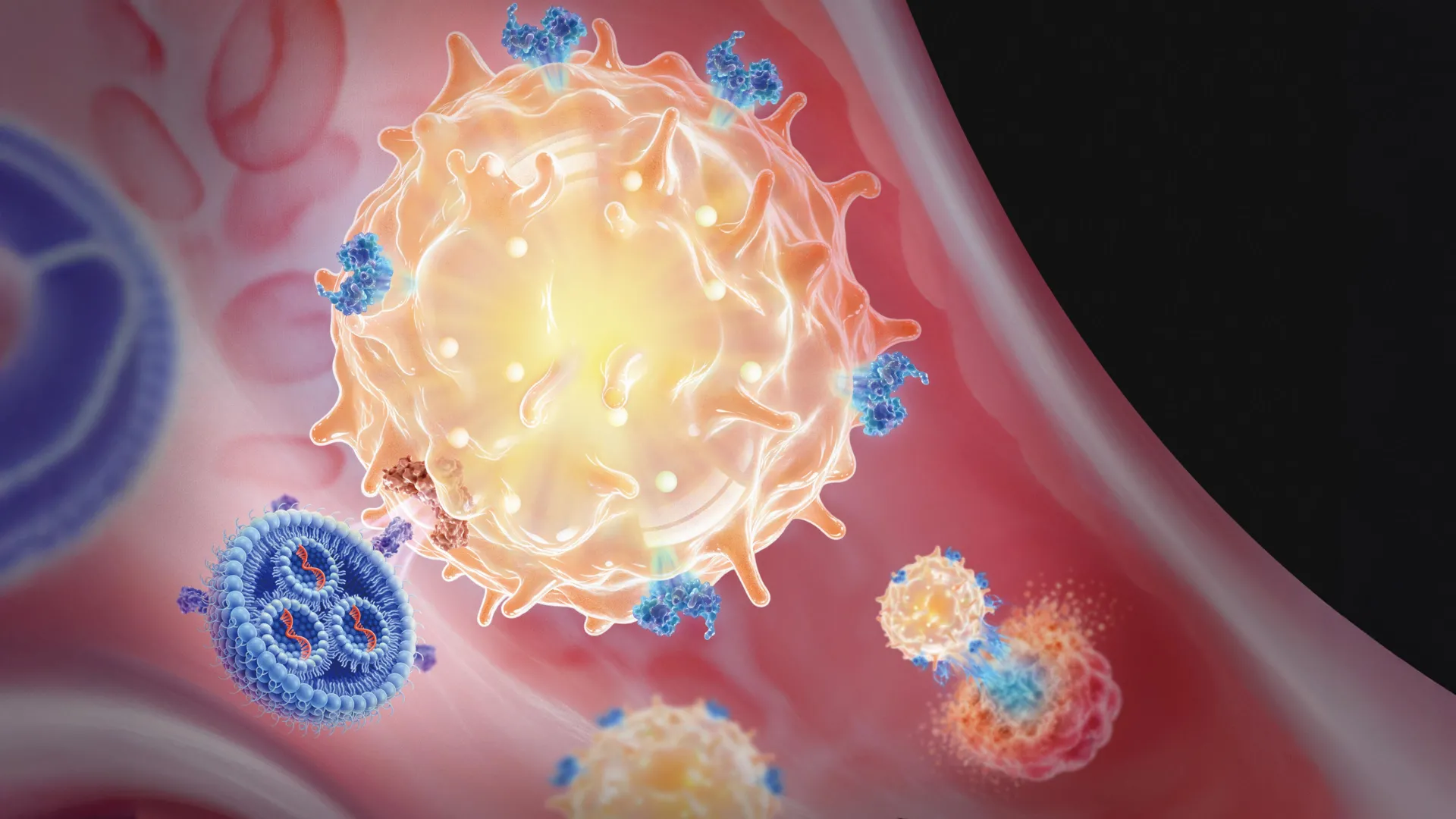
This scientific breakthrough, detailed in the journal Nature Biotechnology, marks a significant departure from the current standard of care in cell-based immunotherapy. By bypassing the traditional, labor-intensive ex vivo manufacturing process, researchers at the Massachusetts Institute of Technology (MIT) have successfully demonstrated that natural killer (NK) cells can be reprogrammed in vivo using lipid nanoparticles (LNPs) to identify and eradicate malignant T cells.
The Evolution of CAR T-Cell Therapy
To understand the significance of this development, one must examine the current landscape of personalized medicine. Over the past decade, chimeric antigen receptor (CAR) T-cell therapy has revolutionized the treatment of hematologic malignancies. Since the first FDA approval of a CAR T-cell therapy in 2017, seven such treatments have entered the clinical market. These therapies function by harvesting a patient’s own T cells, genetically engineering them in a specialized facility to express receptors that target specific cancer-associated antigens, and then re-infusing the expanded cell population back into the patient.
While these therapies have achieved remarkable remission rates in patients with refractory B-cell lymphomas and leukemias, they are fraught with logistical and economic hurdles. The "vein-to-vein" time—the period from blood collection to final infusion—often spans several weeks, during which a patient’s condition may deteriorate. Furthermore, the cost of manufacturing, which involves cleanroom processing, high-grade viral vectors for genetic modification, and complex cold-chain logistics, often exceeds $400,000 per patient, severely limiting global accessibility.
The Problem of T-Cell on T-Cell Violence
A primary limitation of existing CAR T-cell technology is its inability to effectively target T-cell-based malignancies. If researchers attempt to engineer a T cell to attack another T cell, the modified cells frequently fall victim to "fratricide," where the engineered cells recognize each other as targets, rendering the therapy ineffective.
Natural killer cells represent a unique, evolutionarily distinct arm of the innate immune system. Unlike T cells, which require precise matching of major histocompatibility complex (MHC) molecules, NK cells are designed to recognize and destroy cells that exhibit stress or foreign markers without the same risk of self-destruction. By shifting the target of engineering from T cells to NK cells, the MIT team has effectively solved the fratricide bottleneck.
Technical Methodology: Programming In Vivo
The research team, led by Daniel Anderson and Robert Langer, utilized a sophisticated delivery platform: antibody-functionalized lipid nanoparticles. These nanoparticles are engineered to encapsulate messenger RNA (mRNA) that encodes the instructions for the chimeric antigen receptor.
The delivery mechanism is highly specific. By conjugating antibody fragments to the surface of the LNPs, the researchers ensure that the particles bind exclusively to receptors on the surface of endogenous NK cells. Once internalized, the NK cells translate the mRNA, expressing the CAR on their own surface. This transient expression allows the body’s own immune system to effectively become a localized "factory" for cancer-fighting cells.
This approach eliminates the need for expensive bioreactors, viral vector transduction, and the high-level infrastructure required for traditional cell therapy manufacturing. In the MIT study, lead authors Yuang Chen, Julia Monkovic, and Haseeb Mughal confirmed that approximately 80 percent of targeted NK cells were successfully reprogrammed using this method in mouse models.
Chronology of Experimental Success
The efficacy of this technique was validated through a rigorous series of experiments:
- Initial Validation: The team successfully targeted and reprogrammed NK cells in mice, proving that the LNPs could navigate the bloodstream and find their cellular targets with high specificity.
- Melanoma Remission: In a model of aggressive melanoma, the team observed complete remission in 60 percent of the treated cohort.
- Lymphoma Eradication: Utilizing humanized mice—animals that possess a reconstituted human immune system—the researchers demonstrated that five injections of the mRNA-loaded nanoparticles could completely eliminate T-cell lymphoma tumors.
- Autoimmune Resolution: Beyond oncology, the researchers applied the technique to autoimmune hepatitis. By instructing NK cells to target autoreactive T cells that destroy liver hepatocytes, the team observed not only the clearance of the pathogenic cells but also the physical regeneration and healing of the damaged liver tissue after a single injection.
Analysis of Clinical Implications
The implications for the medical community are profound. By shifting the manufacturing process from a central lab to the patient’s own biology, the "cost of goods" for these advanced therapies could drop by orders of magnitude.
"The manufacturing challenges with CAR NK cells are significant," explains Daniel Anderson. "The idea here is you can deliver a nanoparticle that will modify your own NK cells with a CAR construct and teach them to attack tumor cells."
From a health economics perspective, this technology potentially solves the "scalability crisis" that currently prevents cell therapies from reaching low- and middle-income countries. If a therapy can be administered via a simple infusion of nanoparticles rather than a complex surgical and laboratory procedure, it could move from a boutique, hospital-only intervention to an accessible outpatient treatment.
Future Horizons: Beyond Cancer
While the current research focused on lymphoma and autoimmune hepatitis, the platform is inherently modular. The mRNA instructions within the nanoparticles can be swapped to target virtually any cell surface marker. This creates a vast, untapped potential for treating chronic conditions such as multiple sclerosis, rheumatoid arthritis, and other inflammatory disorders where specific T-cell populations drive disease progression.
However, the path to human trials remains complex. Researchers must now conduct extensive toxicology studies to ensure that the systemic delivery of mRNA-carrying nanoparticles does not trigger unintended immune responses or "off-target" modifications in non-immune tissues. Furthermore, because the expression of the CAR via mRNA is transient, the duration of the immune response must be carefully tuned. While this transience is safer—allowing the effect to "turn off" once the nanoparticle supply is depleted—it may necessitate repeat dosing for chronic conditions.
Official Responses and Academic Context
The research, which received funding from Sanofi, the Marble Center for Cancer Nanomedicine, and the National Cancer Institute, has been met with optimism by the wider biotechnology community. Robert Langer, a pioneer in the field of drug delivery and a co-contributor to the study, underscored the broader significance of the work: "This study is an excellent example of the power of nano delivery systems and their ability to potentially treat cancer and other diseases."
Industry analysts suggest that if the in vivo reprogramming platform can replicate its mouse-model success in human clinical trials, it will likely represent the most significant shift in immunotherapy since the advent of CAR T cells. As the researchers look toward future studies, the goal is to refine the LNP delivery profile to increase safety margins, ensuring that the next generation of cancer treatments is not only more effective but also fundamentally more democratic in its distribution.
As the industry pivots toward these "off-the-shelf" synthetic biology solutions, the focus will now shift to identifying which specific autoimmune or oncology indications will serve as the first human clinical trial targets. With the proof-of-concept established, the race is on to transition this elegant piece of molecular engineering from the lab bench to the clinic, promising a future where a patient’s own immune system is the primary, and most effective, tool in their medical arsenal.