
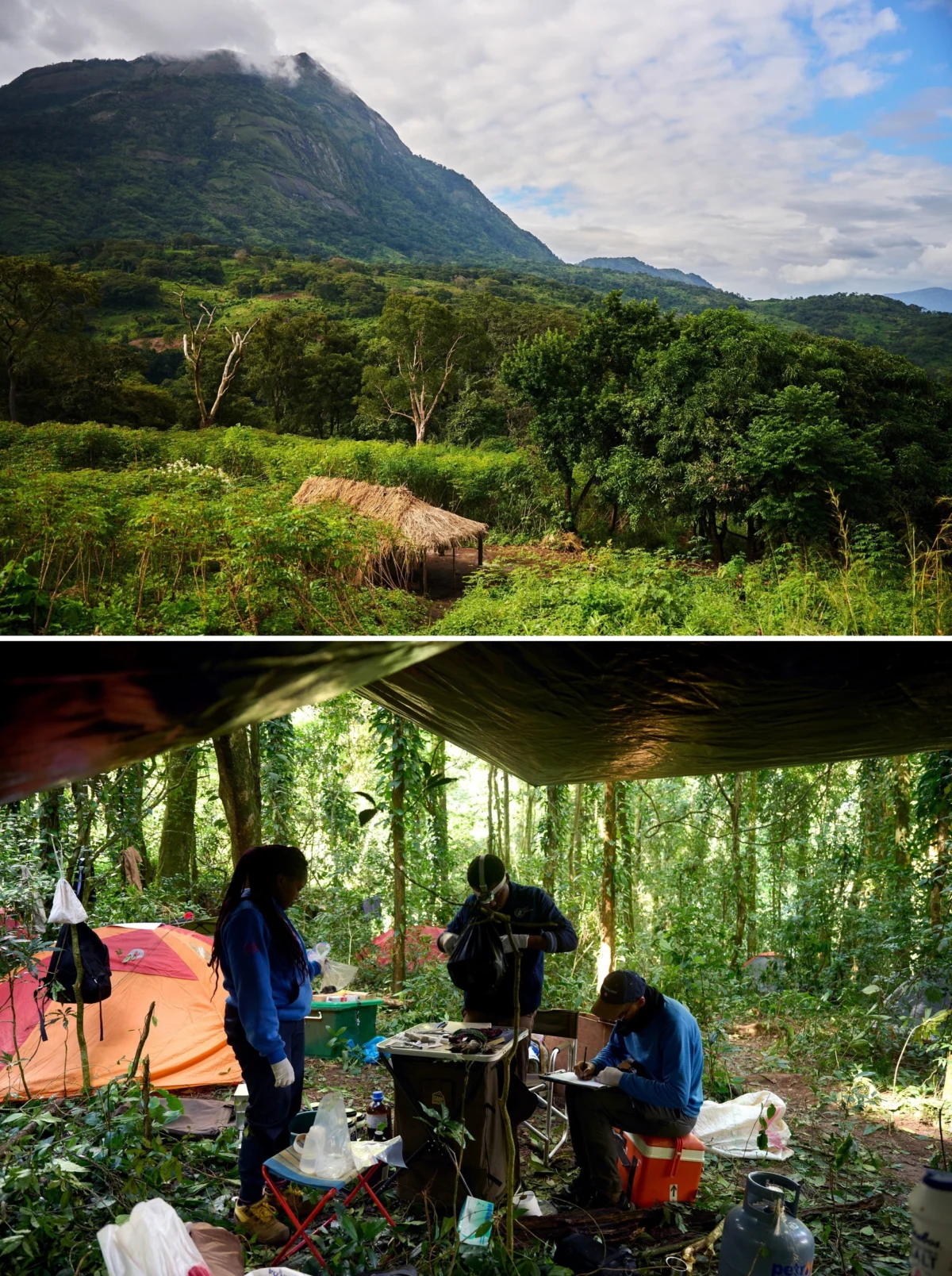
Mozambique’s Ministry of Agriculture, Environment and Fisheries has officially granted legal protection to Mount Mabu, creating the 9,341-hectare (23,082-acre) Mount Mabu Community Conservation Area in the Lugela district of northern Mozambique. Formally established through a ministerial decree published on August 24, this designation marks a monumental victory for global conservation efforts and local indigenous stewardship. Crucially, the management and stewardship of the land have been formally entrusted to the local communities who have served as custodians of the forest for generations.
Home to the largest continuous block of medium-altitude rainforest left in southern Africa, Mount Mabu is a globally recognized biodiversity hotspot. Its steep ridges, deep valleys, and unique topography have fostered a diverse array of microclimates, allowing species to evolve in isolation over millions of years. The resulting ecosystem boasts extraordinarily high levels of endemism—hosting countless species of flora and fauna found nowhere else on Earth.

A Two-Decade Quest for Conservation
The formal protection of Mount Mabu is the culmination of more than twenty years of scientific discovery, persistent advocacy, and collaborative conservation planning. Ecologist Julian Bayliss, who led numerous scientific surveys to the region, expressed immense relief at the government’s decision. For decades, researchers have worked to document the ecological significance of the forest, building an irrefutable case for its legal preservation.
The turning point for international recognition came in 2013, when famed naturalist and broadcaster David Attenborough visited Mount Mabu. During his expedition, Attenborough documented a rare seasonal phenomenon: every year in October and November, hundreds of butterflies gather in the morning sunlight on the 1,700-meter (5,577-foot) summit to mate—a behavior known to scientists as "hilltopping." Attenborough’s coverage brought international acclaim to the region, cementing its nickname as the "butterfly forest."
However, the scientific marvels of Mount Mabu extend far beyond its lepidopteran populations. Since scientific expeditions intensified around 2005, researchers have cataloged more than 30 species entirely new to science, spanning frogs, chameleons, bats, and various insects. Among the most notable discoveries are the Mount Mabu forest viper (Atheris mabuensis), which Bayliss famously encountered in 2009 after accidentally stepping on it beneath a blanket of leaf litter, and a striking, cobalt-blue butterfly known as Iolaus mabuensis, first discovered in 2008 and described in a recent study by Szabolcs Sáfián and colleagues. To date, only a single specimen of this vibrant butterfly has been collected.

Chronology of Discovery and Protection
- 2005–2008: Initial biological expeditions led by Julian Bayliss and international researchers uncover extraordinary levels of biodiversity, identifying Mount Mabu as southern Africa’s largest medium-altitude rainforest.
- 2008: Researchers discover the rare cobalt-blue butterfly (Iolaus mabuensis), later formally described in scientific literature.
- 2009: The Mount Mabu forest viper (Atheris mabuensis) is formally described following its initial discovery under forest leaf litter.
- 2013: Naturalist David Attenborough documents the unique hilltopping behavior of Mount Mabu’s butterflies, broadcasting the "butterfly forest" to a global audience.
- 2024: A comprehensive conservation area proposal is finalized and reviewed, highlighting local reverence for the forest and the imminent threats of agricultural encroachment.
- August 24, 2026: The Ministry of Agriculture, Environment and Fisheries publishes the official decree establishing the 9,341-hectare Mount Mabu Community Conservation Area.
Empowering Indigenous Custodians
A central pillar of the newly established conservation area is its governance model. Rather than imposing top-down restrictions from the national capital, the decree empowers local communities by granting them direct stewardship over the landscape. Conservation groups, including ReGeCom—an organization working closely with Mabu residents—played a vital role in bridging the gap between local traditions and state-level legal frameworks.
José Monteiro, executive director of ReGeCom, emphasized that the designation is, above all, an official acknowledgment of the communities’ historical dedication. For generations, local inhabitants have treated the forest as sacred, protecting its boundaries against outside pressures.
Under the terms of the decree, the land is officially dedicated to the protection, conservation, and sustainable use of natural resources. While the overarching legal framework is now in place, specific regulations, permitted activities, and zoning restrictions will be finalized in an upcoming community management plan. This roadmap aims to balance traditional resource use with the stringent ecological needs of the fragile rainforest ecosystem.

Pressures and Environmental Implications
Despite its remote geography and revered status among locals, Mount Mabu faces mounting external pressures. In recent years, the primary threats to the forest have stemmed from the steady encroachment of small-scale agriculture and unmanaged logging. As surrounding populations grow and arable land becomes scarcer, forested lower slopes face increasing conversion risks.
Environmental analysts view the creation of the Community Conservation Area as a crucial buffer against these threats. By endowing local populations with legal land rights and state-backed recognition, the decree creates a powerful deterrent against illegal commercial logging and uncontrolled land clearing. Furthermore, securing legal protection for the largest medium-altitude forest block in southern Africa safeguards critical watershed functions and preserves a vital carbon sink in a region highly vulnerable to climate shifts.
As scientists continue their field studies—with estimates suggesting that the butterfly count alone could rise from 200 to 250 species with further surveys—the formal safeguarding of Mount Mabu ensures that its evolutionary treasures will endure for future generations. The partnership between modern ecological science and indigenous guardianship sets a progressive precedent for conservation across Mozambique and the broader southern African region.










Leave a Reply