
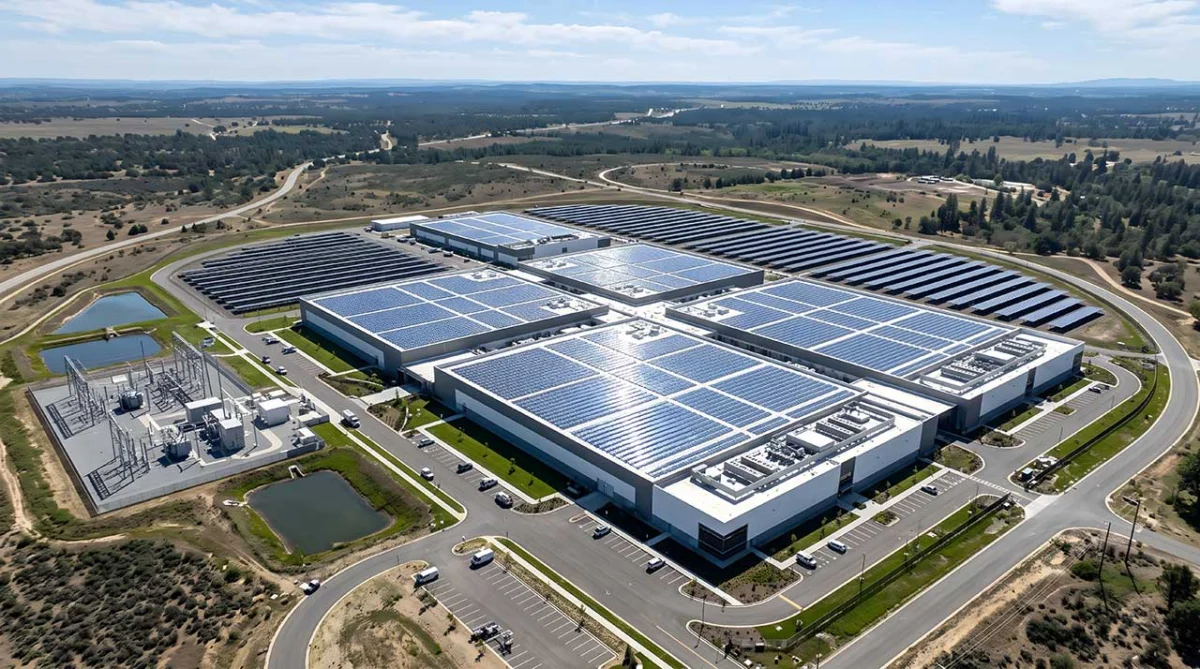
Ask an AI chatbot a simple question, and its answer consumes roughly the electricity of a microwave running for a single second. This low barrier to entry has masked the staggering energy requirements of the next generation of artificial intelligence: the autonomous agent. When an AI is tasked with planning complex workflows, searching the web, and iterating through trial-and-error cycles, the power consumption skyrockets. A single, multi-step agentic job can deplete the battery of a high-performance laptop in six hours. While the technology underlying both the simple chatbot and the complex agent is the same, the environmental and financial bill they generate is vastly different. This discrepancy has transformed the debate surrounding AI from a niche technical discussion into a pressing environmental and economic crisis, playing out in town halls, state legislatures, and utility commission hearings across the globe.
A Shifting Baseline: The Evolution of AI Measurement
The conversation regarding AI’s environmental footprint has been marked by a series of contentious studies. In February 2024, researchers from three universities published a landmark comparison in Scientific Reports, suggesting that AI could be significantly more efficient than human labor. The study calculated that generating a page of text with AI emitted 130 to 1,500 times less carbon dioxide than a human writer. However, the methodology sparked immediate backlash. By attributing a portion of the average American’s annual carbon footprint—including home heating, transportation, and lifestyle emissions—to the time a person spends writing, the researchers created a false equivalency.
Critics were quick to point out that human carbon emissions are relatively constant; a writer does not cease to emit carbon simply because they delegate a task to an AI. When the focus shifted from total lifecycle emissions to the marginal electricity cost of a laptop, the perceived efficiency advantage of AI evaporated.
By November 2025, the same journal published a correction of sorts: a study by Nolan Woo that pivoted from volume of output to quality of result. Woo tested AI models on high-school-level programming contests, where success is binary. He found that the environmental cost was not determined by the model’s complexity, but by the number of attempts required to reach a correct solution. In many instances, the models required dozens of iterations, turning a simple task into a resource-intensive failure. While the Stanford AI Index Report (2026) suggests that coding accuracy has surged to over 95%, the "hidden" energy cost of the trial-and-error loop remains a significant factor in the total carbon footprint of generative AI.
The Rise of Agentic AI and the Hidden Energy Tax
The fundamental math of AI energy consumption changed in 2026 with the shift from static queries to autonomous agents. Today’s AI tools do not merely answer; they reason, loop, and cross-reference information over long durations. Research from KAIST, South Korea’s leading engineering university, quantified this "hidden energy" cost. Their findings revealed that a single-agent task consumed 348 watt-hours—136 times more energy than a simple prompt.
A significant portion of this energy is lost to inefficiency. During these multi-step processes, high-end GPUs—the specialized hardware that powers AI—often sit idle while waiting for web searches or external programs to return data. These chips draw substantial power even when not actively processing, creating a "base load" of waste that currently prevents AI from achieving true environmental sustainability. While the International Energy Agency (IEA) reported in April 2026 that AI task-efficiency is improving at an unprecedented rate, the sheer growth in AI adoption threatens to outpace these technical gains.
The Break-Even Point: A Regional Energy Problem
The environmental impact of AI is not universal; it is highly dependent on the energy mix of the local power grid. When comparing the carbon footprint of a 20-hour human research project—which accounts for the amortized energy of a workstation and monitor—to AI-driven research, a "break-even" point emerges. If a data center is powered by renewable energy, an AI agent must perform roughly 46 tasks to reach the same carbon footprint as the human worker. In regions powered by standard U.S. electricity, that number drops to 15. In the coal-heavy or fossil-fuel-dependent regions where many large-scale data centers are strategically built to lower operating costs, the break-even point is just 11 tasks. Because most professional AI workflows involve dozens or hundreds of requests, the "cleaner" alternative is frequently the more carbon-intensive one.
The Water Crisis Beneath the Wires
While carbon emissions capture headlines, water usage represents an equally critical, yet often overlooked, challenge. Lawrence Berkeley National Laboratory estimates that U.S. data centers consumed 17.4 billion gallons of water in 2023 for cooling. However, this figure is dwarfed by the water required to generate the electricity powering those facilities.
Power plants remain the largest consumers of freshwater in the United States. Every kilowatt-hour consumed by a data center incurs a "water debt" from the power grid. While companies like Google report their direct cooling usage, the indirect water footprint—often 12 times higher than the direct cooling usage—remains opaque. In drought-prone regions such as the American Southwest, the pressure on local water tables has led to severe community pushback, as residents find themselves competing with data center infrastructure for essential resources.
Economic Ripples: The Cost of Capacity
The economic tension surrounding data centers has reached the household level. In the PJM Interconnection, the grid operator for 65 million people across 13 states, capacity auction prices surged from $29 per unit in 2024 to $329 in 2026. Data centers were identified as the primary driver behind this 1,000% increase, which has been passed directly to consumers through higher monthly utility bills.
Industry proponents, including organizations like the Virginia-based JLARC, argue that data centers stimulate the economy, creating thousands of construction and administrative jobs. They contend that large-scale energy contracts can, under the right regulatory framework, stabilize grid costs by spreading fixed infrastructure expenses across a larger user base. However, this requires legislative intervention. States like Virginia and Ohio are currently pioneering new rate categories to insulate residential consumers from the volatile energy demands of the AI industry.
The Grassroots Resistance: A New Era of Localism
The conflict has sparked a wave of local activism, with 833 opposition groups tracking data center projects across 49 states as of early 2026. The resistance is notable for its political diversity, uniting fiscal conservatives concerned about utility rate hikes and environmentalists focused on water and carbon impacts.
The case of Tucson, Arizona, serves as a blueprint for community intervention. When residents discovered a confidential plan for a massive Amazon-backed campus, public outcry forced the city council to unanimously reject the project. While the developer eventually bypassed the city’s jurisdiction by moving the site outside municipal limits, the event demonstrated the limits of corporate transparency. In contrast, the settlement in Saline Township, Michigan—where a $16 billion project proceeded after a legal battle with a small township—highlights the profound difficulty small municipalities face when opposing well-funded technology giants.
Future Implications and Informed Decision-Making
The trajectory of AI’s environmental impact is not solely dictated by technical efficiency. It is shaped by public policy, land-use zoning, and utility rate structures. As states like New York implement temporary freezes on data center construction, the debate has moved from the laboratory to the statehouse.
For the individual user, the choice is clear: simple, single-turn tasks are relatively efficient, but the widespread adoption of autonomous agents carries an environmental cost that is currently being subsidized by local communities and the public grid. As Jevons’ Paradox suggests, increasing the efficiency of a resource often leads to higher, not lower, total consumption. Unless the growth of AI infrastructure is coupled with rigorous environmental oversight and equitable cost-sharing, the "hidden" price of artificial intelligence will continue to be paid by the communities that host its physical footprint.










Leave a Reply