
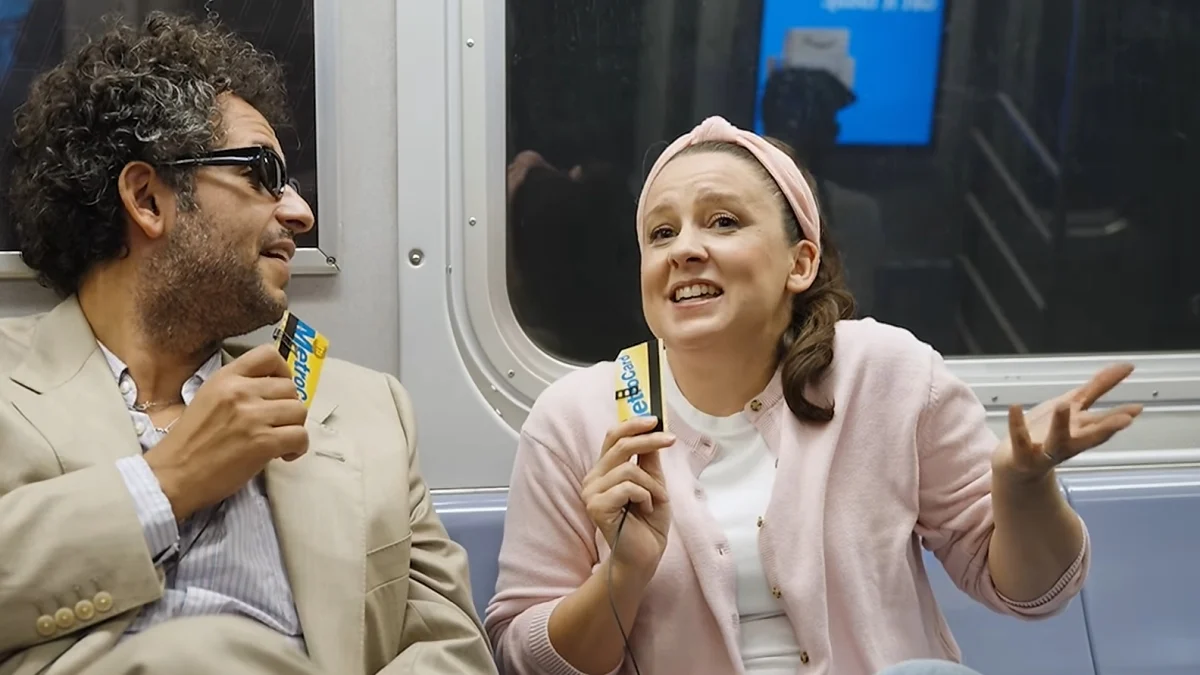
SubwayTakes with Kareem Rahma, the popular internet-based talk show known for candid, unfiltered conversations held amidst the rhythmic clatter of New York City transit, recently hosted one of the most influential figures in modern early childhood education: Rachel Griffin Accurso, widely known as Ms. Rachel. The episode serves as a rare, long-form look at the woman behind the screen, bridging the gap between her role as a gentle digital mentor for toddlers and her vocal stance as an activist addressing systemic global issues.
The interview, which has already garnered significant attention across social media platforms, positions Accurso as a contemporary counterpart to Fred Rogers. While her digital presence is defined by songs, speech therapy techniques, and inclusive play, the SubwayTakes appearance highlights the intellectual and ethical framework that informs her pedagogical approach. For many viewers, the juxtaposition of a lighthearted puppet-filled career and rigorous political advocacy provides a comprehensive portrait of how modern content creators are navigating their roles as public influencers.
The Evolution of Children’s Media: Retiring Outdated Narratives
A central theme of the discussion involved the cultural responsibility of children’s media producers. Accurso argued that the legacy of nursery rhymes and traditional songs is not immutable. She contended that content creators have a moral obligation to evaluate the origins and underlying messages of the material they present to the next generation.
Accurso specifically pointed to the necessity of retiring songs with documented racist histories, such as Eeny, Meeny, Miny, Moe and various songs from the minstrel era. Her approach is not rooted in a desire for censorship, but rather in a proactive vision for cultural literacy. She suggests that the wealth of human creativity allows for the constant development of new, inclusive narratives that better reflect modern values.
Regarding traditional tales like The Three Little Kittens, she proposes a shift from punitive discipline toward problem-solving. By reframing scenarios where children—or in this case, kittens—are shamed for mistakes into opportunities for cooperation and retracing steps, she emphasizes the developmental benefit of fostering a growth mindset over a fear-based disciplinary model.
Mr. Rogers as a Political Archetype
Accurso’s defense of her own political engagement is grounded in the historical precedent set by Fred Rogers. Often remembered primarily for his gentle demeanor, Rogers was, as Accurso noted, a deeply political figure who utilized his platform to advocate for civil rights and public funding.
The historical record supports Accurso’s analysis. In 1969, Rogers famously invited Officer Clemmons, played by actor François Clemmons, to join him in cooling his feet in a wading pool. This act of televised integration occurred during a period of intense racial unrest and public debate over desegregated spaces. Furthermore, Rogers’ 1969 testimony before the U.S. Senate Subcommittee on Communications is frequently cited as a masterclass in moral advocacy. By speaking directly to Chairman John Pastore about the importance of PBS funding, Rogers successfully secured $20 million in federal support, effectively saving public television.
Accurso’s reflection on this history serves to refute the common criticism that educators should remain detached from social issues. By aligning her platform with the legacy of Rogers, she argues that the act of educating a child is inherently tied to the state of the world they will inherit.
Global Advocacy and the Ethics of Care
The most intensive portion of the interview addressed the humanitarian crises currently impacting children globally, specifically within the contexts of U.S. immigration detention and the ongoing conflict in Gaza. Accurso utilized reports from the American Academy of Pediatrics and the United Nations to underscore her points regarding medical neglect and the psychological toll of institutionalization on children.
The discussion surrounding Gaza focused on the devastating impact of the conflict on pediatric health, citing the high numbers of casualties and the severe lack of medical infrastructure. Accurso highlighted the logistical barriers preventing children with chronic or life-threatening conditions—such as celiac disease or cystic fibrosis—from accessing the care necessary for survival.
From an analytical perspective, Accurso’s advocacy represents a shift in the role of the "influencer." Unlike traditional celebrities who may avoid controversial geopolitical topics to preserve their marketability, Accurso has consistently leveraged her reach to raise funds for humanitarian organizations like the Palestine Children’s Relief Fund (PCRF). Her discourse emphasizes the concept of universal responsibility, drawing on the James Baldwin sentiment that children are a collective responsibility, regardless of their nationality or geographic location.
Intelligence and Biodiversity: A Defense of Pigeons
In a pivot that highlights the eclectic nature of the SubwayTakes format, the conversation transitioned to the biological complexity of urban wildlife. Accurso’s advocacy for pigeons is rooted in ethological evidence: these birds demonstrate complex cognitive abilities, including the capacity for numerical counting and high-level social bonding. By highlighting their role in the urban ecosystem and their complex parental behaviors, she invites her audience to practice empathy toward the natural world, even within the confines of a dense metropolis.
The Role of Puppetry in Modern Urban Life
The episode concluded with a proposal for a puppet-operated café in New York City. While presented as a whimsical idea, it underscores Accurso’s belief in the utility of puppets as pedagogical and social tools. She argues that puppets provide a layer of abstraction that makes difficult or mundane social interactions more approachable.
The use of puppets in this hypothetical setting serves as a microcosm for her broader philosophy: using creative, non-threatening mediums to facilitate communication. Whether addressing a child learning to speak or an adult navigating the frustrations of city service, the puppet acts as a mediator that lowers barriers to engagement and fosters a sense of play.
Broader Implications and Public Response
The reception of this episode signals a growing trend among digital audiences who increasingly demand that their favorite creators exhibit moral consistency. As Accurso continues to grow her brand, the transition from purely educational content to public intellectualism appears to be a deliberate strategy.
Critics and supporters alike acknowledge the influence of her "Ms. Rachel" persona, which has become a staple in millions of households globally. Her willingness to discuss complex geopolitical issues, such as the UN’s reports on the targeting of children, places her in a unique position. She is not merely providing entertainment; she is modeling a form of civic engagement that values the sanctity of childhood across all borders.
The implications of this interview are twofold. First, it cements the intellectual legitimacy of Accurso’s work, moving the conversation beyond her viral songs and into the realm of social and educational theory. Second, it serves as a case study for future digital creators on how to maintain a dedicated, family-oriented brand while simultaneously asserting a rigorous, independent moral voice.
As the episode concludes, the takeaway remains clear: for Ms. Rachel, the "neighborhood" of childhood is not a sequestered space protected from the realities of the world, but rather the foundation upon which a more compassionate and informed future must be built. Her appearance on SubwayTakes has, in effect, provided a blueprint for how to hold that space, even in the middle of a busy, often indifferent, urban landscape.








Leave a Reply