
A Cinematic Exploration of Brutalist Desolation
At its core, the film functions as a scathing critique of hostile urban architecture, specifically focusing on the Piedrabuena neighborhood of Buenos Aires. The setting is characterized by its imposing, brutalist housing projects—octagonal clusters of flats centered around a domineering water tower. This environment serves as a physical manifestation of the social isolation experienced by its residents. By documenting the decay of these structures, the film posits that the physical design of living spaces directly influences the psychological and spiritual health of their inhabitants.
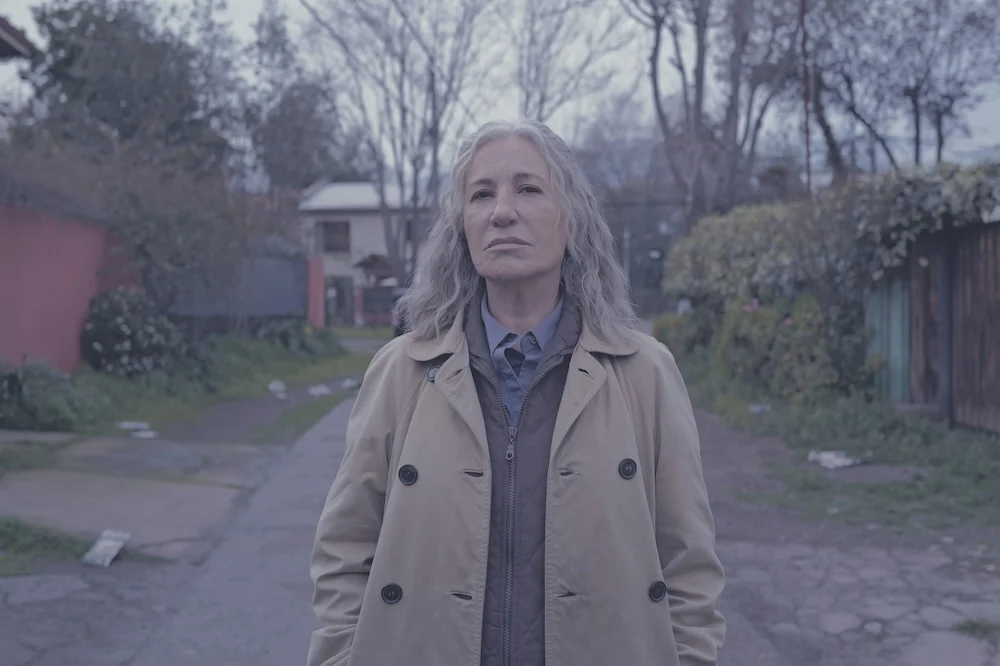
The film’s visual language, crafted in collaboration with cinematographer Sergio Armstrong, utilizes a muted, low-contrast color palette. This aesthetic choice renders both the living and the dead in a consistent, washed-out shade of pinkish-gray, effectively blurring the lines between mortality and the afterlife. The imagery serves as a metaphor for the stagnation of life within these concrete confines, where the distinction between those who breathe and those who have ceased to exist becomes increasingly thin.
The Protagonist: Ema and the Burden of the Seen
The narrative follows Ema, portrayed by Mercedes Morán, a retired doctor whose professional history is marred by controversy. Ema is depicted as a woman burdened by her unique ability to perceive the restless dead, a condition that alienates her from a society that prefers to ignore the systemic violence and neglect inherent in the neighborhood.
Ema’s character arc is rooted in a sense of "resilient resignation." Having returned to Piedrabuena to care for her dying mother, she witnesses the transition between life and death firsthand. The film’s portrayal of death is not one of quiet dignity; rather, it is visceral and chaotic. Spirits often appear to be trapped in a loop of their final, traumatic moments, unable to reconcile their passing. Ema, exhausted by her role as an involuntary witness to these cycles, attempts to maintain a boundary between herself and the ghosts, an effort that is complicated by the arrival of her estranged family.
Familial Dynamics and Supernatural Commingling
The arrival of Ema’s sister, Lidia, and her family from Seattle introduces a critical sub-plot involving Lidia’s teenage daughter, Julia. It is revealed that Julia shares Ema’s ability to communicate with the dead, though her interaction with the spectral realm is markedly different. While Ema remains a passive observer, Julia engages with spirits in a way that challenges conventional taboos.
This aspect of the film serves as a commentary on the alienation of youth and the failure of traditional institutions to address mental health or social deviance. The parents’ plan to institutionalize Julia highlights the film’s critique of how modern society handles those who do not conform to normative experiences. By depicting these "movements" with the spirits, the narrative forces the audience to confront the intersection of the non-corporeal with the physical, touching upon themes of decomposition and the fragility of the human form.
Chronology of Production and Contextual Evolution
The transition of My Sad Dead from a serialized television format to a singular, long-form film is a significant development in contemporary distribution models. Originally commissioned as a multi-part series, the decision to recut the project into a three-hour feature film reflects a growing trend in prestige filmmaking where the medium of exhibition—be it streaming or theatrical—is increasingly fluid.
- Development Phase: Initial concept development by Pablo Larraín and Mariana Enriquez focusing on the sociological impact of the Piedrabuena housing projects.
- Production: Filming took place in Buenos Aires, utilizing the actual brutalist structures to maintain authenticity.
- Post-Production: The project underwent a significant re-edit from its miniseries format to a 186-minute theatrical cut to suit international festival requirements.
- Premiere: The film made its competitive debut at the San Sebastián International Film Festival, where it was noted for its departure from traditional narrative pacing.
Sociopolitical Implications of the Piedrabuena Setting
The Piedrabuena neighborhood, as depicted in the film, serves as a microcosm for broader issues facing urban Argentina. The script incorporates sub-narratives regarding socioeconomic instability, including the rise of vigilantism, the marginalization of immigrant populations, and the consequences of inadequate healthcare access. The "water crisis" central to the film’s second half acts as a catalyst, forcing the entire community to confront the spirits of the deceased—and by extension, the history of violence—that they had previously chosen to ignore.
The film does not attempt to solve these issues through a procedural lens. Instead, it utilizes the presence of the dead to highlight the persistence of trauma in urban centers. As one character notes, "Rage weighs more than concrete," suggesting that the emotional weight of a community’s history is more enduring than the infrastructure built to contain it.
Critical Reception and Comparative Analysis
Critics have drawn parallels between My Sad Dead and Krzysztof Kieślowski’s Dekalog, particularly in its ability to extract profound, universal human truths from the constraints of a single, localized housing complex. Both works emphasize the importance of texture, subtext, and the cumulative impact of observational storytelling.
The film’s refusal to shy away from the grotesque—depicting the realities of decay alongside moments of mordant humor—has been lauded as a bold artistic choice. By framing the sadness associated with death as an "upside-down affirmation" of life, Larraín provides an existential resolution to a narrative that could have easily descended into nihilism.
Broader Impact on Global Cinema
The success of My Sad Dead in bridging the gap between high-concept supernatural horror and sociopolitical drama suggests a shift in how international audiences engage with regional narratives. By focusing on the specificities of the Argentine experience, the film achieves a resonance that transcends borders. It stands as a testament to the idea that cinematic storytelling is not defined by the screen size or the format, but by the depth of the narrative and the clarity of the directorial vision.
As the industry continues to navigate the post-streaming boom landscape, My Sad Dead serves as a primary example of how intellectual property can be repurposed to suit both serialized and feature-length appetites. The film ultimately challenges viewers to consider the invisible histories buried beneath the concrete of their own environments, suggesting that the ghosts of the past are never truly absent, but merely waiting for the right moment to be heard.








Leave a Reply