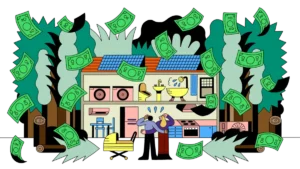
As the European Union Deforestation Regulation (EUDR) finally approaches its mandatory enforcement date following a series of high-profile delays and intense political maneuvering, international commodity markets are undergoing a seismic shift. Mongabay’s Solutions Desk has launched a comprehensive special reporting series examining how major global industries are scrambling to comply with the stringent new mandates, as well as where critical operational shortfalls threaten to disrupt trade. From massive soy trading desks in the agricultural heartland of Brazil to smallholder cocoa farms in West Africa and sprawling palm oil plantations across Southeast Asia, this investigation explores the immense logistical hurdles businesses face as they race to adapt to unprecedented traceability requirements.
The stakes for global trade are exceptionally high. The EUDR represents one of the most ambitious unilateral environmental trade policies ever enacted, designed to curb global forest degradation driven by European consumption. However, the journey from legislative conception to ground-level enforcement has been fraught with tension, reflecting the profound economic friction inherent in green protectionism.
Main Facts and Regulatory Scope
The European Union Deforestation Regulation is designed to ensure that a select group of globally traded commodities—specifically cattle, cocoa, coffee, oil palm, rubber, soy, and wood—do not originate from deforested or degraded land anywhere in the world after the cutoff date of December 31, 2020. Furthermore, these goods must have been produced in accordance with the relevant legislation of the country of production, including land-use rights, environmental protection, third-party rights, and labor standards.
Under the framework of the EUDR, importing companies operating within the European Union must exercise rigorous due diligence. This requires them to trace their supply chains right back to the exact plot of land where the raw material was harvested. Companies must provide verifiable geolocation coordinates of the production plots, alongside time stamps and conclusive proof of legality.
Failure to comply with these requirements carries severe penalties. Member state authorities are empowered to levy fines amounting to at least 4% of an EU-wide annual turnover for non-compliant companies, alongside the immediate confiscation of the non-compliant products or the revenues derived from them. Furthermore, companies face potential temporary exclusions from public procurement processes and broader public funding markets.
Chronology of the EUDR: From Conception to Enforcement
The path toward the implementation of the EUDR has been marked by mounting anxiety among trade partners, prolonged legislative debates, and crucial timeline adjustments driven by readiness concerns.
In July 2021, the European Commission published its initial communication on stepping up EU action against global deforestation and forest degradation. This laid the groundwork for a binding legislative instrument rather than voluntary corporate social responsibility frameworks.
By November 2021, the Commission formally adopted its legislative proposal for the regulation on deforestation-free products. The proposal triggered years of intense lobbying by agricultural conglomerates, producer governments, and international trade associations warning of severe market disruptions.
In December 2022, the European Parliament and the Council reached a provisional political agreement on the final text of the regulation, significantly expanding the scope of ecosystems protected and strengthening human rights provisions regarding indigenous land rights.
In June 2023, the EUDR officially entered into force, setting a tight implementation clock. Large companies were originally given an 18-month transition period to adapt their supply chains, setting a target compliance date of December 30, 2024, while small and medium-sized enterprises (SMEs) were granted until June 30, 2025.
However, as the initial deadline drew closer, pressure from major trading partners—including the United States, Brazil, Indonesia, and several African nations—intensified exponentially. Critics argued that the European Commission had failed to provide adequate technical clarity regarding its information system and country benchmarking classifications.
Responding to mounting international pressure and technical readiness warnings from member states and industry coalitions alike, the European Commission proposed a 12-month extension in October 2024. Following European Parliament and Council approval, the enforcement timeline was officially pushed back, granting large operators until December 30, 2025, and small enterprises until June 30, 2026, to fully comply with the due diligence declaration system.
Supporting Data: The Scale of the Challenge
The logistical mountain that supply chain actors must climb is underscored by trade and agricultural data. The European Union remains one of the world’s largest importers of deforestation-linked commodities. According to European Commission impact assessments, the consumption and production of the six targeted commodities in the EU accounted for approximately 16% of total global deforestation associated with international trade between 2005 and 2017.
In Brazil, which accounts for a substantial share of global soy and beef exports, agricultural producers face the monumental task of mapping millions of hectares of arable land. While Brazil’s domestic Rural Environmental Registry (CAR) provides a baseline of spatial data, reconciling national databases with the precise, high-accuracy geolocation requirements demanded by the EU information system has proven technically complex.
In West Africa, where Côte d’Ivoire and Ghana produce roughly 60% of the world’s cocoa, the challenge is fundamentally socio-economic. The sector is dominated by millions of smallholder farmers, many of whom lack smartphones, internet access, or formal land titles. Mapping hundreds of thousands of fragmented, small-scale farming plots without clear cadastral surveys requires an immense mobilization of mapping personnel, GPS devices, and grassroots extension services.
In Southeast Asia, particularly Indonesia and Malaysia, palm oil producers have spent years navigating previous certification schemes such as the Roundtable on Sustainable Palm Oil (RSPO) and national standards like ISPO and MSPO. Yet, industry analysts point out that while these frameworks provide a foundation, none automatically guarantee full regulatory alignment with the EUDR’s rigid data-sharing demands and zero-deforestation cut-off strictures.
Official Responses and Regional Reactions
The rollout of the EUDR has elicited sharply polarized reactions across the international community, highlighting deep geopolitical and economic divisions over sustainable trade policy.
European policymakers and environmental NGOs have consistently defended the regulation as a historic, necessary milestone in halting global climate breakdown and protecting biodiversity hotspots. Proponents argue that the regulation creates a level playing field for progressive businesses that have already invested heavily in transparent, sustainable supply chains, preventing them from being undercut by cheaper, forest-risk competitors.
Conversely, producer nations have voiced strong objections, frequently characterizing the regulation as a form of green protectionism that unfairly penalizes developing economies. During various trade summits, representatives from the governments of Indonesia and Malaysia—operating through the Council of Palm Oil Producing Countries (CPOPC)—have argued that the EUDR imposes disproportionate administrative burdens, threatens the livelihoods of millions of smallholders, and infringes upon national sovereignty by attempting to dictate domestic land-use policies.
Latin American agricultural exporters have similarly cautioned that the rigidity of the geolocation demands could result in risk-averse European importers simply bypassing smaller suppliers altogether, opting instead for large, vertically integrated corporate mega-farms capable of easily absorbing the compliance costs. This unintended consolidation of supply chains could severely marginalize small-scale producers across the Global South.
Broader Impact and Supply Chain Implications
As the enforcement window narrows, the long-term implications of the EUDR are already reshaping global commerce far beyond the borders of the European Union.
First, the regulation is accelerating a massive technological modernization of agricultural supply chains. Agribusinesses, commodity traders, and tech startups are heavily investing in blockchain, satellite monitoring, artificial intelligence, and mobile data-collection tools. Companies can no longer rely on opaque intermediary networks; instead, they must build direct, verifiable digital threads connecting end-use consumer products back to specific plots of harvested land.
Second, the regulation is triggering a profound market bifurcation, often referred to in trade circles as market decoupling. Commodities are increasingly splitting into two distinct streams: higher-priced, fully traceable, EUDR-compliant products destined for Europe and premium markets; and non-compliant or unverified commodities redirected toward less regulated domestic markets or fast-growing economies in Asia and the Middle East. This bifurcation risks creating a two-tier global trade architecture where environmental standards are applied selectively based on destination geography rather than universal sustainability principles.
Third, the social dimensions of compliance are drawing intense scrutiny. Human rights organizations emphasize that the EUDR requirement to respect local legislation—including customary land tenure rights of Indigenous peoples and local communities—could empower marginalized populations if enforced stringently. However, experts warn that without robust independent monitoring, there is a risk that powerful landholders could engage in preemptive land clearing or the eviction of informal tenants to sanitize their properties before formal mapping is finalized.
Conclusion
The European Union Deforestation Regulation stands as a definitive turning point in global environmental governance, forcing multinational corporations, national governments, and vulnerable smallholders alike to confront the hidden ecological costs of modern consumption. While the extended timeline has provided a crucial breathing space for operational adaptation, the fundamental challenges of data integration, smallholder inclusion, and geopolitical friction remain largely unresolved. As Mongabay’s Solutions Desk continues its in-depth exploration into the implementation phase, the coming months will reveal whether the EUDR succeeds in transforming global supply chains into models of genuine sustainability, or whether it falters under the weight of its own administrative complexity.