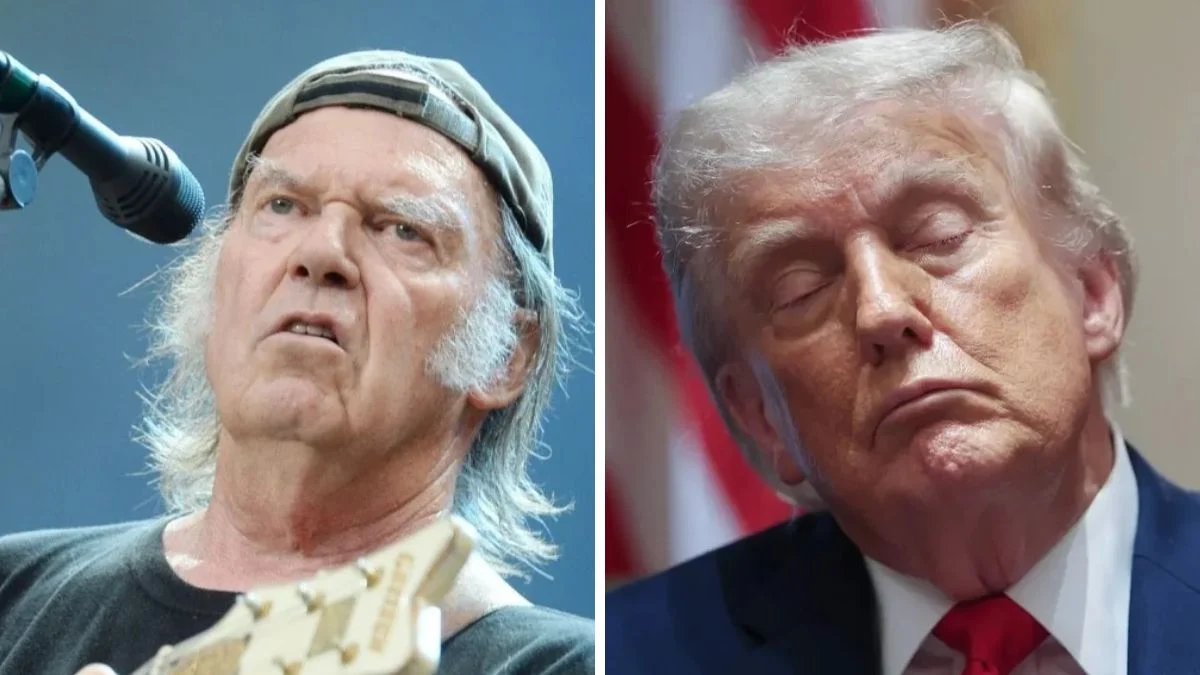
The long-standing legal battle between rock icon Neil Young and the political apparatus of Donald Trump has escalated once again, marking a significant new chapter in the ongoing debate over intellectual property rights, licensing, and the intersection of popular music with political campaigning. On Monday, Young filed a formal copyright infringement lawsuit against the Trump 47 Committee in the U.S. District Court for the Eastern District of Virginia, seeking $10 million in damages. The litigation follows an October 12th midterm campaign rally in Youngstown, Ohio, where the campaign allegedly utilized Young’s 1989 anthem, Rockin’ in the Free World, without obtaining the necessary public performance license.
This latest filing represents a departure from previous informal warnings and out-of-court resolutions, signaling a shift toward aggressive litigation as a primary tool for artists attempting to curate the association of their creative works with specific political candidates.
A Chronology of Conflict: A Decade of Disagreement
The tension between Young and the Trump campaign is rooted in a history that predates the former president’s first term in office. The discord first surfaced in June 2015, during the nascent stages of Trump’s initial presidential bid. When the song was played at the announcement event at Trump Tower in New York, Young immediately issued a public rebuke. At the time, representatives for Trump stated that they had secured a blanket license from the American Society of Composers, Authors, and Publishers (ASCAP) to use the song. However, Young’s legal representatives countered that the use was unauthorized due to the specific political context, leading the campaign to voluntarily cease the use of the track shortly thereafter.
The cycle repeated during the 2020 election cycle, which culminated in a more formal legal confrontation. Young sued the 2020 reelection campaign for unauthorized use of both Rockin’ in the Free World and Devil’s Sidewalk. That particular dispute was resolved through a private agreement, wherein the campaign committed to obtaining explicit licensing before utilizing Young’s catalog at future events. The current lawsuit alleges that the Trump 47 Committee has breached this previous understanding, prompting Young to pursue statutory damages and a permanent injunction to prevent further unauthorized usage.
Legal Framework and Intellectual Property in Politics
The central challenge in this litigation lies in the nuances of performance rights organizations (PROs) and the licenses they grant to venues. Generally, venues like stadiums and arenas hold blanket licenses from PROs, which allow for the playing of music within those spaces. However, artists frequently argue that the use of their music in a political context implies an endorsement or a shared ideological framework, which they contend exceeds the scope of a standard public performance license.
Under federal copyright law, songwriters have the right to control how their work is used in commercial and political contexts. While PRO licenses are standard for incidental music, high-profile usage at a campaign rally—often paired with political messaging—can be categorized differently by the artist’s legal team. Young’s complaint argues that the association is not only unauthorized but also fundamentally antithetical to the song’s lyrical intent.
In the filing, the plaintiffs note: "In short, the song is the opposite of everything Donald J. Trump stands for." This legal argument highlights the disconnect between the anthemic, high-energy nature of the music and the critical, often cynical commentary regarding poverty, social decay, and systemic failure found in the song’s verses.
Economic and Reputational Implications
The demand for $10 million in damages serves as a significant deterrent, moving beyond the symbolic nature of previous protests. Legal analysts suggest that by quantifying the damages at this level, Young is attempting to force the campaign to treat his intellectual property with the same rigor as other commercial assets. If the court finds in favor of the plaintiff, it could set a precedent for other artists seeking to prevent their music from being weaponized in political advertising or rallies.
The impact on the Trump 47 Committee could be both financial and operational. Beyond the potential payout, the threat of an injunction could force the campaign to radically restructure its music programming for future rallies, potentially necessitating a much more curated and expensive approach to licensed content.
The Broader Cultural Context
The use of music at political rallies has become a recurring theme in modern American politics, with artists ranging from Bruce Springsteen and Aerosmith to The Rolling Stones and Adele expressing dissatisfaction with their music being used by political candidates. The issue is rarely about the legal mechanics of the venue license alone, but rather the "right of publicity" and the protection of the artist’s brand.
Young remains an active proponent of using his music to support political causes he aligns with, frequently performing the song in settings that contrast sharply with Trump’s events. Notably, he closed a September concert with Willie Nelson by chanting, "Take America Back!" and featured the song in a collaborative performance with Bruce Springsteen, Dave Grohl, and Tom Morello at the recent Power to the People Festival. These instances underscore Young’s position that the song is not inherently retired from political life, but rather that he reserves the right to determine the political causes to which his art is tethered.
Contrasting Approaches: The Minaj Factor
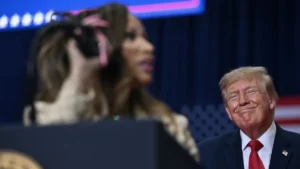
As Young pursues litigation, other figures in the music industry have adopted a different strategy. The same weekend the Youngstown rally occurred, rapper Nicki Minaj appeared alongside Donald Trump at a rally in Michigan. The event drew significant media attention, particularly regarding Trump’s public praise of the artist and the subsequent suggestion from his team that she could serve in a high-profile administrative capacity.
The stark contrast between Young’s legal battle and Minaj’s active collaboration highlights the polarization within the entertainment industry regarding political alignment. While Young seeks to establish clear boundaries between his catalog and conservative political movements, other artists have embraced the political platform as a means of personal expression or strategic engagement.
Next Steps in the Litigation
The case is currently in the initial phase of federal civil procedure. Once the Trump 47 Committee is formally served with the complaint, they will have 21 days to file a response, a motion to dismiss, or other legal filings. Given the history of the parties involved, legal observers expect a robust defense centered on the licensing agreements held by the venues where the rallies occur.
As the court processes the case, the broader legal community will be watching closely to see if this lawsuit provides a clearer framework for the intersection of copyright law and political free speech. For now, the case sits in the U.S. District Court for the Eastern District of Virginia, with no hearing date yet on the docket.
The outcome of this lawsuit will likely influence how future campaigns select and license music. Should Young succeed, political campaigns may find themselves forced to abandon the convenience of blanket venue licenses in favor of direct, artist-approved agreements, effectively ending the era of musicians being surprised by the presence of their tracks at political events. If the case fails, it may solidify the current status quo, where venue-level licensing provides a broad, if legally contentious, shield for campaigns to utilize the music of their choosing, regardless of the artist’s personal objections.
The dispute is more than just a matter of copyright; it is a battle over the control of cultural capital. In an age where the line between celebrity and politics is increasingly blurred, Neil Young’s refusal to allow his work to serve as a sonic backdrop for a political movement he opposes represents a significant stand for artist autonomy. Whether the legal system will uphold this autonomy in the face of established licensing practices remains the central question that this litigation aims to answer. As the 2026 political cycle intensifies, this case will undoubtedly serve as a bellwether for the future of intellectual property in the volatile arena of American political campaigning.