
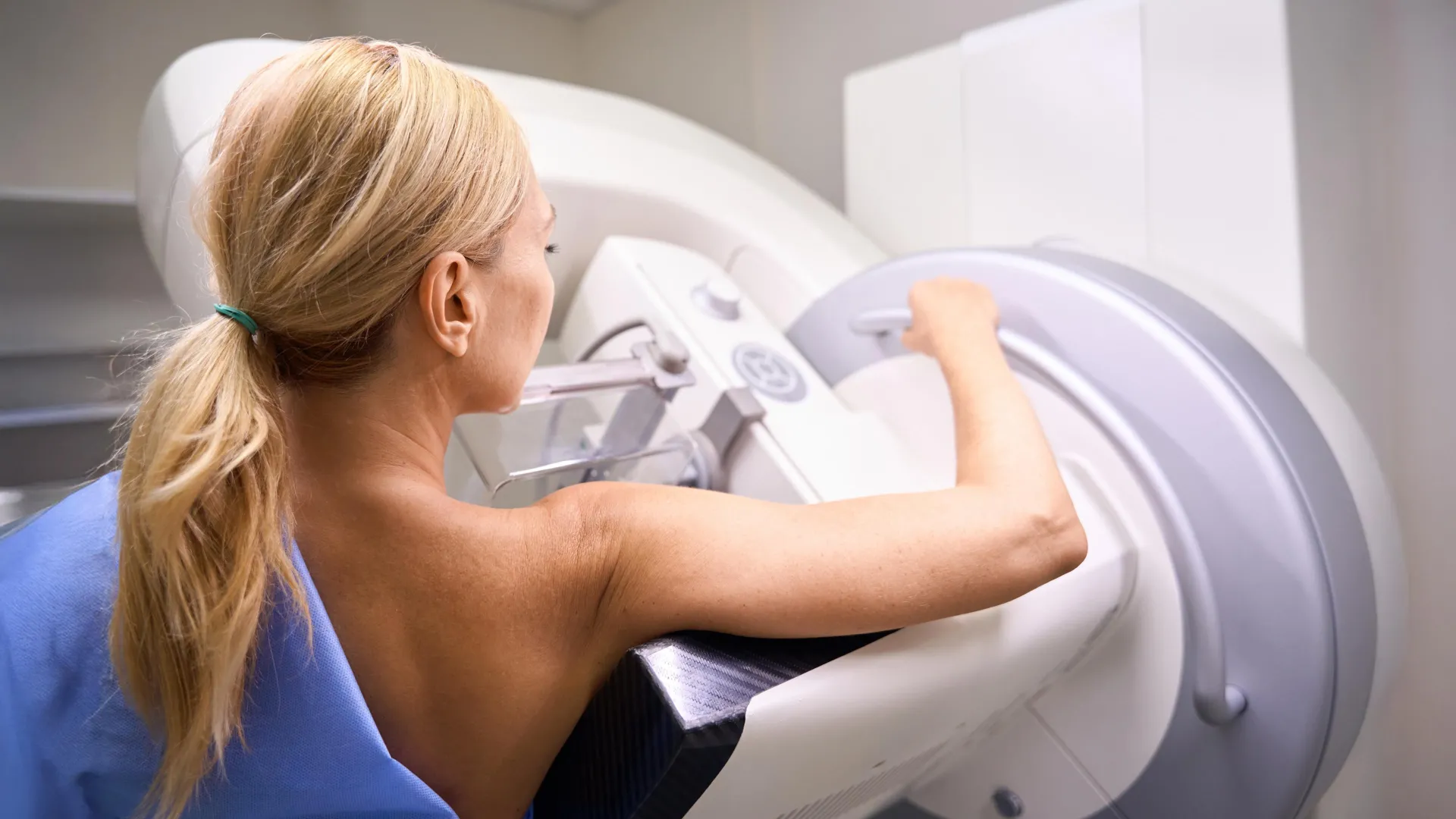
For decades, the public health community has grappled with a persistent dilemma: the trade-off between the life-saving potential of breast cancer screening and the clinical phenomenon known as overdiagnosis. Overdiagnosis occurs when mammography detects a tumor that would never have progressed to cause symptoms or health complications during a patient’s lifetime. Because this condition is fundamentally unobservable—as the patient would have remained asymptomatic—it has been a subject of intense statistical debate, with some historical studies suggesting that as many as 30% to 50% of screen-detected cancers fall into this category. However, a comprehensive new study involving researchers from the University of Southern Denmark, the University of Copenhagen, and Queen Mary University of London challenges these high-end estimates, suggesting that the true rate of overdiagnosis is likely below 5%.
The Statistical Challenge of Measuring the Unseen
To understand why estimates of overdiagnosis have varied so wildly, it is necessary to examine the evolution of mammography trials. Randomized controlled trials (RCTs) are the gold standard of medical research, yet in the context of cancer screening, they are susceptible to temporal distortion. When a screening program is introduced into a population, there is an immediate, artificial spike in incidence rates. This occurs because the program identifies tumors that were already present but had not yet reached a symptomatic stage.
Under normal circumstances, this "lead-time" shift should be followed by a compensatory decline in diagnosis rates later on, as the pool of undiagnosed cancers is depleted. If researchers conclude their study before this decline is fully realized, or if they fail to account for the fact that women in the control group often gain access to screening outside of the trial environment, the data can be misinterpreted. The resulting "excess" diagnoses are often erroneously categorized as overdiagnosis, inflating the perceived harm of screening programs.
A Reevaluation of Historical Trial Data
The research team, led by Professor Sisse Helle Njor of the University of Southern Denmark and Lillebælt Hospital, sought to reconcile these discrepancies by re-examining the complete body of randomized controlled trial data. The study included all eight major international mammography trials: the New York Health Insurance Plan (HIP) study, the Malmö mammographic screening trial, the Two-County trial in Sweden, the Edinburgh trial, the Canadian National Breast Screening Study, the Stockholm trial, the Gothenburg trial, and the UK Age trial.
By integrating data from these landmark studies with real-world, longitudinal evidence from Denmark—a country where regional implementation of screening allowed for precise temporal mapping—the researchers were able to control for variables that had previously skewed results. Denmark provided an ideal laboratory because the country phased in its organized screening program over 17 years. This "staggered" rollout allowed researchers to observe exactly how incidence rates behaved before, during, and long after the introduction of screening, providing a clearer baseline for identifying true overdiagnosis versus temporary statistical shifts.
The Impact of Temporal Context
The findings, published recently, suggest that the perceived risk of overdiagnosis has been significantly overstated due to a lack of "temporal maturity" in earlier research. According to Professor Elsebeth Lynge of the University of Copenhagen, the failure to account for how screening affects diagnosis timing is the primary culprit behind the high, misleading estimates.
"When screening is introduced, the number of breast cancer diagnoses initially rises because cancers are detected earlier than they would have been without screening," Professor Lynge noted. "Over time, this should be followed by a drop, as some of these cancers would otherwise have been diagnosed later. If researchers do not take these factors into account, the initial increase can be mistaken for overdiagnosis."
By applying this rigorous temporal analysis, the team found that the excess incidence observed in the trials aligned closely with the under-5% overdiagnosis rate seen in modern, well-monitored programs. This suggests that the clinical reality of screening is far more favorable than the 30% to 50% figures that have dominated medical literature and patient communication materials for years.
Clinical Implications and Patient Communication
The implications of this study are profound for both healthcare policy and individual patient decision-making. For years, women have been warned about the risks of "unnecessary treatment" arising from overdiagnosis. While the risk of overdiagnosis—which includes cases where a woman dies of an unrelated condition before a slow-growing cancer would have manifested—is not zero, this new evidence suggests it is a relatively rare occurrence.
Dr. Matejka Rebolj, a Senior Epidemiologist at Queen Mary University of London, emphasizes that previous estimates were often based on trial data that had not yet reached full maturity. "When interpreted in their full temporal context, randomized trial data are consistent with overdiagnosis of less than five percent, rather than with estimates nearing 50%," Dr. Rebolj stated.
This shift in perspective provides a more balanced narrative for clinicians. When counseling patients, doctors can now emphasize that the benefits of early detection—specifically the reduction in breast cancer mortality and the potential for less invasive treatment protocols—are not substantially undermined by the risk of overdiagnosis. For most women, the diagnostic clarity provided by screening outweighs the statistical risk of detecting a clinically insignificant tumor.
Methodology: A Rigorous Approach to Evidence
The researchers focused on three critical factors to refine their estimates:
- Screening Exposure: Accounting for the fact that participants in control groups often sought private or opportunistic screening, which narrowed the gap between control and intervention groups.
- Temporal Decay: Adjusting for the period following the initial diagnostic spike, specifically looking for the expected decrease in incidence that indicates the "shifting" of cases rather than the "creation" of new, indolent ones.
- Maturity of Data: Ensuring that enough time had passed following the conclusion of the trials to allow for the natural course of cancers to unfold, thereby separating true overdiagnosis from lead-time bias.
The study examined both invasive breast cancer and ductal carcinoma in situ (DCIS). By applying these filters to the eight global trials, the researchers provided a modernized interpretation of evidence that was originally gathered in the 1970s, 80s, and 90s. This retrospective harmonization is a vital step in ensuring that 21st-century screening guidelines are based on accurate data rather than outdated statistical interpretations.
Looking Toward the Future of Screening
The medical community is likely to welcome these findings as they offer a more optimistic assessment of screening efficacy. However, the study also underscores the importance of longitudinal data. As healthcare systems move toward more personalized screening regimens—such as risk-stratified screening based on genetics or breast density—the ability to accurately measure the harms of these programs will remain essential.
The funding for this research was provided by the Novo Nordisk Foundation and Cancer Research UK, underscoring the international importance of resolving this long-standing debate. By clarifying the true scale of overdiagnosis, the study provides a new framework for public health communication, allowing officials to invite women to screening programs with greater confidence and transparency.
Ultimately, the goal of screening is to strike a delicate balance: maximizing the detection of lethal cancers while minimizing the psychological and physical burden of overtreatment. With this new evidence, the needle has moved significantly, suggesting that the "harms" of screening have been magnified by the limitations of past statistical methods. For the millions of women worldwide who participate in breast cancer screening, the message is one of reassurance: the system is more effective, and the risk of diagnostic error is significantly lower, than previously believed.
As screening technology continues to advance—with the integration of artificial intelligence in mammography and digital breast tomosynthesis—the need for such rigorous, evidence-based reevaluations will only grow. This study serves as a reminder that in medical science, how we measure the data is just as important as the data itself. By looking at the full timeline of the screening process, researchers have successfully demystified a complex clinical problem, paving the way for more informed healthcare decisions across the globe.










Leave a Reply