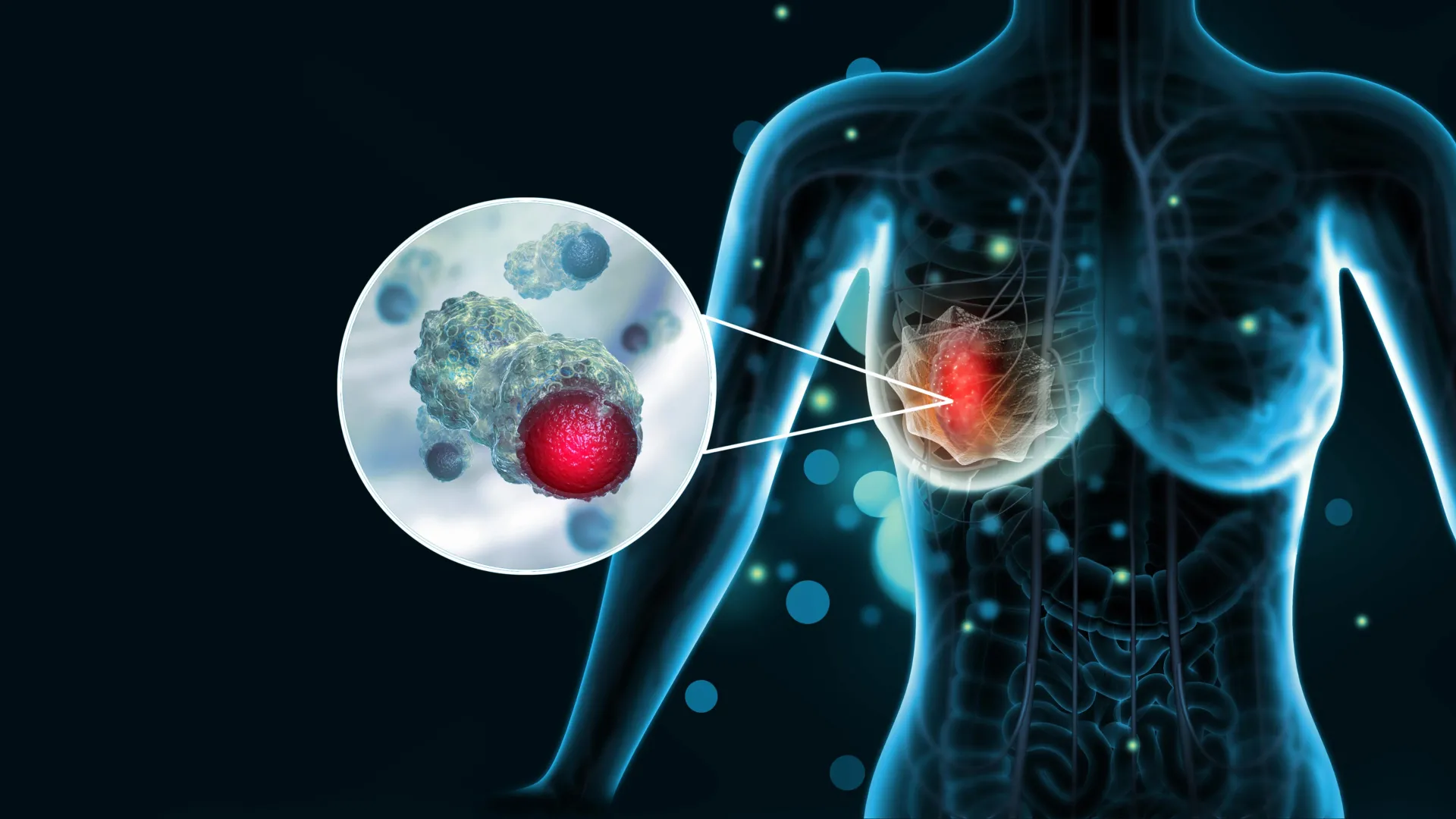
A significant study conducted by the National Institutes of Health (NIH), a component of the U.S. Department of Health and Human Services (HHS), has uncovered a compelling correlation between elevated blood concentrations of legacy per- and polyfluoroalkyl substances (PFAS) and an increased incidence of estrogen receptor-negative (ER-negative) breast cancer. This research, published in the Journal of Clinical Oncology, provides new insight into the potential environmental drivers of aggressive malignancies, marking a critical step forward in understanding the long-term physiological impact of persistent synthetic chemicals.
The investigation centered on two specific compounds—perfluorooctanoic acid (PFOA) and perfluorooctanesulfonic acid (PFOS)—which have been ubiquitous in consumer manufacturing for decades. While the study did not establish a direct causal link to overall breast cancer risk, the data suggests a stark elevation in risk for the ER-negative subtype, a form of the disease that is notoriously difficult to treat due to its lack of hormonal sensitivity.
Understanding the Mechanism of Persistence
Often referred to as "forever chemicals," PFAS are a broad category of thousands of synthetic compounds characterized by strong carbon-fluorine bonds. This chemical structure grants them exceptional resistance to degradation, allowing them to persist in the environment and accumulate within the human body for years, if not decades. Historically, these substances were prized for their water, grease, and heat-resistant properties, appearing in everything from non-stick cookware and food packaging to stain-resistant textiles and firefighting foams.
Because of their chemical stability, these substances have migrated into global water supplies and food chains. The NIH study underscores that despite international efforts to phase out PFOA and PFOS, the biological legacy of these chemicals remains deeply embedded in the modern human population.
Chronology of the Sister Study and Data Collection
The research utilized data from the Sister Study, a comprehensive, long-term prospective cohort study managed by the National Institute of Environmental Health Sciences (NIEHS). Between 2003 and 2009, the program recruited over 50,000 women across the United States and Puerto Rico. The inclusion criteria required that all participants be between the ages of 35 and 74 and have a sister who had previously been diagnosed with breast cancer, providing a controlled environment for observing hereditary and environmental interactions.
The researchers analyzed blood samples drawn years before the onset of any cancer diagnosis, allowing for a longitudinal assessment of chemical exposure. By measuring the concentrations of 17 distinct PFAS in 1,609 women who eventually developed breast cancer and comparing them against a control group of 2,269 women, the team was able to calculate the relative risk associated with exposure levels.
Quantifying the Risk: A Statistical Breakdown
The findings reveal a significant statistical variance between exposure levels and health outcomes. When researchers stratified the women into groups based on their blood concentrations of PFAS, those in the highest tier of PFOA exposure exhibited a 67% higher incidence of ER-negative breast cancer compared to those in the lowest tier.
The correlation was even more pronounced regarding PFOS, where the highest exposure group demonstrated a 93% higher rate of developing the disease. It is important to note that these figures represent relative risk rather than absolute probability; however, the magnitude of these percentages indicates a substantial public health signal that warrants further epidemiological scrutiny.
Clinical Implications of ER-Negative Malignancies
ER-negative breast cancer represents a distinct clinical challenge. Unlike hormone receptor-positive cancers, which can often be managed with endocrine therapies that block estrogen or progesterone signaling, ER-negative tumors do not rely on these hormones to thrive. Consequently, they are typically treated with more intensive chemotherapy, radiation, and surgical interventions.
Because the causes of ER-negative cancers remain largely enigmatic—with fewer established risk factors compared to other breast cancer types—the identification of an environmental link like PFAS provides a critical lead for oncologists and public health researchers. The fact that the strongest associations were found in these aggressive, non-hormonal tumors suggests that PFAS may be acting through alternative biological pathways, such as immune system modulation or epigenetic interference, rather than by mimicking hormonal signals.
Official Responses and Policy Outlook
Following the release of the findings, HHS Secretary Robert F. Kennedy, Jr. emphasized the government’s commitment to addressing environmental health hazards. "Women deserve clear answers about how chemicals in their environment may affect their health," said Secretary Kennedy. "This NIH study links two forever chemicals to a higher risk of ER-negative breast cancer and demands further investigation. Under President Trump’s leadership, we will pursue the evidence, confront environmental health risks, and give women the information they need to protect their health."
The study’s lead, NIH Stadtman Investigator Alexandra White, Ph.D., noted the importance of confirming these results through meta-analysis. "Our findings, which we confirmed using a meta-analysis of prior research, indicate that certain legacy PFAS are associated with a higher risk of ER-negative breast cancer, a more aggressive tumor type with few known risk factors," she stated.
The Challenge of Modifiability and Future Prevention
One of the most encouraging aspects of the study is the concept of modifiability. Although PFAS are persistent in the environment, the researchers suggest that identifying these risks is the first step toward reducing future exposure. Dr. Che-Jung Chang, the study’s first author, noted, "Although PFAS are persistent in the environment and in our bodies, exposure to them is still potentially modifiable, meaning people can take steps to reduce their exposure, and these findings could open new avenues for prevention."
Steps to reduce exposure often include the use of high-quality water filtration systems certified to remove PFAS, avoiding products treated with stain-resistant coatings, and limiting the consumption of foods packaged in materials known to contain these substances.
The Path Forward: Replacement Chemicals and Unanswered Questions
While PFOA and PFOS have been largely phased out of production in the United States, they have been replaced by a new generation of PFAS compounds. A major concern among the scientific community is whether these newer alternatives share similar toxicological profiles.
"More research is needed, particularly evaluating the risk of breast cancer associated with newer replacement PFAS chemicals," Dr. White remarked. The current scientific consensus highlights a critical knowledge gap: the "whack-a-mole" approach to chemical regulation, where one substance is phased out only to be replaced by a chemically similar, under-researched alternative.
Moving forward, the NIH aims to focus on populations with historically high PFAS exposure, such as those living near manufacturing facilities or in areas with contaminated groundwater. By studying these high-risk cohorts, researchers hope to clarify the precise biological mechanisms by which these chemicals interfere with human cellular health.
Broader Public Health Implications
The implications of the NIH study extend beyond breast cancer research. The findings serve as a reminder of the complex relationship between industrial chemistry and human physiology. As the global scientific community continues to grapple with the "forever chemical" crisis, this study provides a foundational piece of evidence that could influence future regulatory standards and environmental policy.
As public awareness regarding PFAS grows, the demand for more rigorous safety testing and transparent labeling of consumer goods is likely to increase. The transition from legacy chemicals to safer, truly biodegradable alternatives remains a primary objective for public health advocates. Until such time, the focus remains on individual risk reduction and ongoing monitoring of the long-term health consequences for the millions of people who have already been exposed to these persistent, man-made substances.
In conclusion, while the NIH study does not provide a definitive causal proof of environmental carcinogenesis, the strength of the association between legacy PFAS and aggressive breast cancer is a significant indicator of potential harm. By bridging the gap between molecular research and large-scale epidemiological data, this investigation provides a vital framework for future cancer prevention strategies, ultimately aiming to empower women with the information necessary to navigate an increasingly complex chemical landscape. The research, supported by NIEHS grants Z01ES044005, Z1AES103332, and R01ES032831, underscores the necessity of sustained funding for environmental health, ensuring that the legacy of the chemical age does not dictate the future of human health.