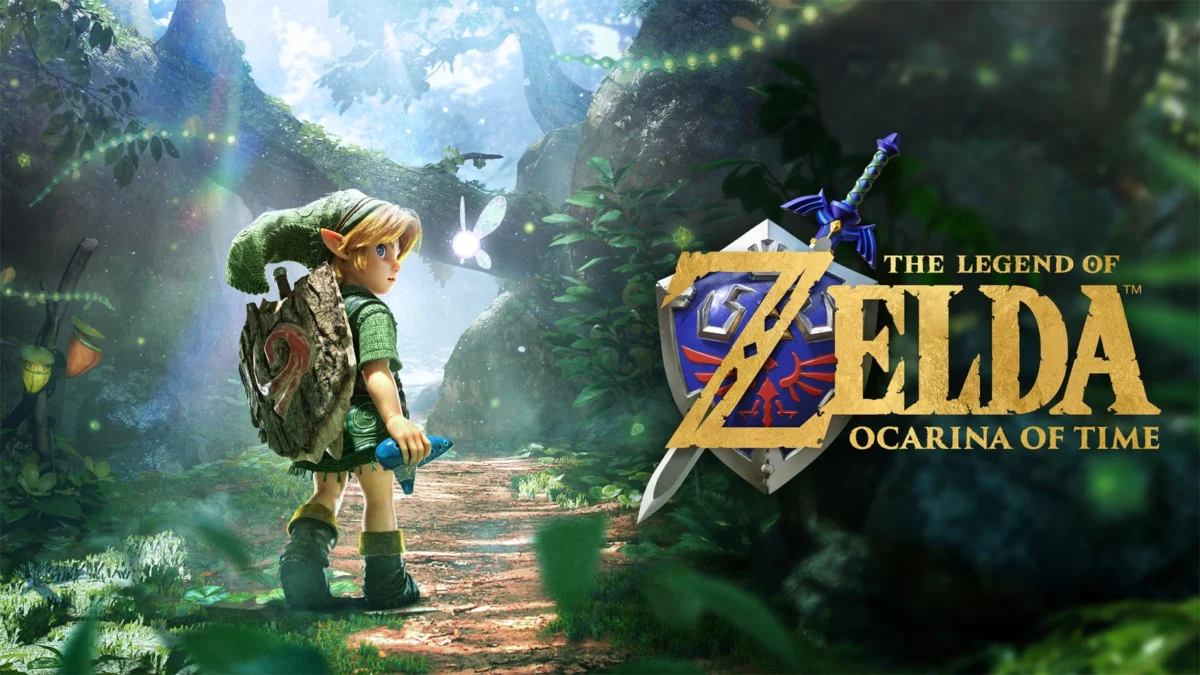
The landscape of interactive entertainment is set for a significant transformation as Nintendo officially announced a comprehensive remake of The Legend of Zelda: Ocarina of Time, arriving exclusively on the Nintendo Switch 2 on November 5. This release serves as a centerpiece for the franchise’s 40th anniversary, reimagining one of the most critically acclaimed titles in gaming history for a modern hardware generation. The announcement, delivered during a high-profile Nintendo Direct presentation, underscores the company’s strategy of leveraging its most storied intellectual properties to drive adoption of its next-generation hardware.
A Masterpiece Reborn for the Modern Era
Originally released in 1998 for the Nintendo 64, Ocarina of Time revolutionized the action-adventure genre by introducing 3D lock-on targeting and a Z-axis exploration system that became industry standards. The upcoming Switch 2 remake promises to be more than a graphical update; it is a fundamental reconstruction of the experience. Nintendo has confirmed that the title will feature fully overhauled visuals, taking advantage of the Switch 2’s enhanced processing capabilities to deliver high-fidelity environments and character models.
Beyond the aesthetic improvements, the game will incorporate fully voiced cutscenes, a notable departure from the original title’s reliance on text boxes, and expanded character dialogue to add depth to the inhabitants of Hyrule. The audio experience will be further elevated by a symphonic orchestral score, replacing the synthesized MIDI tracks of the original while maintaining the core melodic themes composed by Koji Kondo.
Perhaps most innovative is the integration of the Switch 2’s hardware features. The console’s built-in microphone will allow players to interact with the game’s central mechanic: the Ocarina. Players can physically sing or hum learned melodies within range of the system, and Link will mirror these inputs in-game. This tactile integration aims to deepen the immersion, bridging the gap between the player and the protagonist’s legendary journey.
Strategic Implications and Industry Context
The decision to revisit Ocarina of Time comes at a pivotal moment for Nintendo. As the industry shifts toward higher-fidelity graphics and more complex mechanical systems, the remake acts as a bridge between nostalgia and innovation. Industry analysts suggest that by modernizing such a landmark title, Nintendo is effectively courting both long-term fans who grew up with the franchise and a new demographic of younger players who may have found the original’s antiquated mechanics difficult to navigate.

The release date of November 5 positions the game perfectly for the critical holiday shopping window. This timing is intentional, as Nintendo looks to establish a robust software library in the months following the launch of the Switch 2. Historically, Zelda titles have served as "system sellers," and by anchoring the late 2026 lineup with this remake, the company expects to maintain momentum through the end of the fiscal year.
Expanding the Nintendo Portfolio: Metroid and Kirby
While the Zelda announcement dominated the headlines, the Nintendo Direct also unveiled two significant projects slated for release in 2027: Metroid Ravenous and Kirby and the World Beyond.
Metroid Ravenous marks the latest entry in the dark, science-fiction franchise featuring bounty hunter Samus Aran. According to Nintendo, the title will emphasize survival mechanics, pushing the series further into its atmospheric, horror-adjacent roots. To accompany the launch on January 28, Nintendo will release a dedicated line of amiibo figures, including a high-detail Samus and a Chozo Statue. A special edition bundle, which includes a commemorative steel case, is already available for pre-order, signaling a high level of confidence in the title’s performance.
Simultaneously, the Kirby series will reach a major milestone in 2027: its 35th anniversary. To celebrate, Nintendo is developing Kirby and the World Beyond, a fully realized 3D adventure that promises to utilize the character’s iconic Copy Abilities in a more expansive, open-ended world. By moving Kirby into a fully 3D space, Nintendo aims to evolve the platforming genre once again, following the successful formula established by previous 3D platformers.
The Evolution of Gaming Events
The gaming industry is also witnessing a shift in how community events are structured. PAX West has confirmed its return to the Seattle Convention Center for Labor Day weekend, September 3–6, maintaining its position as a staple of the North American gaming calendar. However, the expansion of the PAX brand into new territories, specifically with the introduction of PAX Unplugged Houston, highlights a growing demand for localized, face-to-face engagement.
The inaugural Houston event, scheduled for June 25–27 at the George R. Brown Convention Center, represents an effort by event organizers to capture the vibrant gaming culture of the Southern United States. By diversifying the geographical reach of these expos, the industry is fostering a more inclusive community that does not rely solely on major coastal hubs.

The Rise of Theatrical Esports
Perhaps the most intriguing development of the week is the partnership between Epic Games and AMC Theatres to broadcast the 2026 Rocket League World Championship Finals. On September 20, 50 AMC locations across major cities including New York, Los Angeles, and Chicago will screen the high-stakes competition live.
With a prize pool of $1.2 million on the line, the event is being treated with the same prestige as a major professional sporting event. Ellen Copaken, Senior Vice President of Business Development at AMC Theatres, noted that the move is designed to replicate the communal experience of traditional cinema. "We’re excited to give fans the opportunity to watch esports’ biggest stage unfold live on massive screens," Copaken stated.
The initiative includes a "commemorative ticket" program, where attendees receive codes for exclusive in-game cosmetics. This integration of physical and digital rewards is a growing trend in the esports world, designed to incentivize attendance and provide tangible value to the dedicated Rocket League fanbase.
Looking Ahead: The Future of the Industry
The upcoming months appear to be defined by a blend of legacy and evolution. Whether it is the return to the Fields of Hyrule in an updated Ocarina of Time, the survival-focused challenges of a new Metroid, or the communal experience of watching esports in a traditional theater, the industry is clearly focused on refining its current offerings while testing new delivery methods.
For Nintendo, the goal is clear: to solidify the Switch 2’s market position through a combination of trusted intellectual properties and technological upgrades. The success of these titles, particularly the Zelda remake, will likely serve as a barometer for how well the company can balance its rich history with the demands of a modern, increasingly sophisticated gaming audience. As we approach these release dates, the industry awaits to see if these high-profile projects can meet the substantial expectations of the global player base.