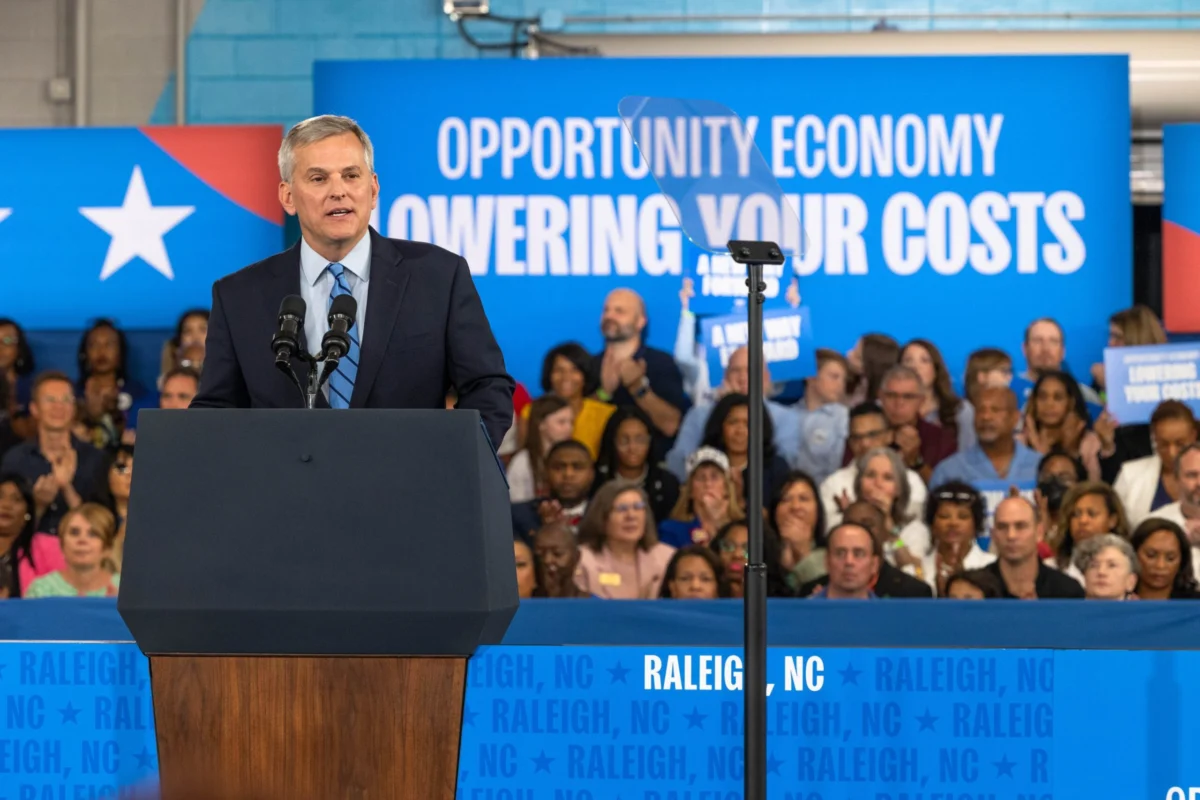
RALEIGH, N.C. — As millions of Americans head to the polls to cast their ballots in the midterm elections, voters in North Carolina are weighing a high-stakes constitutional amendment that could fundamentally reshape the state’s fiscal policy for generations. The ballot measure, formally titled “Lower Taxes for All NC,” asks voters to enshrine a hard limit on the state’s maximum allowable income tax rate, slashing the current constitutional ceiling of 7% down to 3.5%.
The vote arrives at a critical juncture, directly intersecting with voter anxieties over inflation, the cost of living, and economic security. With affordability emerging as a dominant theme in the current electoral cycle—nearly half of registered voters nationwide identifying cost-of-living pressures as their primary concern—the North Carolina referendum serves as a lightning rod for a broader national debate over taxation, government spending, and economic resilience. While proponents argue the amendment is a necessary safeguard against future tax hikes and a logical continuation of a decade-long conservative tax-cutting strategy, opponents warn it risks crippling public infrastructure, starving essential government services, and shifting an unfair tax burden onto middle- and lower-income families via regressive consumption taxes.
A Decade of Conservative Tax Overhauls
The debate over the 3.5% tax cap is the culmination of more than ten years of concerted legislative effort by North Carolina’s Republican-dominated General Assembly. The trajectory of the state’s tax code shifted dramatically in 2010, when GOP candidates captured majorities in both chambers of the state legislature for the first time in over a century, breaking a generations-long streak of Democratic control.
Taking office in 2011, Republican lawmakers wasted little time initiating a profound restructuring of the state’s fiscal architecture. In 2013, the legislature enacted sweeping tax reforms that dismantled North Carolina’s traditional graduated income tax brackets in favor of a flatter, lower tax structure, while simultaneously chipping away at corporate tax rates. This methodical reduction of tax liability continued unchecked through subsequent legislative sessions, maintaining sufficient momentum to bypass consecutive Democratic governors elected after 2017, including current Governor Josh Stein, through legislative supermajorities.
A major milestone in this multi-year effort occurred in 2018, when North Carolina voters approved a constitutional amendment that lowered the state’s maximum allowable income tax ceiling from 10% to 7%, albeit with a relatively modest margin of support falling just below 60%. Since then, statutory cuts have driven the state’s actual individual income tax rate down significantly. The individual income tax rate currently sits at 3.99% and, under pre-existing legislation, is legally mandated to drop further to 3.49% in 2027, before sliding to 3.24% in 2030 and reaching a low of 2.99% by 2033.
The Mechanics of the Proposed Amendment
Despite its ballot title, the proposed constitutional amendment does not enact an immediate tax cut. Instead, its primary function is preventative and structural. If approved by a majority of voters on Tuesday, the measure will permanently lower the legal ceiling for both individual and corporate income taxes to 3.5%.
Consequently, any future state legislature seeking to raise income tax rates above the 3.5% threshold would face a high procedural hurdle. Such an action would no longer be possible through a simple legislative majority or even a standard bill; it would require passing a brand-new constitutional amendment, which mandates a three-fifths supermajority vote in both the state House and Senate, followed by subsequent approval from a majority of North Carolina voters in a statewide referendum.
Because the initiative takes the form of a constitutional amendment, it bypassed the desk of Democratic Governor Josh Stein. Under North Carolina law, the governor possesses no veto power over proposed constitutional amendments passed by the General Assembly, allowing the Republican legislative leadership to place the question directly before the electorate without executive sign-off.
Arguments For the Cap: Locking in Fiscal Discipline
Supporters of the amendment, led by the state’s Republican leadership, contend that the measure provides vital long-term protection for taxpayers, ensuring that hard-earned wages remain in the pockets of citizens rather than being absorbed by state coffers.
State Senator Michael Lee, a key architect and sponsor of the legislation that placed the cap on the ballot, defended the initiative earlier this year. “Our tax reforms have produced more than a decade of strong revenue growth while letting people keep more of what they earn, and this amendment locks in that progress,” Lee stated.
Proponents argue that lower income tax rates have been a primary catalyst for North Carolina’s robust economic performance, drawing businesses, entrepreneurs, and new residents to the state in record numbers over the past decade. By constitutionally binding future lawmakers to a low-tax regime, supporters believe the state can maintain a predictable, competitive business climate that discourages runaway government spending and forces fiscal discipline upon future administrations.
Arguments Against the Cap: Risks to Public Services and Equity
Conversely, a broad coalition of progressive groups, fiscal analysts, and Democratic leaders have mounted a fierce opposition campaign against the amendment, labeling it a misleading gimmick that disproportionately benefits the wealthy while threatening the state’s long-term financial stability.
Governor Josh Stein has emerged as one of the amendment’s most vocal critics. During a press conference in May, Stein warned that the initiative fails to provide any immediate financial relief to working families while permanently insulating high-earning individuals from contributing more during economic emergencies.
“It will not put any more money in anyone’s pockets,” Stein asserted. “But what it will do is make regular people pay the consequences of it next year and years into the future because it will insulate the very wealthy from ever having an increase in their income tax.”
Critics point out that individual income taxes are the lifeblood of North Carolina’s state budget, generating approximately $17 billion during the 2024–25 fiscal year—nearly half of the state’s entire $34.6 billion General Fund. This revenue stream is critical for financing foundational public goods, including public education, higher learning institutions, health care programs, and public safety infrastructure.
Alexandra Sirota, executive director of the NC Budget & Tax Center, echoed these concerns in a September statement, arguing that the amendment severely restricts the state government’s structural capacity to respond to unforeseen crises. “These tax amendments won’t cut anyone’s taxes,” Sirota said. “But they would make it more difficult for future lawmakers to fairly raise the revenue needed to meet costs through a higher rate on millionaires, billionaires, and highly profitable corporations.”
Opponents argue that if income tax revenue is permanently capped and restricted, future lawmakers facing budget shortfalls during economic downturns will have little choice but to drastically slash funding for public services or shift the tax burden downward by raising regressive consumption taxes, such as the state sales tax, which disproportionately impacts lower- and middle-income residents.
The Broader National Landscape: A Patchwork of Ballot Measures
North Carolina’s high-stakes vote is far from an isolated event. Across the United States, voters in several states are deciding on competing fiscal and tax initiatives as they grapple with the compounding pressures of inflation, shifting labor markets, and the rising cost of living.
According to data compiled by Ballotpedia, at least nine other income- and wealth-tax-related measures are appearing on ballots across six states this cycle. The policy approaches vary wildly by jurisdiction, highlighting deep ideological divides over economic management:
- In Colorado, voters are weighing competing proposals: one that would replace the state’s 4.4% flat income tax with a progressive graduated tax reaching up to 8.4%, and a rival measure that would cement a permanent 4.4% cap on income taxes.
- In Iowa, a separate ballot measure proposes requiring a two-thirds supermajority vote in the legislature to enact any future income tax increases.
- In Washington state, voters are deciding whether to repeal a recently enacted 9.9% tax on individual capital gains and high household incomes exceeding $1 million.
- In California, voters are considering Proposition 40, one of the nation’s most controversial tax proposals, which would establish a one-time 5% wealth tax on individuals holding a net worth exceeding $1 billion. The measure has drawn fierce opposition from prominent technology leaders and billionaires, including Google co-founder Sergey Brin.
Economic Backdrop: Inflation, Affordability, and Political Realignments
The fierce legislative focus on taxation takes place against a challenging macroeconomic backdrop. According to data from the Commerce Department, U.S. consumer prices surged by 3.6% in September, up from 3.4% in August. Persistent inflationary pressures have been exacerbated by international disruptions, including geopolitical conflicts in the Middle East that have driven global oil prices up by approximately 68% over the past year, driving up production and distribution costs across nearly every consumer sector.
These economic strains have altered the political landscape of the midterms. Recent polling from Reuters/Ipsos indicates that 48% of registered voters view the rising cost of living as the single most critical issue facing the country. Consequently, Democrats have managed to gain unexpected political traction even in traditionally conservative regions by aggressively challenging Republican records on affordability and cost management.
While federal Republicans have sought to address voter concerns through legislative action—such as championing the bipartisan 21st Century Road to Housing Act earlier this year to accelerate homebuilding and ease zoning restrictions—state-level measures like North Carolina’s income tax cap remain the most direct battlegrounds for defining the post-inflationary economic future.
As North Carolina precincts close and the final tallies are tabulated, the outcome of the vote on the "Lower Taxes for All NC" amendment will determine not only the future flexibility of the state’s fiscal policy, but also whether the conservative tax-cutting trajectory of the past decade will be permanently locked into the foundational laws of the state.