The landscape of space infrastructure is undergoing a fundamental transformation as German startup Orbital Matter has successfully executed the first-ever 3D printing of a structural component on a free-flying satellite in orbit. This technical achievement, conducted via the Replicator-2 mission launched earlier this year on a SpaceX rideshare flight, signals a shift away from the traditional, limited paradigm of "origami-style" satellite deployment toward a future of autonomous orbital manufacturing. By extruding a specialized resin cured by ultraviolet light, the company has successfully created a half-meter rigid beam in the vacuum of space, proving that hardware can be constructed, rather than merely deployed, beyond Earth’s atmosphere.
The Technological Breakthrough: Replicator-2 in Context
Current satellite design is inherently constrained by the physical dimensions of launch vehicle fairings. Whether it is a communication satellite, a space telescope, or a modular space station, engineers must pack every instrument and solar array into a folded configuration that can withstand the intense vibration and acoustic loads of a rocket launch. Once in orbit, these structures must execute high-stakes deployment sequences—unfurling mirrors or extending solar wings—where a single mechanical failure can lead to a total mission loss.
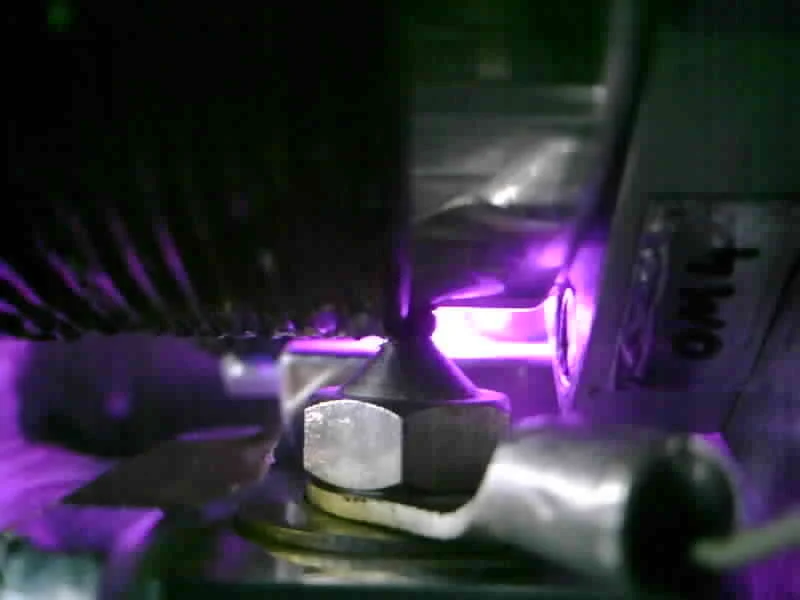
Orbital Matter’s Replicator-2 mission introduces a radical alternative. The satellite is equipped with four onboard 3D printers, each designed to process a proprietary resin that functions similarly to the relationship between cement and water. Once in the microgravity environment, these printers extrude the material, which is immediately cured by UV light to form a rigid, cylindrical beam.
While previous attempts at orbital manufacturing have been documented—most notably NASA’s experiments with Redwire and various additive manufacturing tests conducted within the pressurized, human-tended environment of the International Space Station—Orbital Matter’s success is distinct. By operating on a free-flying, autonomous spacecraft, the company has bypassed the environmental protections and power constraints of the ISS, proving that additive manufacturing is viable in the harsh, unshielded vacuum of space.
Chronology and Development Timeline
The path to this orbital success began with the founding of Orbital Matter in 2022 by CEO Jakub Stojek and CTO Robert Ihnatsin. Leveraging Ihnatsin’s prior expertise at the prominent 3D printing firm FormLabs, the team secured a $3 million seed round to develop their Printer-Assisted Deployment System (PADS).
The developmental timeline for the company has been aggressive:
- 2022: Orbital Matter is founded, focusing on the integration of additive manufacturing for large-scale orbital structures.
- 2023: Increased industry interest in in-space manufacturing sees companies like Redwire conduct vacuum-chamber testing of structural beams, though these remain Earth-bound proof-of-concepts.
- Summer 2024: Replicator-2 is launched as part of a SpaceX rideshare mission.
- Late 2024: The company confirms the successful printing of a half-meter beam and the subsequent deployment of a solar array using the printed structure.
- 2028: Projected launch for a larger demonstration mission aimed at generating 5 kW of power.
Despite the overall success, the mission was not without technical hurdles. During the flight, one of the four onboard printers suffered an anomaly, leading to a failure. However, the modular nature of the mission design allowed the team to continue operations using the remaining hardware. According to CTO Robert Ihnatsin, the decision to launch multiple printers simultaneously was a deliberate strategy to prioritize iterative, in-orbit learning over years of ground-based simulations that can never perfectly replicate the variables of the space environment.
Implications for Future Space Infrastructure
The ability to print structures in orbit addresses one of the most pressing bottlenecks in the "New Space" economy: the power-to-weight ratio. As data centers migrate to orbit and high-power radar or laser communication arrays become standard, the demand for electricity is scaling exponentially.
Current mass-produced satellites, such as SpaceX’s Starlink V2, utilize solar arrays reaching approximately 20 meters in length. These are already considered feats of engineering. However, for future orbital data centers or large-scale power stations, structures exceeding 100 meters in length may be required. By enabling the construction of these booms in orbit, Orbital Matter effectively decouples a spacecraft’s final size from the diameter of a rocket’s payload fairing.
Beyond solar power, this technology could eventually allow for the in-orbit construction of massive telescope mirrors, large-aperture antennas, and even the framework for permanent modular space habitats. By carrying raw resin rather than pre-manufactured metal trusses, companies can significantly reduce the volume—and therefore the launch cost—required to establish large-scale infrastructure.
Official Responses and Industry Collaboration
The project has garnered significant backing from major players in the European aerospace sector. Orbital Matter has established collaborative relationships with the European Space Agency (ESA) and Thales Alenia Space, one of Europe’s premier satellite manufacturers.
Industry analysts suggest that the involvement of established entities like Thales Alenia provides a crucial validation of the technology’s industrial viability. For traditional aerospace prime contractors, the shift toward PADS technology represents a transition from building "static" satellites to creating "dynamic" orbital platforms. While the company is currently focused on smaller structural booms, the long-term goal is to integrate these printers into the standard architecture of satellite buses, allowing them to autonomously "grow" their mission-critical components upon reaching their operational orbit.
Economic and Technical Analysis
From an economic standpoint, the "cost per kilogram" to reach orbit remains the primary driver of satellite design. Additive manufacturing offers a way to maximize the utility of every kilogram launched. If a satellite can launch as a compact, dense package and expand into a massive structure once in space, the mission profile changes from one of compromise to one of optimization.
The technical challenge ahead, however, is reliability and material longevity. Materials used in space must withstand extreme thermal cycling, intense ultraviolet radiation, and atomic oxygen erosion. Orbital Matter’s custom resin must prove it can maintain structural integrity over a mission lifespan of five to ten years—a duration significantly longer than the current test flight.
Furthermore, as the company looks toward its 2028 demonstration, the scale of the challenge increases. Aiming for 5 kW of power generation in the 2028 mission, with a roadmap to 100+ kW per wing by 2030, places Orbital Matter in direct competition with the most ambitious orbital infrastructure projects globally.
Looking Toward 2030 and Beyond
The success of the Replicator-2 mission serves as a "stepping stone" in a much larger narrative of space industrialization. By proving that a printer can function in the vacuum of space to create a structural element, the company has moved the concept of "In-Space Manufacturing" (ISM) from the realm of science fiction into the category of demonstrated reality.
As the industry moves toward 2030, the ability to build, maintain, and repair large-scale structures in situ will likely define the next era of orbital dominance. Whether these structures are used to power the next generation of global communication networks or to support the logistics of human lunar and Martian exploration, the foundational work performed by the Orbital Matter team marks a pivotal moment. The focus for the next four years will be on scaling the throughput of the printers and ensuring that the material science behind the resin can meet the rigorous demands of long-duration spaceflight. With the support of major European partners and the proof-of-concept already achieved in low Earth orbit, the infrastructure of the future is no longer something that must be launched; it is something that will be built where it is needed most.