
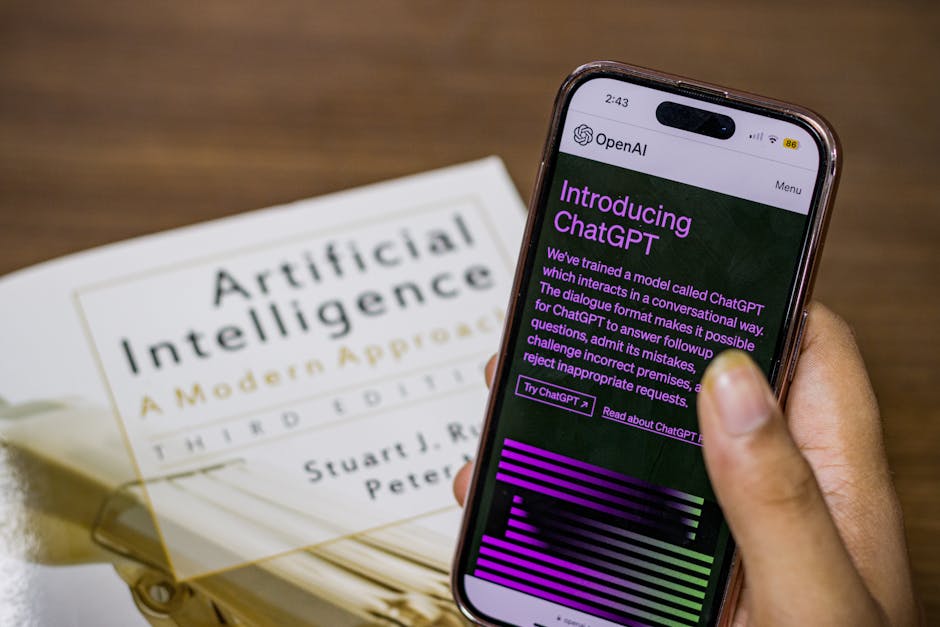
OpenAI’s Read Aloud Voiceover: Revolutionizing Accessibility and Content Consumption
OpenAI’s integration of read aloud voiceover capabilities marks a significant advancement in natural language processing and human-computer interaction, fundamentally altering how individuals engage with text-based content. This feature, powered by sophisticated text-to-speech (TTS) technology, transcribes written words into spoken audio, creating a more accessible and engaging experience across a diverse range of applications. The implications are far-reaching, impacting education, content creation, accessibility for individuals with disabilities, and the broader landscape of digital information consumption. This article will delve into the technical underpinnings of OpenAI’s read aloud voiceover, explore its multifaceted applications, analyze its benefits and limitations, and discuss its potential future trajectory, all while maintaining an SEO-friendly structure and comprehensive coverage.
The core of OpenAI’s read aloud voiceover technology lies in its advanced deep learning models. Unlike traditional TTS systems that often produce robotic and monotonous output, OpenAI leverages neural networks, particularly those inspired by Transformer architectures, to generate highly natural and expressive speech. These models are trained on vast datasets of human speech and corresponding text, allowing them to learn the intricate nuances of pronunciation, intonation, rhythm, and even emotional tone. The process typically involves several stages. First, the input text is processed through a text normalization module, which converts numbers, abbreviations, and symbols into their spoken equivalents. This is followed by a phonemizer, which breaks down words into their constituent phonemes – the basic units of sound in a language. The heart of the system is the acoustic model, which takes the phonetic representation and predicts a sequence of acoustic features that, when synthesized, will produce human-like speech. OpenAI’s innovation often lies in the sophisticated acoustic modeling, employing techniques like WaveNet or more recent end-to-end TTS models that directly generate audio waveforms from text, bypassing intermediate acoustic features and often resulting in superior audio quality. The ability to control prosody – the rhythm, stress, and intonation of speech – is a key differentiator. This allows the read aloud feature to convey the intended meaning and emotion of the text, making it more engaging and easier to understand. For instance, a question will have a rising inflection, and an exclamation will be delivered with more emphasis. The training data, which includes diverse voices and speaking styles, also contributes to the naturalness and variability of the output, offering users a selection of voices that can further personalize the experience.
The applications of OpenAI’s read aloud voiceover are remarkably broad and transformative. In the realm of education, it offers a powerful tool for both students and educators. Students with reading difficulties, such as dyslexia, can benefit immensely from having text read aloud, improving comprehension and reducing frustration. This feature can also aid English as a Second Language (ESL) learners by providing auditory reinforcement of vocabulary and pronunciation. For educators, it can be used to create audio versions of course materials, making lessons accessible to a wider range of learning styles and preferences. Imagine an online lecture that can be listened to rather than solely read, or a textbook that can be consumed during a commute. The accessibility aspect extends beyond educational settings. For visually impaired individuals, read aloud functionality is not just a convenience but a necessity, enabling them to access websites, documents, and digital content that would otherwise be inaccessible. This democratizes information and empowers a significant portion of the population. Content creators, from bloggers to podcasters, can leverage this technology to expand their reach. Instead of solely relying on written content, they can offer audio versions of their articles, blog posts, or even social media updates. This caters to the growing demand for audio content, allowing users to multitask while consuming information. Furthermore, it can assist in the creation of audiobooks, video voiceovers, and even customer service responses, streamlining workflows and reducing production costs. The gaming industry can also benefit, providing immersive narration for in-game text and enhancing the player experience. In essence, any scenario where text needs to be conveyed audibly becomes a potential application for this technology.
The benefits of OpenAI’s read aloud voiceover are substantial and varied. Foremost is the significant improvement in accessibility. By providing an auditory alternative to visual text, it opens up digital content to individuals with visual impairments, dyslexia, and other reading challenges. This promotes digital inclusion and ensures that information is available to everyone, regardless of their abilities. Secondly, it enhances comprehension and engagement. Studies have shown that combining auditory and visual learning can improve information retention. The ability to listen to text can also aid in understanding complex subjects or lengthy documents, allowing users to process information at their own pace. This is particularly beneficial for learners who struggle with sustained reading or those who prefer auditory input. Thirdly, it offers convenience and multitasking capabilities. In our fast-paced world, people often consume content on the go. Read aloud functionality allows users to listen to articles, emails, or social media feeds while commuting, exercising, or performing other tasks, maximizing their productivity and time utilization. Fourthly, it supports language learning. For non-native speakers, hearing pronunciation and intonation can significantly improve their language acquisition journey. They can practice their listening skills and familiarize themselves with correct speech patterns. Fifthly, it reduces production costs and time for content creators. Generating audio content manually can be expensive and time-consuming. AI-powered TTS offers a cost-effective and efficient alternative for producing voiceovers, audiobooks, and other spoken content. This democratizes content creation, making it accessible to smaller businesses and independent creators. Finally, it contributes to a more personalized user experience. The ability to choose from different voices, adjust speaking speed, and even select emotional tones allows users to tailor the audio output to their preferences, making the interaction more enjoyable and effective.
Despite its impressive advancements, OpenAI’s read aloud voiceover also presents certain limitations and challenges. One primary challenge is achieving perfect human-like nuance and emotion. While AI has made significant strides, capturing the full spectrum of human emotion, sarcasm, humor, and subtle contextual cues in speech remains a complex task. Occasionally, the synthesized voice might misinterpret the intended tone or deliver it unnaturally, leading to a less impactful or even misleading message. This is particularly evident in highly literary or emotionally charged texts. Another consideration is the potential for misinterpretation or errors. While the accuracy of TTS models is high, they are not infallible. Complex sentence structures, jargon, or uncommon proper nouns can sometimes be mispronounced or misunderstood, leading to an incorrect audio output. This necessitates careful review of the synthesized audio, especially in critical applications. Computational resources are also a factor. Generating high-quality, natural-sounding speech, especially for long texts, can be computationally intensive, requiring significant processing power. This can impact real-time applications or limit accessibility on less powerful devices. Ethical considerations also arise. The ability to generate realistic synthetic voices raises concerns about their potential misuse, such as in creating deepfakes or spreading misinformation through fabricated audio. Ensuring responsible development and deployment is crucial. Furthermore, cost can be a barrier for some users or developers, particularly for high-volume or advanced applications. While increasingly accessible, sophisticated TTS services often come with associated costs. Finally, cultural and linguistic variations pose ongoing challenges. While models are trained on vast datasets, capturing the full diversity of accents, dialects, and cultural nuances within a single language, let alone across multiple languages, is a continuous area of research and development.
The future trajectory of OpenAI’s read aloud voiceover technology is poised for continued innovation and expansion. We can anticipate further improvements in naturalness and expressiveness. Future models will likely exhibit even greater control over prosody, intonation, and emotional delivery, making the synthesized speech virtually indistinguishable from human speech in many contexts. This could involve advancements in end-to-end models that learn directly from raw audio and text, capturing subtle vocal characteristics with higher fidelity. The development of context-aware speech synthesis will also be a significant area of growth. This means TTS models will be better able to understand the context of the text, including the speaker’s intent, the audience, and the overall purpose of the communication, to tailor the voice accordingly. For example, a news report might be delivered with a more authoritative tone, while a children’s story would be narrated with a warmer, more engaging voice. Personalization and customization will also be key. Users will likely have even greater control over voice characteristics, allowing them to select voices that resonate with them personally, or even to clone their own voice for specific applications. This could involve creating unique TTS voices for individual users or brands. The integration of real-time, adaptive TTS will open up new possibilities. Imagine a conversational AI that can respond with dynamically generated, contextually appropriate speech that mimics human turn-taking and emotional responses, creating more natural and engaging human-computer interactions. Furthermore, cross-lingual synthesis and voice translation will become more sophisticated. AI will be able to translate text and then synthesize it in another language with accurate pronunciation and natural intonation, breaking down language barriers more effectively. Finally, the focus on efficiency and scalability will continue. As the technology matures, we can expect to see more optimized models that require less computational power, making high-quality TTS accessible on a wider range of devices and for more cost-sensitive applications. This will democratize the creation and consumption of audio content even further, making AI-powered read aloud features a ubiquitous part of our digital lives. The ongoing research and development at OpenAI and other leading AI labs suggest a future where spoken text is as rich, nuanced, and accessible as written text, profoundly reshaping how we interact with information.





Leave a Reply