
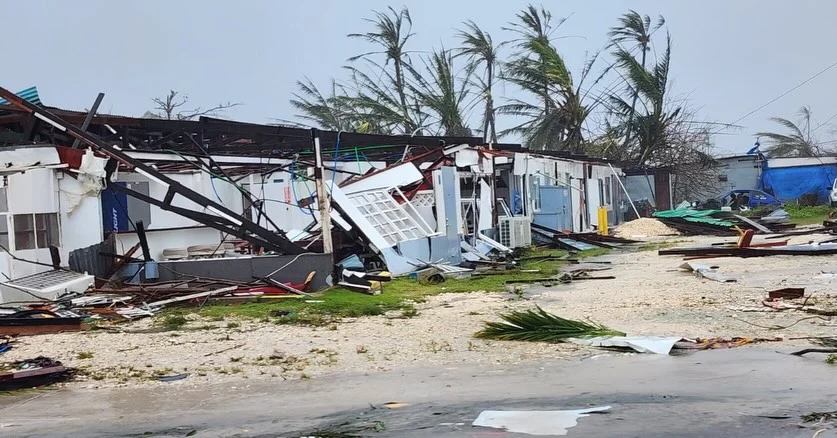
The Commonwealth of the Northern Mariana Islands (CNMI) is currently grappling with the catastrophic aftermath of Super Typhoon Sinlaku, the most powerful storm recorded globally in 2026. The cyclone, which maintained Category 5 intensity for an extended duration, slammed into the islands of Saipan and Tinian this week, leaving a trail of structural devastation, widespread flooding, and a total collapse of essential utility infrastructure. For over 48 hours, residents remained hunkered down in shelters and reinforced homes as the storm’s eyewall lingered over the archipelago, severing communication lines and cutting off access to clean water and electricity. As the winds finally begin to subside, the territory faces a daunting recovery process complicated by a pre-existing economic depression and a volatile political climate in Washington, D.C.
Meteorological Profile and the Climate Change Connection
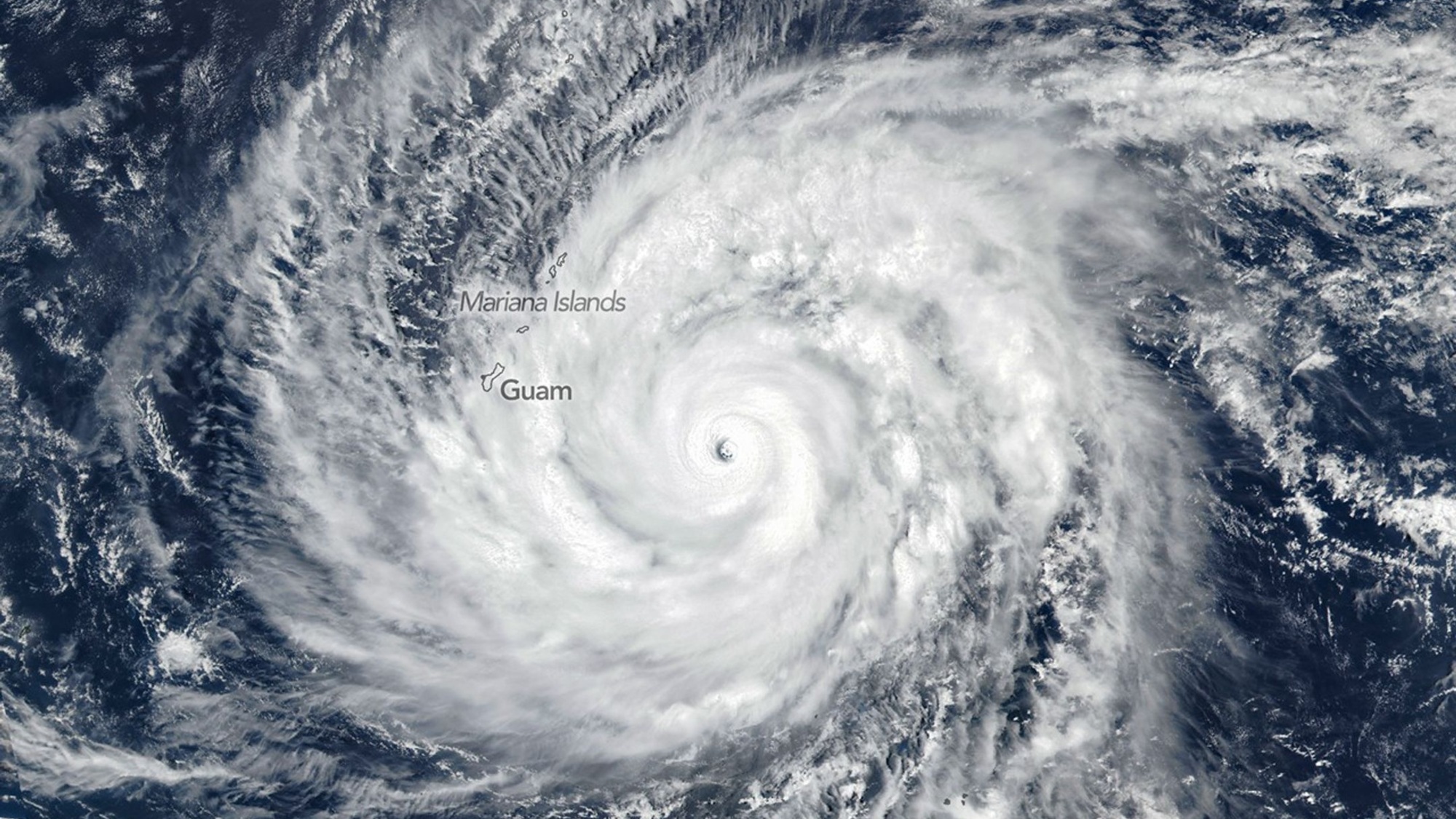
Super Typhoon Sinlaku began its life as a low-pressure disturbance southeast of the Mariana Islands archipelago. Benefiting from what meteorologists describe as "near-perfect" atmospheric conditions, the system underwent rapid intensification—a phenomenon where a storm’s maximum sustained winds increase by at least 35 mph within 24 hours. Sinlaku far exceeded this threshold, exploding into a 185-mph monstrosity that sat at the top of the Saffir-Simpson scale.
The timing and intensity of the storm have raised significant alarms within the scientific community. Historically, the typhoon season in the Western Pacific begins in earnest in June or July. A Super Typhoon of this magnitude occurring in April is statistically rare. According to Daniel Swain, a climate scientist at the California Institute for Water Resources, the storm’s rapid development is a direct reflection of anomalous oceanic warming.
"In the days leading up to the development of this super typhoon, ocean surface temperatures in the region were as high as 3 to 5 degrees Fahrenheit above the recent average," Swain noted. He emphasized that these temperatures are significantly higher than those recorded during much of the 20th century. "Because warm tropical oceans act as ‘hurricane fuel,’ Sinlaku was able to intensify in a favorable environment that is at least partly linked to anthropogenic climate change."
Chronology of the Disaster
The path of Super Typhoon Sinlaku followed a destructive trajectory across Micronesia and the Mariana Islands, mirroring the catastrophic route of Super Typhoon Yutu in 2018.
- Impact on Chuuk: The storm first made landfall in Chuuk State within the Federated States of Micronesia. Reports from the ground confirmed the death of one individual and the disappearance of a fisherman at sea. Structural damage was reported across several atolls, though the full extent remains unclear due to communication outages.
- Passage Near Guam: As Sinlaku tracked northwest, it passed just north of Guam. While the island was spared a direct hit from the eyewall, it was lashed by tropical storm-force winds and torrential rains. The resulting "monsoonal tail" caused significant urban flooding, toppled trees, and triggered power outages across several villages.
- Direct Hit on Saipan and Tinian: The core of the storm struck the CNMI’s most populated islands, Saipan and Tinian. Unlike many fast-moving systems, Sinlaku slowed its forward motion as it reached the islands, subjecting the population to more than two days of unrelenting hurricane conditions.
- The Aftermath: By Thursday morning, as the storm began to pull away toward the Philippine Sea, residents emerged to find a landscape transformed. Debris from corrugated metal roofs littered the streets, and low-lying areas remained submerged under several feet of water.
Ed Propst, a Chamorro resident and former commonwealth legislator, described the experience as uniquely harrowing. "It’s still whistling and you can still hear it going on and things are banging outside," Propst said during the tail end of the storm. "I’ve never seen anything like this, where a typhoon just doesn’t seem to leave. When was the last time we had a super typhoon hitting us this early in the year? This is the first that I can recall."
Historical Context and Infrastructure Vulnerability
The devastation wrought by Sinlaku is amplified by the fact that the CNMI has never fully recovered from Super Typhoon Yutu, which struck eight years ago. Yutu, also a Category 5 storm, destroyed thousands of homes and leveled the islands’ infrastructure so thoroughly that some children were forced to attend classes in temporary tents for over seven years.
The repetition of such a high-intensity event highlights the extreme vulnerability of the region’s built environment. While building codes were strengthened following Yutu, the sheer force of 185-mph winds tests the limits of modern engineering. Furthermore, the slow pace of federal aid in previous years has left many structures in a state of partial repair, making them even more susceptible to Sinlaku’s fury.
A Perfect Storm of Economic and Political Challenges
The timing of Super Typhoon Sinlaku could not be worse for the Commonwealth. The CNMI is currently enduring a severe economic downturn. The territory’s economy is heavily reliant on tourism, particularly from East Asia. Since the COVID-19 pandemic, arrival numbers have struggled to reach even 50 percent of their 2019 levels. This decline has led to a shrinking tax base, business closures, and a notable trend of outmigration as residents leave for the mainland United States in search of stability.
The CNMI government, led by leaders like Congresswoman Kimberlyn King-Hinds, has been pleading with the Trump administration for a federal bailout and policy adjustments. Specifically, the territory has sought the loosening of flight restrictions from China and a revision of visa requirements for workers and tourists from the Philippines. To date, federal officials have remained noncommittal, leaving the islands in a state of financial limbo even before the storm hit.
Compounding this local crisis is a political stalemate in Washington. The Department of Homeland Security (DHS), which oversees the Federal Emergency Management Agency (FEMA), is currently undergoing a partial shutdown. This disruption is the result of a congressional deadlock over funding, driven by partisan disagreements regarding the administration’s immigration policies.
Federal Response and the FEMA Stockpile
Despite the DHS shutdown, FEMA has moved to assure the residents of the Mariana Islands that immediate relief is available. President Donald Trump approved an emergency declaration for the archipelago ahead of the storm, allowing for the mobilization of federal resources.
A FEMA spokesperson confirmed that the agency has 90 personnel stationed across Guam and the CNMI. Furthermore, a massive distribution center in Guam is currently stocked with:
- 1.1 million liters of water
- 723,000 shelf-stable meals
- 5,300 cots and 3,600 blankets
- 4,400 tarps for emergency roofing
- 78 high-capacity generators
While 42 generators are already en route to Saipan to restore power to critical facilities like hospitals and water pumps, the agency warned that the ongoing funding crisis in Congress could hamper long-term recovery efforts. "We urge Democrats in Congress to stop playing games and restore DHS’s funding before American communities suffer the next disaster alone," a FEMA spokesperson stated, reflecting the highly politicized nature of disaster relief in the current administration.
Advocacy and the Struggle for Agency
For many in the CNMI, the storm is not just a natural disaster but a reminder of their marginalized status within the American political system. As a U.S. territory, residents are U.S. citizens but lack the right to vote for the President and have no voting representation in the U.S. Senate. Their lone representative in the House, Congresswoman King-Hinds, can participate in committee work but cannot vote on the final passage of legislation.
Adi Martínez Román, co-director of the nonprofit Right to Democracy, argues that this "colonial" status makes it nearly impossible for territories to influence federal policies that affect their survival. "It is so difficult for us to have agency in federal policies," Román said. "Programs are built responding to constituencies, and we are not considered a constituency."
This lack of political leverage is particularly concerning given the Trump administration’s efforts to scale back disaster preparedness and climate change mitigation programs. For over a year, the administration has moved to reduce FEMA staffing levels and eliminate references to climate change in federal planning documents.
Sheila Babauta, a Chamorro climate justice advocate, echoed these concerns. While sheltering with her two-month-old child, Babauta noted that the community is fighting on multiple fronts. "We are taking a devastating hit from Super Typhoon Sinlaku, compounding the urgent local priorities we already face, from coastal erosion to an economic crisis," she said. "On top of that, we’re constantly fighting ecological threats from the federal government, like deep-sea mining and militarization. Our community is strong, but even warriors need rest."
Long-Term Implications and the Path Forward
As the CNMI begins the grueling task of damage assessment, the focus will inevitably shift from immediate survival to long-term sustainability. The increasing frequency of "once-in-a-generation" storms suggests that the traditional model of "build, destroy, repeat" is no longer viable.
Analysts suggest that the recovery from Sinlaku will require more than just tarp-covered roofs and bottled water. It will require a fundamental shift in how the federal government views its responsibilities to the territories. This includes:
- Infrastructure Hardening: Moving power lines underground and investing in typhoon-proof housing that can withstand Category 5 winds.
- Economic Diversification: Reducing the total reliance on tourism by fostering local industries and securing federal policy changes that facilitate trade and travel.
- Climate Adaptation: Implementing coastal protection measures to combat rising sea levels and coral bleaching, which further weaken the islands’ natural defenses against storm surges.
Despite the daunting challenges, the spirit of the islands remains resilient. Ed Propst, while receiving messages from neighbors in desperate need—including a mother trapped without baby formula and a friend who lost his solar power system—expressed confidence in the local community. "We’ve been through this before, and we know what it takes to get through it again," he said.
The coming weeks will be a litmus test for the federal government’s commitment to its Pacific territories. Whether the CNMI receives the sustained support necessary to rebuild or is left to languish in the shadow of a political stalemate in Washington remains to be seen. For now, the people of Saipan, Tinian, and the surrounding islands are left to pick up the pieces of their lives, once again proving their strength in the face of an increasingly volatile climate.









Leave a Reply