
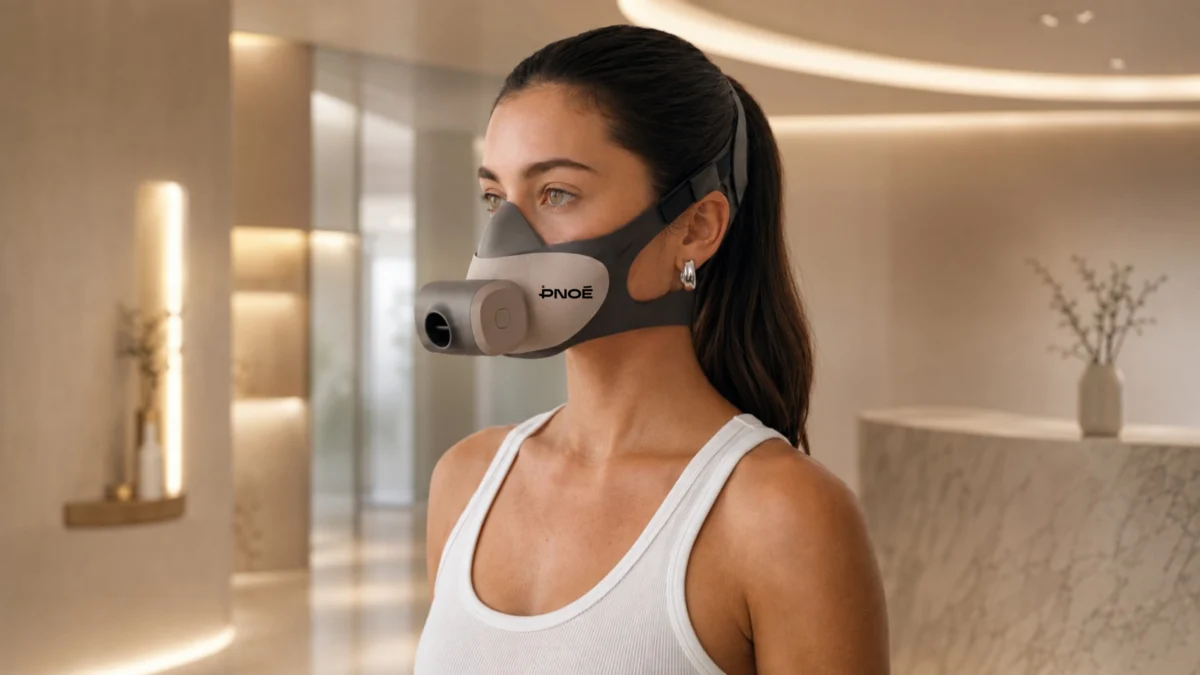
At first glance, the newest device from PNOĒ looks like something a comic-book villain might wear. The mask, which covers the nose and mouth and straps around the back of the head, bears more than a passing resemblance to the one worn by Bane, Batman’s hulking nemesis. However, its purpose is decidedly clinical rather than cinematic. By measuring oxygen consumption and carbon dioxide exhalation, the device translates complex respiratory data into actionable insights regarding nutrition, training intensity, and long-term health management. As the company prepares for the October 1 launch of its PNOĒ 2.0 hardware, it aims to shift metabolic testing from the exclusive domain of elite sports labs into the hands of the general public at gyms, med spas, and potentially, local pharmacies.
The Evolution of Metabolic Monitoring
Metabolic testing has served as the gold standard for cardiorespiratory assessment for over a century. By analyzing the concentration of gases in a subject’s breath, clinicians can determine how efficiently an individual’s body produces energy. Central to this analysis is VO2 max—the maximum volume of oxygen an individual can consume during intense exercise—which is widely regarded as one of the most significant clinical indicators of overall cardiorespiratory health and life expectancy.
For decades, accessing this data required "metabolic carts"—bulky, expensive, and cumbersome machines found only in university research centers, hospital physiology departments, or the training facilities of professional sports teams. These barriers to entry meant that only elite athletes, high-net-worth individuals, and those with specific medical requirements could monitor their metabolic efficiency. PNOĒ, founded a decade ago, sought to disrupt this model by miniaturizing the technology into a portable, user-friendly format.
Chronology and Development
The roots of the company trace back to the doctoral research of CEO Apostolos Atsalakis at the University of Cambridge, where he specialized in advanced sensing technologies. Fascinated by the potential for breath-based diagnostics, Atsalakis partnered with his childhood friend, Panos Papadiamantis, who now serves as the firm’s chief product officer.
The company’s trajectory accelerated significantly following its participation in the Y Combinator Winter 2019 cohort. At that time, the "longevity" industry was in its infancy, yet the startup managed to secure approximately $22 million in funding, including a recent $11 million round. Key investors include 50 Years and Google Maps co-founder Lars Rasmussen. Over the past ten years, the company has grown to a staff of 110, maintaining a dual-operational presence in Malden, Massachusetts, and Athens, Greece. The development of the 2.0 version involved a rigorous design cycle in collaboration with Milan-based Design Group Italia, necessitated by the unique challenges of creating a device that requires zero professional oversight.
The Technical Leap: From Lab to Gym
The primary innovation of the PNOĒ 2.0 is its self-service capability. Previous iterations required the presence of a trained technician to calibrate equipment and monitor the data stream. With the 2.0, a user simply dons the mask, presses a button, and sits for eight minutes of monitored breathing. This simplicity fundamentally changes the business model, allowing fitness centers, wellness boutiques, and even retail pharmacies to offer the service without the overhead of hiring specialized staff.
The device captures 23 distinct biomarkers. Beyond VO2 max, it provides data on resting metabolic rate—the baseline calorie burn for an individual—and metabolic flexibility, which measures the body’s efficiency in switching between fat and carbohydrate oxidation. According to Atsalakis, these metrics provide a level of granularity that standard blood tests cannot, allowing for hyper-personalized exercise and dietary planning.
Addressing Post-Pandemic Hygiene and Design
In the wake of the COVID-19 pandemic, hygiene has become a paramount concern for shared fitness equipment. PNOĒ addressed this by decoupling the electronic sensors from the physical interface. The expensive hardware is modular and detaches from the silicone mask and head straps. This allows businesses to maintain a supply of communal sensors while users purchase or maintain their own individual masks, eliminating the risk of cross-contamination and lowering the cost for facilities.
Market Position and Business Model
PNOĒ operates on a business-to-business (B2B) model. It does not sell directly to individual consumers; rather, it offers a "business in a box" subscription service to gyms, health systems, and wellness centers. Subscription costs range from $400 to over $1,000 per month, which includes the hardware, software, training, and marketing materials. This allows brands like Equinox, the Four Seasons, and the NBA to integrate the testing into their existing customer journey.
The current market environment is highly favorable. As consumer interest in longevity metrics grows, fitness enthusiasts are looking for data that surpasses the estimated VO2 max readings provided by wearable devices like Apple Watch, Garmin, or Whoop. While these consumer wearables rely on heart-rate data and algorithms to estimate performance, PNOĒ provides direct, gas-exchange measurement, placing it in a unique "middle ground" between standard consumer trackers and clinical-grade medical equipment.
Regulatory Status and Future Outlook
Despite its clinical appearance, PNOĒ maintains a strict "wellness" designation. The device is not FDA-cleared for diagnostic use, and the company explicitly avoids providing medical advice. Atsalakis compares the device to a digital scale or body composition monitor—tools that provide data for lifestyle adjustments rather than clinical intervention.
However, the company’s long-term vision is ambitious. Researchers have long studied the chemical composition of human breath as a window into systemic health, with studies suggesting that specific volatile organic compounds could signal the presence of cancers or metabolic diseases. Atsalakis acknowledges that while the company is currently focused on fitness and wellness, its growing database of respiratory markers could eventually pave the way for medical-grade diagnostic capabilities. He notes, however, that such advancements remain years away, pending substantial regulatory review and further longitudinal studies.
The Competitive Landscape
The fitness tech sector is increasingly crowded. In the high-end segment, traditional metabolic carts remain the immovable standard for academic research. In the consumer space, companies like Lumen have popularized breath-based testing for macronutrient burning. PNOĒ’s strategy for growth relies on its unique positioning as the primary provider for high-end, guided fitness ecosystems. By integrating its software directly into the services offered by its clients, PNOĒ ensures that its data isn’t just a number on a screen, but a catalyst for personal training sessions, nutrition plans, and membership retention.
As the company looks toward a Series B funding round in the coming months, its goal is to scale its presence globally. While 85% of its business is currently based in the United States, expansion is already underway in Europe, Latin America, and Asia. With reported growth rates exceeding 100% per year and the company reaching profitability, PNOĒ is well-positioned to capitalize on the increasing public obsession with longevity metrics.
By successfully blending the rigorous science of sports physiology with the convenience of modern consumer hardware, PNOĒ is attempting to move the goalposts for health monitoring. Whether the "Bane-like" mask becomes a common fixture in the modern gym remains to be seen, but the company’s ability to turn human breath into a comprehensive health scorecard suggests that the future of wellness may be as much about how we breathe as it is about how we move.










Leave a Reply