Hollywood has increasingly turned its lens toward the corridors of Silicon Valley, transforming the complex, often opaque world of tech entrepreneurship into the modern era’s version of the corporate political thriller. Following the commercial success of documentaries like "You Can See Everything," which explored the rise and fall of Theranos founder Elizabeth Holmes, and the anticipation surrounding Netflix’s "The Altruists," a series chronicling the collapse of the cryptocurrency exchange FTX, the industry is now setting its sights on the most consequential narrative of the decade: the rise of artificial intelligence and the internal governance of OpenAI.
The upcoming biographical comedy-drama "Artificial," scheduled for a Christmas Day theatrical release, stars Andrew Garfield as OpenAI co-founder and CEO Sam Altman. The film provides a dramatic retelling of the company’s meteoric rise and the highly publicized boardroom crisis of November 2023, which resulted in Altman’s brief departure and subsequent reinstatement.
A Chronology of the OpenAI Boardroom Crisis
To understand the weight of "Artificial," one must revisit the chaotic events of late 2023. On November 17, 2023, the OpenAI board of directors stunned the global technology sector by announcing the immediate termination of Sam Altman, citing a lack of "candid" communication. This event triggered a swift and unprecedented chain reaction:
- November 17, 2023: The board dismisses Altman. Greg Brockman, the company president and co-founder, resigns in solidarity.
- November 18–19, 2023: Intense negotiations ensue. Investors, led by Microsoft—OpenAI’s primary financial backer—pressure the board to reverse the decision. Meanwhile, internal employee unrest begins to surface.
- November 20, 2023: Microsoft announces that Altman and Brockman will join the company to lead a new advanced AI research team. Simultaneously, over 700 of OpenAI’s approximately 770 employees sign an open letter threatening to resign unless the board resigns and reinstates Altman.
- November 22, 2023: The board reaches an agreement in principle for Altman’s return. A new initial board is formed, and the previous directors responsible for the firing resign.
This five-day window served as a stress test for corporate governance in the age of generative AI. It highlighted the tension between a non-profit-controlled board prioritized on "AI safety" and the commercial imperatives of a company valued in the tens of billions of dollars.
The Evolution of the Tech Biopic
Andrew Garfield’s casting as Altman follows a well-trodden path in Hollywood’s depiction of tech titans. Garfield, who rose to prominence playing Eduardo Saverin in David Fincher’s 2010 film "The Social Network," brings a degree of industry gravitas to the role. However, the reception of such films has been mixed. While "The Social Network" is widely regarded as a cinematic masterpiece, recent attempts to capitalize on tech lore—such as the 2026 film "The Social Reckoning"—have struggled to resonate with audiences, suggesting a potential shift in public appetite for Silicon Valley narratives.
The challenge for filmmakers is the inherent gap between cinematic dramatization and the reality of technical leadership. Mark Zuckerberg, for instance, has been vocal about the inaccuracies in his own portrayal. In a 2025 podcast appearance, Zuckerberg noted that while films like "The Social Network" might capture superficial details—such as his wardrobe or office layout—they often fundamentally misinterpret the motivations of the individuals involved. He famously noted the film’s central narrative arc—that his motivation for creating Facebook was driven by a romantic entanglement—was factually disconnected from his life at the time, given he was already in a committed relationship with Priscilla Chan.
The Weight of Responsibility: Altman’s Perspective
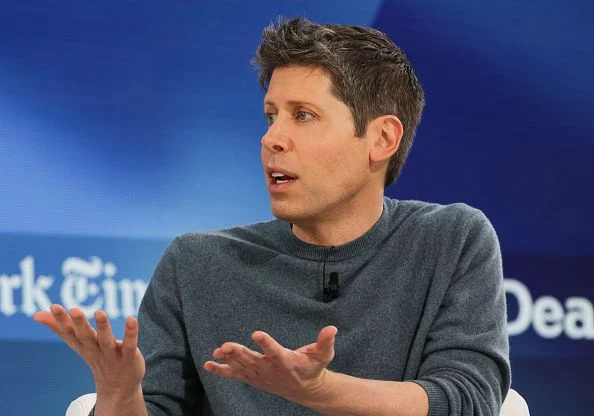
Sam Altman, for his part, has maintained a pragmatic, if somewhat detached, view of his transition from industry leader to pop culture subject. During the New York Times DealBook Summit, Altman remarked that a biopic about his life would have seemed absurd two decades ago, but now ranks low on the list of "weird" occurrences in his career.
When asked about the most surreal aspect of his current reality, Altman pointed to the immense societal burden of directing technologies with profound ethical and existential implications. "The fact that we are ushering in this technology that we have all of these very real concerns about, and that we find ourselves in a role of such significance and such responsibility to make that go well," Altman stated. "That’s a crazy situation to find yourself in."
This sentiment underscores the central theme of the modern tech narrative: the transition from "move fast and break things" to a stage where the stakes involve the soul of human infrastructure, labor markets, and cognitive security.
Critical Reception and Artistic Distance
The actor portraying a public figure often faces the challenge of maintaining objectivity while embodying the subject. Andrew Garfield, in an interview with Esquire, admitted he has never met Altman. He offered a critical analysis of the archetype he is portraying, suggesting that the pressure of leading an organization capable of immense global disruption necessitates a degree of psychological dissociation. "I think anyone who takes on that level of responsibility for a company or technology that you know is going to do a hell of a lot of damage to the soul of humanity [must have] a certain ability to dissociate," Garfield observed.
This comment reflects a broader cultural skepticism toward the tech industry, a marked departure from the "hacker-hero" tropes of the early 2010s. The film industry is now more inclined to frame the tech executive not as a visionary protagonist, but as a complex, potentially compromised figure grappling with forces beyond their complete control.
Broader Implications for the Tech Sector
The release of "Artificial" arrives at a pivotal time for OpenAI and the broader AI sector. As the industry faces increased scrutiny from regulators in the United States and the European Union, the portrayal of the internal governance crisis provides a public-facing lesson in the dangers of opaque board structures.
Data indicates that public trust in AI companies is increasingly tied to the perceived ethics of their leadership. According to recent surveys by the Pew Research Center, a significant portion of the public expresses concern regarding the lack of transparency in how AI models are developed and governed. By dramatizing the 2023 crisis, "Artificial" may serve to solidify these concerns in the public consciousness, framing the internal power dynamics of OpenAI as a matter of public interest rather than mere corporate trivia.
Furthermore, the film highlights the "personality-driven" nature of modern technology. As companies like OpenAI, Anthropic, and Google DeepMind become the focal points of a new geopolitical race, the individuals at the helm are increasingly viewed through a lens of celebrity. This can be a double-edged sword: while it brings visibility to the importance of AI safety and policy, it also risks reducing complex systemic issues into simplistic, character-driven dramas that may obscure the underlying technological realities.
Conclusion
"Artificial" represents a significant moment in the intersection of cinema and Silicon Valley. It signals that the events of the last few years—from the collapse of FTX to the boardroom drama at OpenAI—have entered the cultural zeitgeist as defining stories of the era. Whether the film succeeds in its portrayal of the intricate, high-stakes world of artificial intelligence remains to be seen. However, by choosing to center its narrative on the 2023 ousting, it ensures that the conversation around corporate accountability in the age of AI will continue well beyond the boardroom, reaching audiences who may never engage with a technical white paper but who are deeply invested in the future of the technology that is shaping their lives.
As the film prepares for its January 8, 2026, wide release, the tech community will likely watch with a mix of curiosity and apprehension. For Sam Altman and his peers, the film serves as a reminder that in an age of ubiquitous digital influence, their private struggles have become public property, and their professional decisions are now part of a global narrative that is, for better or worse, being written in real-time.