
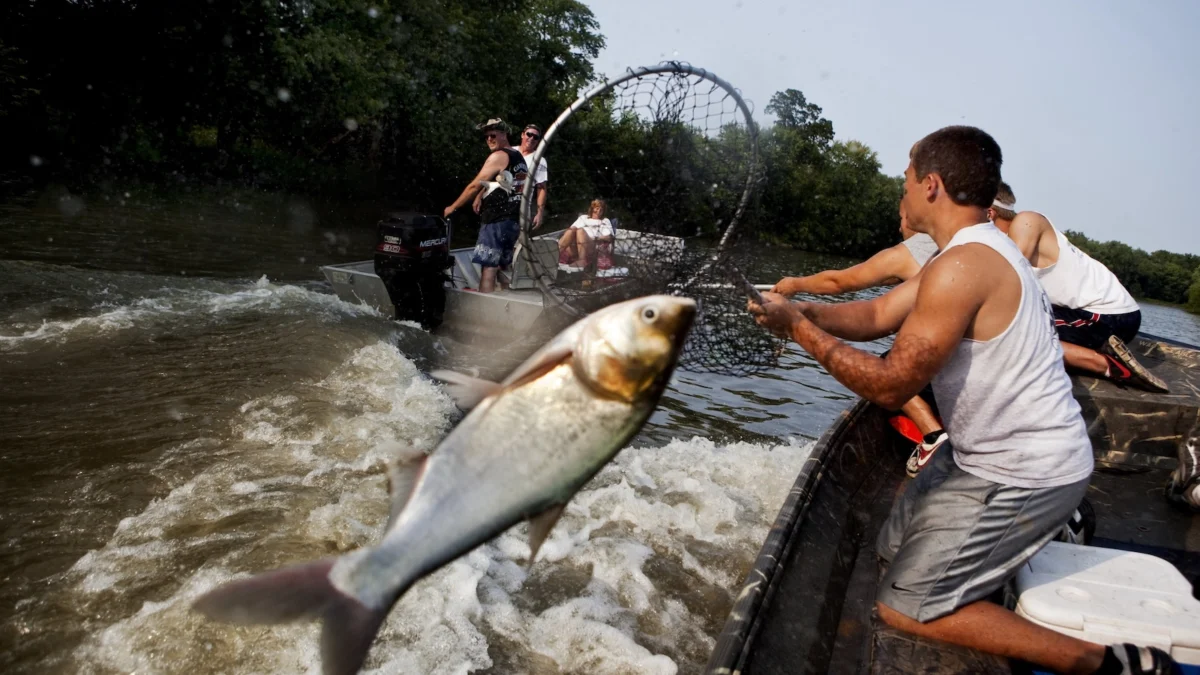
The battle to prevent invasive Asian carp from devastating the Great Lakes has transformed from an environmental priority into a high-stakes political confrontation between the Trump administration and Illinois Governor JB Pritzker. This long-standing ecological threat, which has loomed over the Midwest for decades, recently reached a new boiling point following a series of federal maneuvers that have sidelined Illinois leadership in favor of Michigan officials. The move has sparked threats of litigation and accusations of political sabotage, leaving the future of a $1.15 billion infrastructure project hanging in the balance.
At the heart of the dispute is the Brandon Road Interbasin Project, a sophisticated defensive system designed to prevent invasive fish species from migrating from the Mississippi River basin into Lake Michigan. While the project has enjoyed bipartisan support in the past, the latest developments suggest that the technical challenges of ecological preservation are now being overshadowed by a deepening rift between the White House and the executive leadership of Illinois.
The Biological Threat: A Half-Century of Migration
The invasive fish at the center of this controversy—primarily silver carp and bighead carp—were originally introduced to the United States in the 1970s. Imported from Asia to control algae growth in southern aquaculture ponds and wastewater treatment facilities, the fish escaped during flooding events into the Mississippi River system. Over the subsequent fifty years, they have migrated northward, out-competing native species and fundamentally altering the ecosystems of the Illinois and Mississippi Rivers.
These fish are particularly destructive due to their voracious appetites and rapid reproduction rates. Silver and bighead carp are filter feeders that consume massive quantities of plankton, the foundational food source for nearly all native fish species. In some sections of the Illinois River, invasive carp now account for up to 90 percent of the total biological mass. Beyond the ecological damage, silver carp pose a direct physical threat to humans; they are known to leap several feet out of the water when startled by boat engines, causing injuries to recreational boaters and anglers.
For decades, the Chicago Area Waterway System (CAWS) has been identified as the primary "back door" through which these fish could enter the Great Lakes. If they successfully establish a self-sustaining population in Lake Michigan, experts warn of a catastrophic collapse of the region’s $7 billion commercial and sport fishing industry, as well as a multi-billion dollar impact on the recreational boating and tourism sectors.
The Brandon Road Interbasin Project: A Technological Fortress
To address this threat, the U.S. Army Corps of Engineers proposed the Brandon Road Interbasin Project. Located at the Brandon Road Lock and Dam in Joliet, Illinois, the project represents one of the most complex aquatic deterrent systems ever designed. The $1.15 billion plan involves a "layered defense" strategy that utilizes multiple technologies to ensure no fish—at any stage of their life cycle—can pass through the lock system.
The primary components of the deterrent system include:
- Electric Barriers: High-voltage underwater fields designed to repel fish or stun those that attempt to swim through.
- Acoustic Deterrents: Underwater speakers that emit specific sound frequencies known to be unpleasant or frightening to Asian carp.
- Bubble Curtains: A continuous wall of air bubbles that acts as a physical and sensory deterrent.
- Flushing Locks: A specialized lock system capable of scouring the water to remove "hitchhiking" fish or floating eggs and larvae before vessels move from the river into the canal system.
Despite the technical consensus on the necessity of these measures, the project’s implementation has been plagued by delays, funding disputes, and now, jurisdictional upheaval.
A Chronology of Political and Financial Friction
The current standoff is the result of a series of escalating actions between the state of Illinois and the federal government over the last two years. While Michigan and Illinois have historically collaborated on Great Lakes protection, the relationship between Governor Pritzker and the Trump administration has been characterized by public friction.
In July 2024, a landmark agreement was signed between Illinois, Michigan, and the Army Corps of Engineers to move forward with the project. Under this deal, Illinois committed approximately $50 million for design and initial construction phases. The state also took the lead in acquiring the necessary real estate, including a 50-acre stretch of riverbed and nearly three acres of adjacent land.
However, the momentum stalled in late 2024 and early 2025. Governor Pritzker briefly paused the project in February 2024, citing concerns that the federal government was withholding nearly $250 million in promised funds from the Bipartisan Infrastructure Law. This pause drew sharp criticism from the White House, which characterized the move as an attempt to use the Great Lakes as a bargaining chip.
By late 2024, the Trump administration initiated a formal review of the project, effectively freezing construction. The situation reached a crescendo last week when the administration announced it would strip Illinois of its management role. Assistant Secretary of the Army for Civil Works Adam Telle stated that the management would be moved to the Army Corps’ Detroit office, placing Michigan in the driver’s seat.
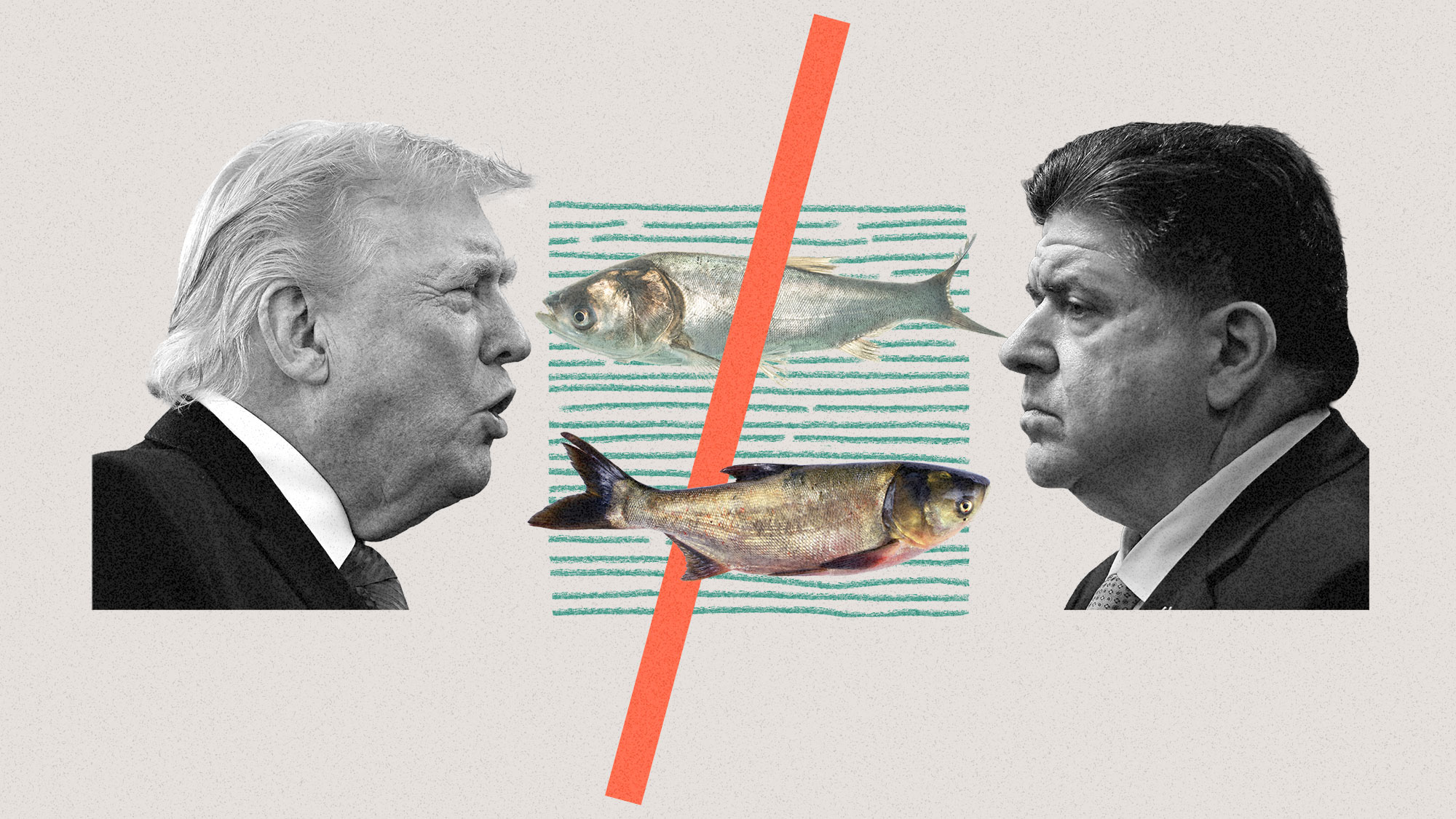
"President Trump has always been a champion of keeping invasive Asian carp out of the Great Lakes," Telle wrote in a statement. He further accused Illinois of being an "unreliable partner" that was "delinquent on its payments and real estate commitments."
The Legal and Territorial Dispute
Governor Pritzker’s response to the federal announcement was immediate and defiant. He rejected the claims of delinquency, asserting that Illinois has met every financial and land-acquisition obligation outlined in the July 2024 agreement. Pritzker argued that the administration’s move was a "political stunt" designed to punish a political opponent rather than protect the environment.
A central point of contention is the ownership of the land where the barrier is to be built. Because the Brandon Road Lock and Dam is located within Illinois, the state holds the title to much of the critical infrastructure and riverbed. "Illinois owns the land the Brandon Road Project will be built on," Pritzker noted in a public statement. "Trump cannot just decide to give it away."
Legal experts suggest that the attempt to move management to Michigan could trigger a protracted court battle. If Illinois refuses to grant access to state-owned land or denies necessary permits to Michigan-based managers, the project could remain in a state of perpetual litigation. This "jurisdictional limbo" would likely halt all construction, leaving the Great Lakes vulnerable during the very years when the carp population is expected to reach a critical pressure point near the Brandon Road site.
The Toxic Legacy: Coal Ash and Remediation
Adding another layer of complexity to the project is the environmental condition of the site itself. The land acquired by Illinois for the barrier is reportedly contaminated with legacy coal ash—a byproduct of coal-fired power plants that contains heavy metals such as arsenic, lead, and mercury.
According to the original agreement, Illinois is responsible for the remediation of this "toxic mess." The costs of cleaning up coal ash can be astronomical, often running into the tens of millions of dollars. Critics of the Pritzker administration have suggested that the state’s slow progress on environmental cleanup provided the federal government with the leverage needed to justify the management shift. Conversely, supporters of the governor argue that the federal government is using the coal ash issue as a pretext to seize control of the project and claim credit for its eventual completion.
Michigan’s Position and Regional Implications
While the conflict centers on Illinois and Washington, Michigan Governor Gretchen Whitmer finds herself in a delicate position. Michigan has long been the most vocal advocate for the Brandon Road project, as the state’s economy is arguably the most dependent on the health of the Great Lakes.
In a statement following the federal announcement, Whitmer’s press secretary, Stacey LaRouche, emphasized the need for "urgency." While the statement did not explicitly take sides in the Trump-Pritzker feud, it signaled that Michigan is ready to take the lead if it means the project will finally move forward. Michigan has already contributed significant funding toward the project and views the completion of the barrier as a non-negotiable necessity for regional economic security.
However, the shift in management raises logistical questions. The Detroit office of the Army Corps of Engineers is located hundreds of miles from the construction site. Managing a billion-dollar project in a different state, across different jurisdictional boundaries, and on land owned by a hostile state government presents unprecedented administrative hurdles.
Economic and Environmental Stakes: A $23 Billion Risk
The broader implications of the delay are staggering. The Great Lakes hold 21 percent of the world’s surface freshwater and support a massive regional economy. A 2023 economic impact study suggested that the combined value of the fishing, shipping, and tourism industries tied to the lakes exceeds $23 billion annually.
If the Brandon Road project remains stalled due to political infighting, the risk of a "breach" increases every year. While electric barriers currently exist in the Chicago Sanitary and Ship Canal, they are not 100 percent effective, particularly against small fish or during power fluctuations. The Brandon Road Interbasin Project was designed to be the definitive solution—a permanent wall of technology that would provide the security the region has sought for three decades.
Conclusion: A Project at a Crossroads
As of late May, the Army Corps of Engineers has not clarified whether the shift in management means that previously frozen funds will be released or if a new construction schedule has been established. The silence from the federal agency underscores the uncertainty currently surrounding the project.
What began as a collaborative effort to solve a biological crisis has devolved into a case study of federal-state friction. With Illinois threatening legal action and the Trump administration digging in on its decision to empower Michigan, the Brandon Road Interbasin Project stands as a monument to the complexities of modern environmental governance. For the residents of the Great Lakes region, the hope remains that a resolution can be found before the invasive carp find their own way through the gates.










Leave a Reply