The landscape of American conservation policy underwent a seismic shift last week as President Donald Trump signed two executive orders effectively dismantling the current boundaries of the Bears Ears and Grand Staircase-Escalante national monuments. By slashing the protected areas by approximately 90 percent, the administration has ignited a fierce debate over the stewardship of public lands, the influence of industrial lobbying, and a growing disconnect between elected officials and the constituents they represent. While Utah’s top Republican leaders have hailed the move as a victory for "local control" and "fairness," a mounting body of empirical data suggests that a significant majority of Utah residents—and voters across the Mountain West—oppose the reductions.
The executive action, signed in a ceremony flanked by Governor Spencer Cox and members of Utah’s congressional delegation, reduces the 1.35-million-acre Bears Ears National Monument to roughly 121,000 acres. Similarly, the Grand Staircase-Escalante National Monument, which spanned nearly 1.9 million acres, has been pared down to just over 181,500 acres. The justification provided in the presidential proclamation cited the need to "align the use of these public lands with the public interest," specifically highlighting the region’s vast deposits of critical minerals, including copper, nickel, and uranium. However, this industrial focus appears to stand in direct opposition to the conservation-oriented values expressed by the Utah public in multiple recent studies.
The Statistical Divide: Public Opinion vs. Political Rhetoric
The assertion by Utah Representative Celeste Maloy that the President was "listening to the people of Utah" by shrinking the monuments is increasingly scrutinized when held against longitudinal polling data. Research conducted by Utah State University (USU) in 2024 and 2025 reveals a starkly different narrative. According to the study, 61 percent of Utahns supported or strongly supported the preservation of Bears Ears in its original form, while only 19 percent expressed opposition. When asked specifically about reducing the size of the monument, 53 percent of respondents were against the idea, compared to only 26 percent who supported a reduction.
Michaelann Nelson, a professor of environmental rhetoric at Utah State University and the lead author of the poll, noted that the political rhetoric coming from the state capitol and the Oval Office is "very contradictive" of their findings. Nelson suggested that political leaders are "picking and choosing which Utahns they’re paying attention to," prioritizing a vocal minority or industrial interests over the broader consensus of the state’s population.
The data further suggests that the longer a monument exists, the more integrated it becomes into the local identity. While the USU study focused on Bears Ears due to its status as a flashpoint in recent political cycles, Nelson indicated that support for Grand Staircase-Escalante—designated by President Bill Clinton in 1996—likely runs even deeper. "In some ways, perhaps [Utahns would be] even more in favor of Grand Staircase," Nelson said, "just because we’ve existed with it for more than 20 years."
Regional Trends and the MAGA Perspective
The sentiment in Utah is not an isolated phenomenon but part of a broader trend across the Mountain West. The annual Conservation in the West Poll, conducted by Colorado College, has tracked voter attitudes across eight states, including Arizona, Colorado, Idaho, Montana, Nevada, New Mexico, Utah, and Wyoming. The 2026 data shows that 91 percent of voters in these states want existing national monuments kept in place—a figure that has steadily climbed from 80 percent in 2017.
Perhaps most surprising is the bipartisan nature of this support. The Colorado College survey found that 87 percent of Republicans, 92 percent of independents, and 96 percent of Democrats favor maintaining current monument designations. Even among those who identify as supporters of the "Make America Great Again" (MAGA) movement, support for keeping national monuments intact rose from 81 percent in 2025 to 87 percent this year.
Lori Weigel, a principal with the Republican public opinion research group New Bridge Strategies, emphasized the consistency of these findings. "What we have seen very consistently in the data is that people want additional protections for these public lands," Weigel stated. The data suggests that the electorate prioritizes conservation, outdoor recreation, and renewable energy development over the expansion of fossil fuel and mineral extraction on protected lands.
The Role of Tribal Sovereignty and Co-Management
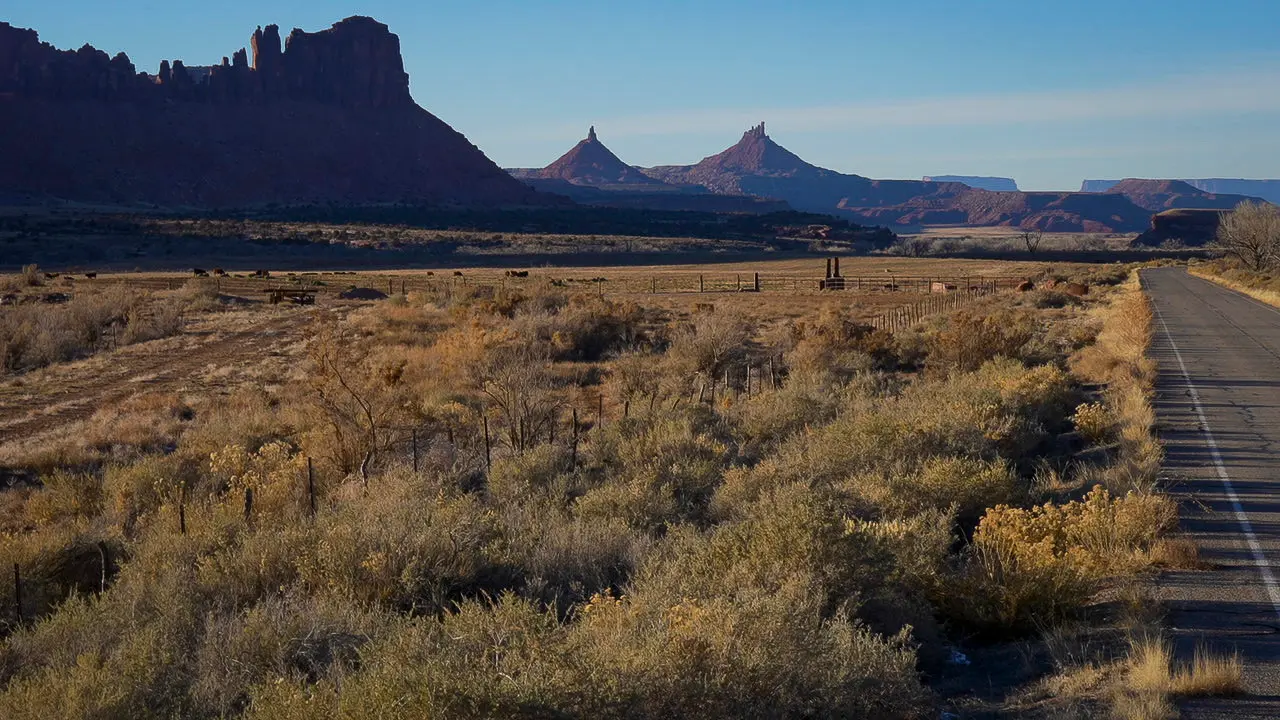
One of the most controversial aspects of the recent executive orders is the dissolution of the intertribal commission that played a central role in the management of Bears Ears. The monument, named after two twin buttes held sacred by several Indigenous nations, was the first of its kind to incorporate a formal tribal management structure. This collaborative model allowed federal agencies to consult with tribal leaders to protect archaeological sites, ancestral lands, and traditional resources.
Public sentiment strongly favors this collaborative approach. A December 2024 survey by New Bridge Strategies found that nearly 90 percent of Utahns support Native American tribes having a strong role in managing their ancestral lands. Furthermore, 81 percent of respondents believed that the administration should maintain existing agreements with tribes for the management of Bears Ears. The decision to disband the intertribal commission not only removes a layer of cultural protection but also appears to disregard a widely supported framework for land governance.
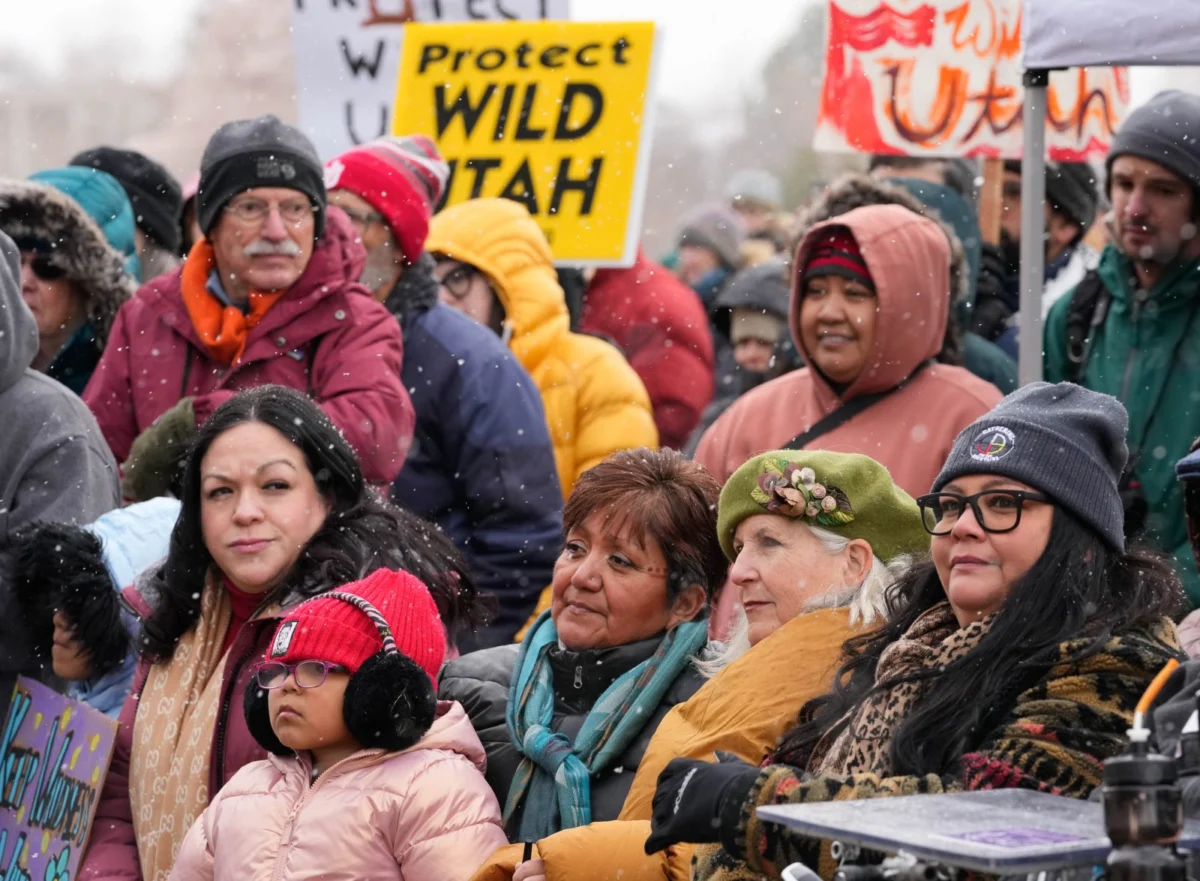
On Monday, the fallout from the decision manifested in a protest outside the Governor’s Mansion in Salt Lake City. Hundreds of demonstrators, organized by the Southern Utah Wilderness Alliance (SUWA), gathered to voice their opposition. Among the speakers were tribal representatives and state leaders, including Utah Senate Minority Leader Luz Escamilla and Autumn Gillard of the Piute Indian Tribe of Utah, who argued that the cuts represent a step backward for both environmental protection and Indigenous rights.
Industrial Interests and the "Smallest Area" Debate
The legal and political justification for shrinking the monuments often hinges on a specific interpretation of the 1906 Antiquities Act. The Act grants presidents the authority to protect sites of historic or scientific interest but specifies that the protected area should be "the smallest area compatible with the proper care and management of the objects to be protected." Governor Spencer Cox has frequently cited this clause, arguing that "multimillion-acre monuments that are bigger than the state of Delaware" exceed the original intent of the law.
However, critics argue that the "smallest area" argument is a smokescreen for facilitating industrial access. During Trump’s first term in 2017, when the monuments were initially downsized, internal records revealed that uranium mining companies had actively lobbied administration officials to redraw the boundaries of Bears Ears to exclude lucrative deposits. The latest executive orders explicitly mention the necessity of mining domestic supplies of "critical minerals" as a primary justification for the reductions.
President Trump also claimed during the signing ceremony that monument designations restrict public access, stating, "You can’t go hunting. You can’t go fishing… You can virtually not even walk on it." Fact-checking of these claims reveals them to be largely inaccurate. In both Bears Ears and Grand Staircase-Escalante, traditional activities such as hunting, fishing, and the use of off-road vehicles on designated trails were permitted under the original management plans. These monuments were specifically designed to allow for "multiple uses" while preventing large-scale industrial development that could permanently scar the landscape or destroy archaeological treasures.
Broader Implications and Legal Uncertainty
The reduction of these monuments sets a precedent that could affect the stability of the entire National Landscape Conservation System. If every change in presidential administration results in the radical redrawing of monument boundaries, the long-term planning required for conservation, tourism infrastructure, and law enforcement becomes nearly impossible.
The Utah Senate has argued that the initial monument designations led to an influx of visitors that strained local resources and caused "degradation" at certain sites. While increased tourism does present management challenges, conservationists argue that the solution is increased funding for land management agencies, rather than the removal of protections that would open the land to mining and drilling.
As the legal battle over the executive orders moves to the courts, the central question remains: Who are these public lands for? While the administration and Utah’s Republican leadership frame the issue as one of local economic empowerment and adherence to the letter of the law, the data indicates that the "public interest" they claim to represent is firmly rooted in the permanent protection of these landscapes. For the residents of Utah and the wider American West, the monuments are seen not as obstacles to progress, but as essential components of the region’s cultural, spiritual, and environmental heritage. The coming months of litigation and protest will determine whether the voices of the majority will eventually override the strategic maneuvers of political and industrial leaders.