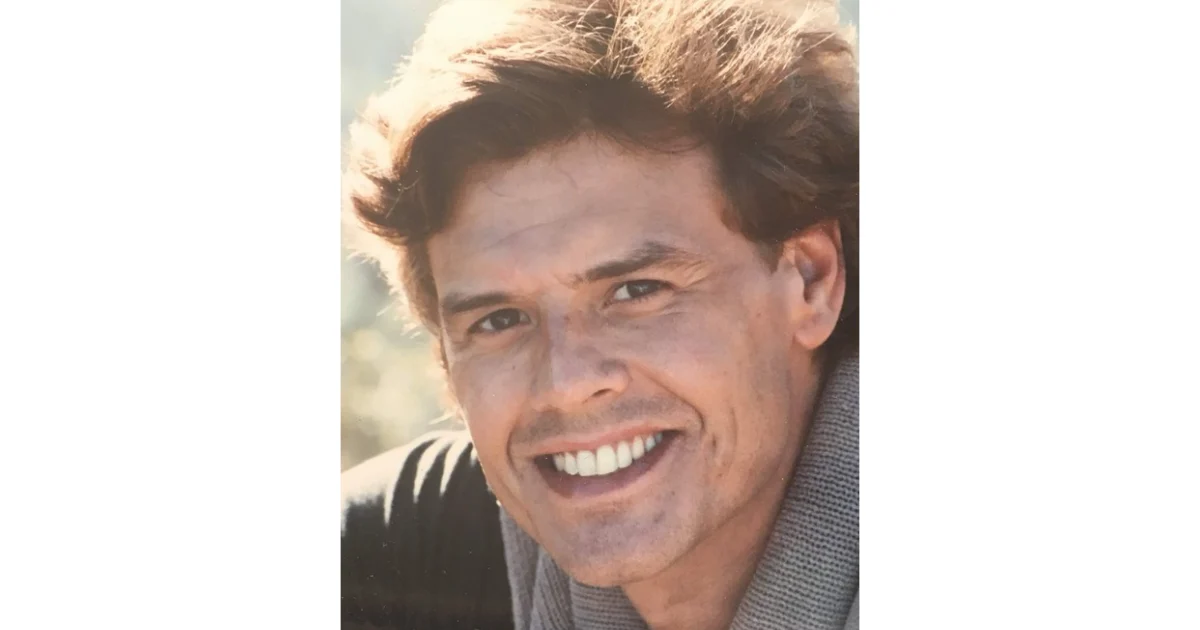
The entertainment industry is mourning the loss of Randall England, a multifaceted talent whose career spanned four decades and encompassed television, film, theater, and international modeling. England, who was 75, passed away on September 25 in Los Angeles. While his family has not disclosed a specific cause of death, their request for memorial donations to be directed to the Esophageal Cancer Action Network (ECAN) suggests a battle with the disease, providing a somber note of reflection on his final chapter.
A Career Built on Range and Resilience
Born on September 22, 1951, in Oklahoma City, England’s path to the entertainment industry was marked by a commitment to the craft of acting and a global perspective gained through his early work in the fashion world. After graduating from the University of Oklahoma, he entered the industry not as an actor, but as a model in the early 1970s. This profession allowed him to travel extensively, working in major fashion capitals including New York, London, Zurich, and Milan before eventually settling in Los Angeles.
His transition to acting was deliberate and grounded in rigorous training. England sought out the tutelage of legendary acting coaches, most notably Kim Stanley and Stella Adler. These formative years under such iconic figures provided him with the dramatic foundation that would define his professional trajectory. His dedication to theater was particularly notable; he commanded the stage in classic productions such as Arthur Miller’s All My Sons, Tennessee Williams’ The Glass Menagerie, and Anton Chekhov’s The Three Sisters. His performance in the latter earned him a prestigious Drama League Award for Best Ensemble Cast, a testament to his ability to thrive within a collaborative artistic environment.
Chronology of a Storied Professional Life
England’s professional journey serves as a blueprint for the working actor in Hollywood—a career defined by consistency and the willingness to tackle a wide variety of roles.
- 1970s: England begins his career as a high-fashion model, gaining international exposure across Europe and the United States.
- 1978: He makes his first credited foray into film with an uncredited role in the television movie Ruby and Oswald, a political thriller centered on the aftermath of the JFK assassination.
- 1984: This year serves as a significant turning point. England appears in the series This Is the Life and secures the role that would bring him his greatest mainstream recognition: Jack Slater on the long-running ABC soap opera General Hospital.
- 1984–1986: During his tenure on General Hospital, England portrays the villainous Jack Slater. His performance spanned more than 30 episodes, cementing his status as a recognizable face in the daytime television landscape.
- 1990s: England expands his television footprint with guest-starring roles, including a two-episode arc on the global cultural phenomenon Baywatch.
- 2008: He showcases his versatility by shifting into voice acting, providing the voice of the Butler in the successful family film Beverly Hills Chihuahua.
- 2010s: England moves behind the camera to explore documentary filmmaking, notably producing The Needs of Kim Stanley, a project that honored his former mentor and provided insight into the life of one of the 20th century’s most respected actresses.
- 2018: His final professional credit is recorded in the film Shiner.
The Significance of the Daytime Villain
In the context of American television history, England’s work on General Hospital in the mid-1980s holds a specific cultural weight. Daytime soap operas during this era were at the height of their influence, with millions of viewers tuning in daily. Actors like England were responsible for driving the narrative tension that kept these shows atop the ratings. By portraying the "villain," England occupied a crucial role in the soap opera ecosystem—a character designed to challenge the protagonists and catalyze plot progression.
The longevity of his appearances suggests that he was a reliable performer, capable of handling the high-volume, rapid-turnaround nature of daytime television production. His ability to move seamlessly from the high-brow intensity of Chekhovian theater to the episodic demands of General Hospital and the lighthearted voice-over work of Beverly Hills Chihuahua highlights a rare professional fluidity.
Behind the Scenes: The Producer’s Perspective
Perhaps one of England’s most meaningful contributions to the arts was his transition into producing. His work on The Needs of Kim Stanley was more than a professional endeavor; it was an act of preservation. By documenting the life and methodology of his mentor, England contributed to the historical record of acting techniques in the 20th century. This project underscored his intellectual investment in the craft and his desire to pass on the lessons he learned from his predecessors.
Documentary production requires a distinct set of skills compared to acting—namely, the ability to synthesize biographical narrative and maintain objective storytelling. England’s involvement in this project demonstrated a capacity for deep research and a reverence for the history of the performing arts.
Legacy and Community Impact
England is survived by his daughter, Micaela Reed, her husband Sam, and his two grandchildren, Katherine and Julian. His family also includes his mother, Catherine Burgess, and his sister, Linda Baker.
The decision by his family to highlight the Esophageal Cancer Action Network (ECAN) as the preferred recipient for memorial donations provides a clear signal regarding the nature of his passing. Esophageal cancer remains a challenging diagnosis, and by directing public attention to ECAN, the family is contributing to the broader goal of increasing awareness, early detection, and research funding for the disease. This act of service is reflective of the private nature of the man behind the public persona.
Broader Implications: The "Working Actor" Model
The death of Randall England invites a reflection on the "working actor" model in Hollywood. While the industry is often fixated on the trajectories of A-list celebrities, the foundation of the entertainment economy is built upon the work of professionals like England. His career trajectory demonstrates the necessity of adaptability—moving from the modeling runway to the stage, to the soap opera set, to the recording booth, and finally to the producer’s chair.
England’s life serves as a reminder of the sheer dedication required to maintain a presence in the industry for nearly 50 years. He was not defined by a single role but by a collection of performances that allowed him to sustain a career in a famously volatile field. His background in stage work—specifically his award-winning ensemble performance—provided the rigor that allowed him to remain employable across decades of technological and cultural shifts in media.
Concluding Thoughts
Randall England’s legacy is not confined to his credits on IMDB or the archives of ABC. It is found in the training he received, the stories he helped tell, and the connections he maintained with his family and peers. He represented a generation of actors who viewed their profession as a lifelong pursuit of craft rather than a fleeting search for fame.
As the industry continues to evolve, the career of a professional like England remains a standard-bearer for versatility and commitment. His passing marks the end of a long, varied, and productive life, leaving behind a body of work that reflects a genuine devotion to the art of storytelling. Whether through the lens of a camera, the stage lights of a theater, or the quiet, careful work of producing a documentary, England’s influence remains woven into the fabric of the creative community he spent his life serving. The arts community, having benefited from his contributions, now looks toward his family’s requested charities as a way to honor the man who spent his life committed to the craft of the performance.