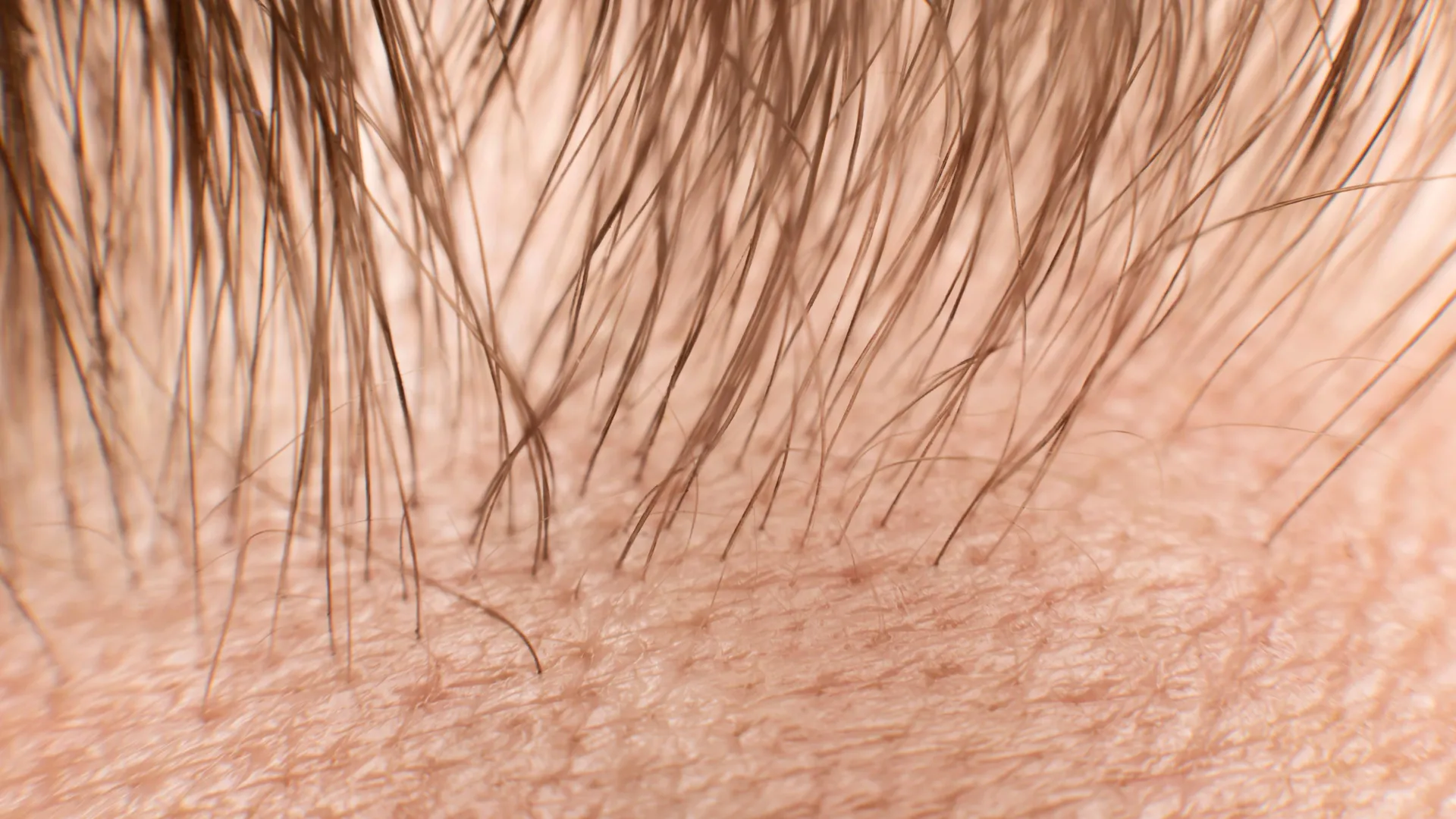
Long before a mammal is born, its skin begins establishing the precise locations where hair will eventually grow, forming intricate geometric arrangements that are as unique to a species as a fingerprint. For decades, developmental biologists have sought to unlock the mechanism behind this biological architecture. A recent study conducted by researchers at the University of Geneva (UNIGE) has provided a transformative answer, suggesting that the complexity of nature’s patterns may be governed by a surprisingly simple, universal set of cellular interactions. By applying principles of chemotaxis, the team has successfully demonstrated that the orderly distribution of hair follicles—from the fuzz of a common house mouse to the structured coat of a spiny mouse—is not the result of a rigid, pre-programmed map, but rather an emergent property of basic chemical signaling.
The Mystery of Morphogenesis
The study, published in the Proceedings of the National Academy of Sciences (PNAS), addresses a fundamental question in evolutionary biology: how does an undifferentiated patch of embryonic skin decide where to sprout hair? Across the animal kingdom, hair, feathers, and scales originate from primordial structures known as placodes. These microscopic thickenings in the embryonic epidermis act as the "founding fathers" of adult appendages.
For years, the prevailing wisdom in the scientific community has been the "expansion-induction" model. This theory posits that once a placode forms, it acts as a localized inhibitory center, secreting a chemical signal that prevents neighboring cells from becoming placodes. As the skin stretches during embryonic growth, gaps appear that are sufficiently distant from the inhibitory influence of existing placodes, allowing new ones to emerge. While this model elegantly explained the spacing observed in laboratory mice (Mus musculus), it struggled to account for the diverse, highly ordered, and sometimes directional patterns observed in other mammalian species.
A New Framework: The Role of Chemotaxis
Led by Senior Lecturer Athanasia Tzika and Professor Michel Milinkovitch of the UNIGE Department of Genetics and Evolution, the research team sought to move beyond the expansion-induction model by investigating chemotaxis. Chemotaxis is a well-documented biological process wherein cells move directionally in response to chemical gradients. This mechanism is vital for human survival, enabling white blood cells to migrate toward sites of infection or injury.
The UNIGE team hypothesized that a similar mechanism might govern the migration of dermal cells toward the epidermis, where they coalesce to form the foundations of hair follicles. To test this, the researchers developed a sophisticated mathematical model simulating the dynamic interaction between dermal cells and chemical signals released by the skin’s surface. Unlike the expansion-induction model, which focuses on inhibition, this new framework focuses on attraction and cellular movement.
The simulation results were striking. The model successfully replicated the developmental patterns seen in the common laboratory mouse, including the precise sequence of follicle formation. Even more significantly, it achieved this without the need for a complex "master blueprint" that assigns coordinates to every individual hair. Instead, the placodes emerged spontaneously, governed by the local interactions of cells responding to their chemical environment.
Comparative Biology: The Spiny Mouse Case Study
To validate the universality of their findings, the researchers applied their model to a species with a significantly different coat morphology: the spiny mouse (Acomys dimidiatus). Unlike the somewhat stochastic distribution of follicles in standard lab mice, the spiny mouse exhibits a highly regular, linearly aligned pattern of hair growth.
The traditional expansion-induction model failed to account for this directional alignment. However, when the UNIGE team adjusted their mathematical parameters—specifically the cellular sensitivity to chemical signals and the growth rate of the embryonic skin—the model replicated the spiny mouse’s distinct follicle arrangement with high accuracy.
This success serves as a powerful argument for the efficiency of evolution. It suggests that nature does not need to reinvent the regulatory logic for every new species. By tweaking a few "knobs"—the intensity of chemical signals, the mobility of cells, and the physical expansion of the tissue—evolution can generate a vast spectrum of structural complexity from a single, conserved mechanism.
Historical Context and Scientific Significance
The quest to understand pattern formation—often termed "morphogenesis"—dates back to the 1952 seminal work of Alan Turing. In his paper, The Chemical Basis of Morphogenesis, Turing proposed the "reaction-diffusion" model, which suggested that two chemicals interacting and diffusing at different rates could produce stable, repeating patterns such as stripes or spots.
While Turing’s theory provided the mathematical foundation for pattern formation in nature, applying it to the specific, complex anatomy of hair follicles has remained a significant challenge. The UNIGE research represents a major milestone in this field. By moving the focus from static chemical diffusion to active cell migration (chemotaxis), the researchers have bridged the gap between abstract mathematical models and observable biological behavior.
"Our work suggests that simple cellular interactions can generate the remarkable diversity of tissue architectures observed throughout evolution," says Professor Milinkovitch. "The differences observed between species result from the same self-organization process, but with variations in the interactions between cells and chemical signals."
Implications for Developmental Biology and Medicine
The implications of this discovery extend far beyond the study of hair growth. The mechanisms identified by the UNIGE team are likely fundamental to many other aspects of embryonic development. The formation of glands, teeth, and various organs involves similar processes of cell recruitment and pattern establishment.
From a clinical perspective, understanding the precise mechanisms of follicle formation could have profound applications in regenerative medicine. Researchers investigating hair loss, skin grafting, and even the reconstruction of damaged epithelial tissues may find that the key to success lies not in manually "placing" cells, but in manipulating the chemical and physical signals that instruct cells to organize themselves.
Furthermore, this study highlights the growing importance of computational biology. By utilizing simulations to test biological hypotheses, researchers can iterate through scenarios that would be impossible to observe in real-time within the womb. The ability to model these interactions allows scientists to predict how variations in gene expression might alter physical morphology, potentially unlocking the mysteries behind congenital structural anomalies.
Peer Reception and Future Research
The scientific community has reacted with cautious optimism, acknowledging the elegance of the UNIGE model. Experts in developmental genetics have noted that while the model is compelling, further experimental validation—perhaps using advanced imaging techniques to track real-time cell migration in embryonic tissue—will be necessary to confirm that the observed mathematical patterns correlate exactly with biological reality.
The researchers have signaled that their next steps will involve deeper investigations into the specific chemical signaling pathways involved. By identifying the exact molecules that act as the "attractants" in this chemotactic process, they hope to gain a more granular understanding of how these signals are encoded in the genome.
Conclusion: Nature’s Elegance
The discovery that the complex, beautiful patterns of mammalian skin are the result of simple, spontaneous self-organization is a testament to the economy of nature. It challenges the assumption that biological complexity requires intricate, top-down instruction. Instead, it posits that life is governed by a few fundamental rules, which, through the pressures of evolution, have been refined to produce the incredible diversity of life we see today.
As Athanasia Tzika and her colleagues continue their work, they provide a compelling answer to the question of how the body creates such orderly patterns. By embracing the simplicity of cellular interaction, the UNIGE team has not only solved a long-standing riddle of hair follicle development but has also opened a new door into the study of morphogenesis, potentially rewriting our understanding of how organisms are constructed from the ground up.