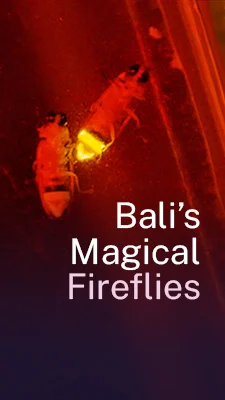
The enchanting nocturnal displays of fireflies, long a staple of the tranquil Balinese landscape, are facing an unprecedented existential threat across the Indonesian island of Bali, prompting local conservationist Wayan Wardika to spearhead a pioneering effort to restore their populations. Across Southeast Asia, bioluminescent insects are disappearing at an alarming rate due to a combination of rapid urbanization, habitat fragmentation, light pollution, the heavy reliance on agricultural pesticides, and shifting climatic patterns. As Bali undergoes relentless economic development and infrastructural expansion, its once-abundant firefly populations have plummeted, transforming a familiar natural spectacle into an increasingly rare phenomenon.
In response to this ecological crisis, Wayan Wardika launched "Bring Back the Light" in 2020, establishing what remains Indonesia’s sole dedicated firefly conservation initiative. Operating with a lean team of committed scientists and environmentalists, the project centers on the meticulous breeding of fireflies in controlled environments before reintroducing them into their native habitats. However, as the initiative has evolved, Wardika and his colleagues have realized that captive breeding alone cannot reverse the tide of decline. True sustainability requires a fundamental shift in how human communities interact with the natural environment. Consequently, the initiative has expanded its mandate to champion comprehensive habitat protection, most notably by lobbying and working alongside neighboring farmers to transition away from chemical-heavy farming methods and embrace organic agricultural practices.
The Chronology of an Ecological Crisis
To understand the current plight of Bali’s fireflies, one must examine the rapid socioeconomic transformations that have swept the island over the past several decades. Historically, Bali’s traditional agricultural systems—characterized by the subak, a cooperative water management system deeply rooted in local philosophy—created a harmonious mosaic of flooded rice paddies that served as ideal breeding grounds for fireflies and countless other aquatic and terrestrial species.
By the late 20th and early 21st centuries, however, the pressures of globalization, tourism-driven real estate development, and modern intensive farming began to fracture these traditional ecosystems.
- Pre-2000s: Fireflies were ubiquitous across rural Bali, illuminating fields and riverbanks in vast, synchronized displays that became deeply ingrained in local folklore and cultural aesthetics.
- 2000–2015: Rapid tourism development spurred widespread land-use changes. Natural wetlands, marshes, and traditional agricultural plots were increasingly converted into concrete structures, resorts, and paved roadways, introducing unprecedented levels of artificial light pollution.
- 2015–2019: The widespread adoption of synthetic chemical fertilizers, broad-spectrum insecticides, and herbicides among local farmers looking to maximize crop yields caused collateral devastation to insect populations, wiping out sensitive larval stages of fireflies.
- 2020: Recognizing the imminent local extinction of firefly species, Wayan Wardika founded "Bring Back the Light" amid the global COVID-19 pandemic, establishing an experimental breeding facility to study firefly life cycles and test viable reintroduction strategies.
- 2021–Present: The initiative shifted from a purely scientific breeding model to a community-centric conservation framework, integrating farmer education programs aimed at phasing out chemical pesticides in favor of regenerative, organic agriculture.
Supporting Data and Environmental Factors
The decline of fireflies in Bali is not an isolated incident, but rather a prominent micro-cosm of a global phenomenon often referred to by entomologists as the "insect apocalypse." Scientific studies spanning the globe indicate that insect populations are declining at rates exceeding two percent per year in some regions, driven by interlocking anthropogenic pressures.
In Southeast Asia, fireflies face four primary drivers of decline, all of which are acutely present in modern Bali:
- Habitat Loss and Fragmentation: As concrete replaces organic soil and dense forests give way to urban sprawl, fireflies lose the damp, undisturbed environments necessary for their larval stages, which often require rotting logs, moist leaf litter, and unpolluted water sources to thrive.
- Artificial Light Pollution: Fireflies rely heavily on bioluminescent signaling to find mates. Urbanization introduces pervasive artificial lighting from streetlights, buildings, and vehicles, which masks the subtle glow of the insects, severely disrupting mating rituals and reproductive success.
- Pesticide Accumulation: Modern agricultural practices heavily utilize organophosphates and other chemical agents designed to eradicate crop pests. Unfortunately, these chemicals are non-selective, poisoning the snails, slugs, and soft-bodied insects that firefly larvae feed upon, while also directly toxic to the fireflies themselves.
- Climate Change: Unpredictable monsoon patterns, prolonged droughts, and rising temperatures alter the micro-climates that trigger seasonal emergence and breeding cycles, throwing synchronized natural phenomena out of alignment.
Entomological surveys conducted across the region suggest that without immediate, localized interventions, several endemic species of fireflies could face functional extinction within the decade, permanently altering tropical food webs and robbing ecosystems of critical biological indicators of soil and water health.
The Strategy of Bring Back the Light
At the core of Wayan Wardika’s initiative is a dual-pronged methodology that combines rigorous biological science with grassroots community engagement. Operating out of local facilities, the "Bring Back the Light" team focuses heavily on understanding the complex life cycles of local firefly species—such as those belonging to the Lucihotela and Pteroptyx genera, famed for their mesmerizing synchronized displays along mangrove and riverine corridors.
Breeding fireflies in captivity is a delicate and labor-intensive process. Researchers must meticulously replicate optimal humidity, temperature, and dietary conditions, providing a continuous supply of micro-invertebrates for the carnivorous larvae to consume. Once mature specimens successfully emerge, they are carefully tagged and released into protected zones where threats have been minimized.
However, Wardika remains the first to acknowledge that releasing laboratory-bred insects into a hostile environment is ultimately futile. "You cannot simply breed fireflies in a vacuum and expect them to survive in a landscape dominated by poisons and concrete," notes an environmental analyst familiar with the project. "Wayan’s breakthrough was recognizing that conservation must happen upstream—both literally, in terms of watershed health, and socially, in terms of changing farming culture."

To address this, Wardika has dedicated substantial energy to conducting outreach among local farming cooperatives. By demonstrating that organic farming methods can yield comparable economic returns while restoring soil fertility and biodiversity, the initiative has successfully persuaded several neighboring agriculturalists to abandon synthetic chemical inputs. These organic zones serve as safe havens, allowing reintroduced firefly populations to establish self-sustaining breeding colonies.
Official Responses and Perspectives
While grassroots initiatives like "Bring Back the Light" operate on the frontline of conservation, regional authorities and agricultural experts have increasingly begun to take notice of the broader implications of insect loss.
Environmental ministries in Indonesia have historically focused on flagship macro-fauna, such as the Balinese starling, orangutans, and marine ecosystems. However, independent ecologists argue that the quiet disappearance of insects signals systemic environmental degradation that threatens soil fertility and crop pollination services essential to human survival.
"Initiatives led by individuals like Wayan Wardika represent a vital bridge between traditional ecological knowledge and modern conservation science," says Dr. Kadek Ariawan, an environmental policy researcher based in Denpasar. "Governments cannot place conservation officers in every village. True environmental recovery relies on community champions who can translate complex ecological decline into tangible, local action—such as convincing a farmer to put down the pesticide bottle."
Local farmers who have partnered with Wardika report an initial skepticism regarding the transition to organic farming, noting fears of crop loss and economic vulnerability. Yet, educational workshops provided by the conservation team—highlighting long-term cost savings on chemical fertilizers and the resurgence of beneficial predators like frogs, spiders, and birds—have gradually shifted community sentiment. For many participants, the return of the firefly has become a living metric of successful ecological restoration.
Broader Impact and Global Implications
The work being conducted in Bali carries profound lessons for other rapidly developing tropical regions grappling with the dual pressures of economic modernization and ecological collapse. Fireflies serve as classic bioindicators; because they are extremely sensitive to environmental toxins, soil compaction, and water pollution, their presence or absence offers an immediate diagnostic assessment of ecosystem health.
When fireflies vanish, it is a warning sign that the foundational layers of the food web are collapsing. Conversely, when projects like "Bring Back the Light" successfully restore firefly populations, it demonstrates that localized environmental healing is achievable even in heavily altered landscapes.
The implications of Wardika’s work extend beyond biodiversity preservation into the realm of sustainable tourism. Bali’s economy relies heavily on tourism, traditionally marketed around natural beauty, lush landscapes, and pristine environments. As concrete spreads and natural wonders fade, the island risks losing the very aesthetic appeal that draws millions of international visitors annually. Restoring the nighttime spectacle of flashing fireflies enhances ecotourism potential, offering travelers a deeper, more regenerative connection to the island’s natural heritage.
Furthermore, the transition to organic agriculture championed by the initiative contributes directly to climate resilience. Organic soils retain water more effectively, reduce chemical runoff into local rivers and coastal coral reefs, and sequester higher volumes of carbon than soils degraded by synthetic fertilizers.
Conclusion and Future Outlook
As "Bring Back the Light" looks toward the future, Wayan Wardika and his team face significant ongoing challenges, including securing long-term funding, expanding breeding capacities, and scaling community outreach across other districts in Bali. The forces of urbanization and climate change show no signs of abating, meaning conservationists must continuously adapt their strategies to stay ahead of environmental degradation.
Yet, the project stands as a powerful testament to the impact of grassroots determination. By uniting scientists, farmers, and local communities under a shared vision of ecological stewardship, Wardika is proving that the loss of biodiversity is not an inevitable fate. Through patient breeding, habitat restoration, and a courageous return to chemical-free agriculture, the quiet fields of Bali may yet reclaim their lost luminescence, offering a guiding light for conservation efforts worldwide.