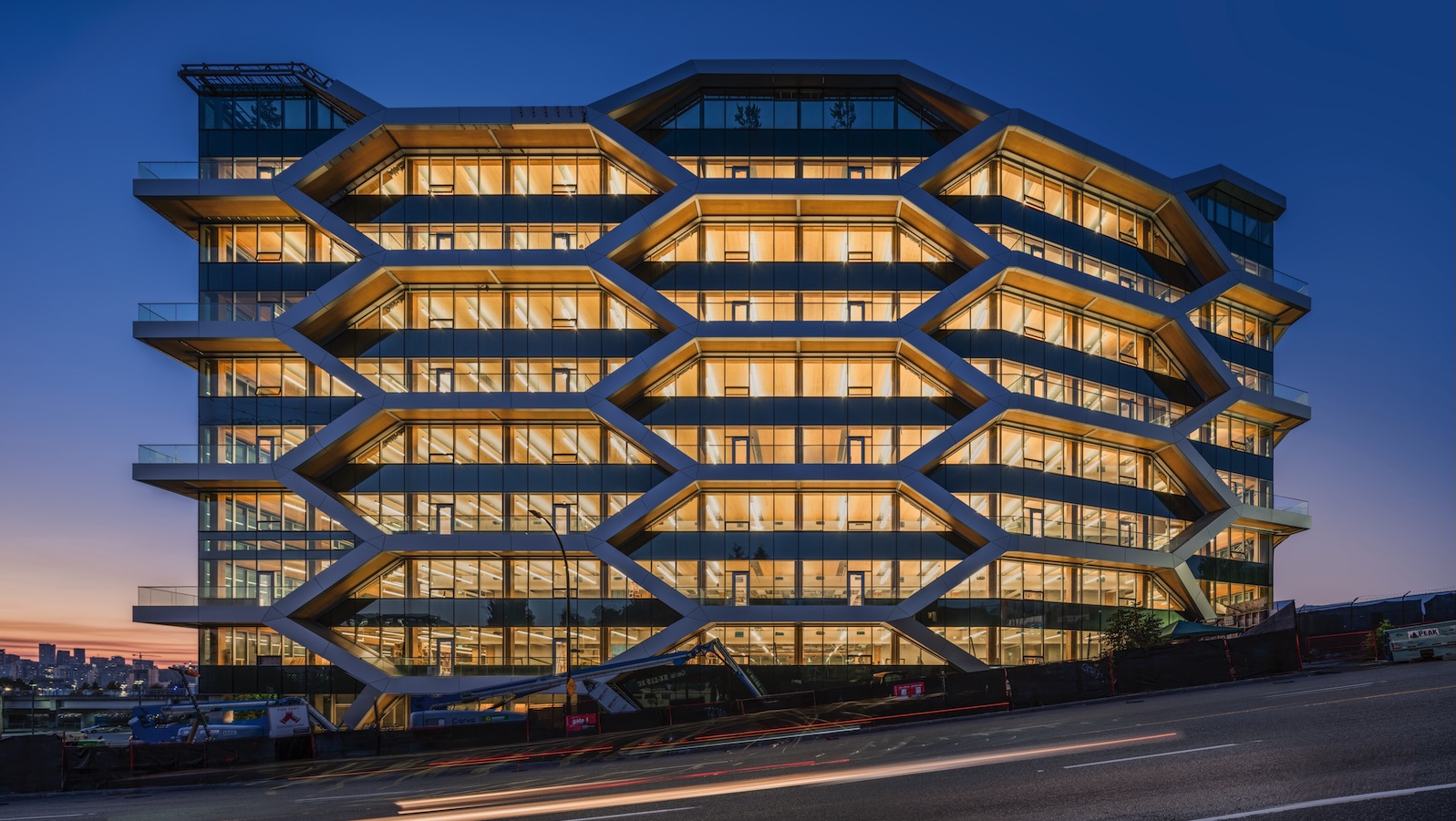
The architectural silhouette of the modern metropolis, long defined by the cold rigidity of steel and the gray expanse of concrete, is undergoing a fundamental transformation as designers look toward the natural world for solutions to the climate crisis. In Vancouver, British Columbia, this shift has reached a new milestone with the completion of the Hive, a 10-story office building that represents the cutting edge of "mass timber" construction. As North America’s tallest brace-framed, seismic-force-resisting timber structure, the Hive is not merely a feat of engineering; it is a testament to a growing movement that seeks to marry ancient biological adaptations with 21st-century technology.
This resurgence of wood in high-rise construction is driven by the urgent need to decarbonize the building sector, which is responsible for approximately 39 percent of global energy-related carbon emissions. By utilizing engineered wood products like cross-laminated timber (CLT) and glue-laminated timber (glulam), architects are proving that the skyscrapers of the future can be grown in forests rather than forged in blast furnaces. The Hive joins an elite group of "plyscrapers," including the 284-foot Ascent MKE in Milwaukee, which currently holds the title of the world’s tallest timber building, in a global race to redefine the limits of organic architecture.
The Evolution of Structural Philosophy
For most of human history, wood was the primary medium for construction. However, the limitations of raw timber—susceptibility to fire, rot, and structural instability at height—led to its displacement during the Industrial Revolution. The 20th century was defined by the "International Style," where steel frames and reinforced concrete allowed cities to scale vertically. These materials provided the necessary stiffness and strength to withstand the forces of nature, but they did so at a staggering environmental cost. The production of cement and steel alone accounts for roughly 15 percent of all global carbon dioxide emissions.
The current return to timber is not a regression, but an evolution. Modern mass timber involves "engineering" wood by laminating layers of lumber together. In cross-laminated timber (CLT), these layers are glued at right angles, creating panels with extraordinary strength-to-weight ratios that rival steel. This manufacturing process allows architects to utilize smaller, younger trees from sustainably managed forests, rather than relying on the massive old-growth trunks required for traditional heavy timber.
Lindsay Duthie, an architect at Dialog—the firm behind the Hive—notes that this approach is a return to foundational principles. "I think we’re going back to how we used to build, which was with more wood," Duthie stated, highlighting the shift toward materials that are inherently more compatible with the planet’s ecological cycles.
Engineering Resilience: The Hive and Seismic Innovation
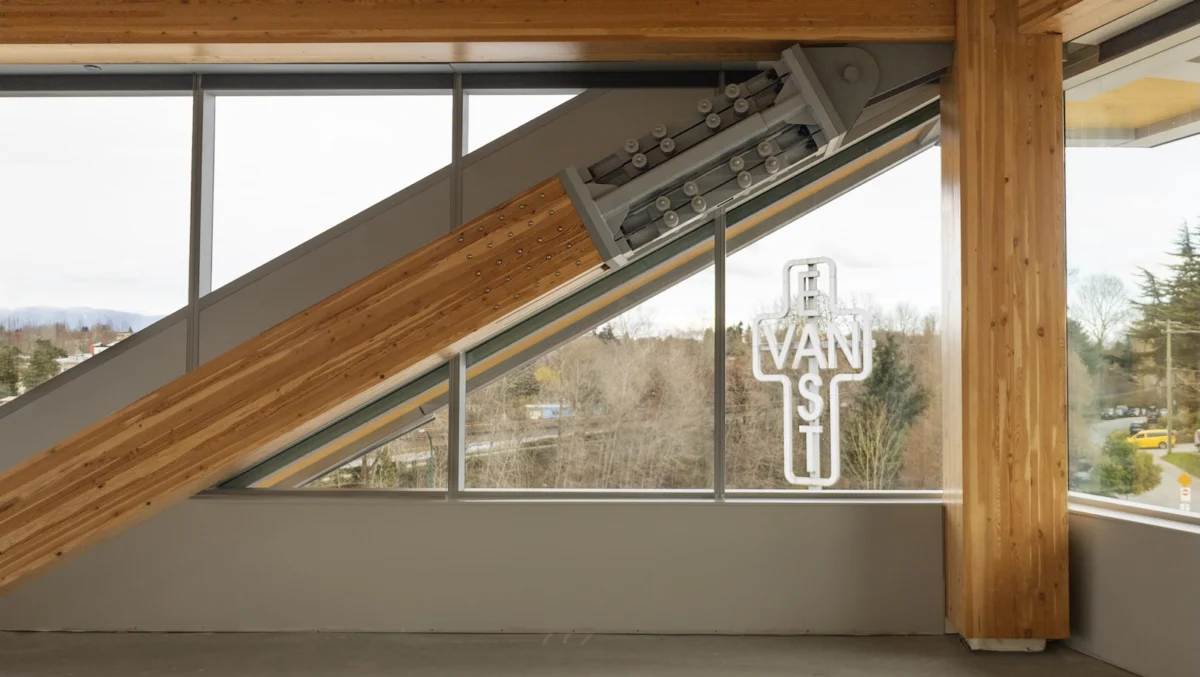
One of the most significant hurdles for tall timber buildings is their performance during seismic events. While trees in a forest naturally oscillate to dissipate wind energy, a 10-story building must remain structurally sound while protecting its occupants from the violent movements of an earthquake. The Hive addresses this through a sophisticated "brace-framed" system integrated with Tectonus dampers.
These dampers function as massive mechanical shock absorbers. During an earthquake, they allow the building to move and dissipate energy, preventing the structural frame from snapping or suffering permanent deformation. Crucially, these systems are designed to "recenter" the building after the shaking stops, ensuring that the structure remains habitable and requires minimal repairs.
This level of resilience was recently validated by researchers at the University of California, San Diego. In a landmark study, engineers constructed a full-scale, 10-story mass timber building on a massive "shake table"—one of the largest earthquake simulators in the world. The structure featured a "rocking wall" system, where timber walls are anchored with high-strength steel rods that allow the building to tilt and then snap back into place.
Over the course of the simulation, the structure was subjected to 88 separate earthquakes, including intensities mimicking the devastating 1994 Northridge quake. The results were unprecedented: the timber building survived every test with zero structural damage. Shiling Pei, a professor of civil and environmental engineering at the Colorado School of Mines who led the project, described the performance as "phenomenal." This data provides a crucial rebuttal to critics who argue that wood is too fragile for earthquake-prone regions like the Pacific Northwest or California.
The Carbon Equation and Environmental Impact
The primary catalyst for the mass timber movement is the concept of carbon sequestration. As trees grow, they absorb carbon dioxide from the atmosphere, converting it into biomass. When a tree is harvested and processed into CLT or glulam, that carbon is effectively "locked" within the building’s frame for the duration of its lifespan. In contrast, every ton of steel or concrete produced adds new carbon to the atmosphere.
Research indicates that using mass timber can reduce the embodied carbon of a building by 25 to 45 percent compared to traditional materials. Furthermore, the lightweight nature of wood means that foundations can be smaller, further reducing the amount of carbon-intensive concrete required.
Beyond carbon storage, the industry is framing mass timber as a tool for forest health. In many parts of North America, a century of fire suppression has left forests dangerously overcrowded. The U.S. Forest Service and other agencies are increasingly advocating for "thinning" operations to remove smaller trees and undergrowth that act as fuel for catastrophic wildfires. By creating a commercial market for this smaller-diameter timber through mass timber production, the construction industry can provide the financial incentive needed to manage forests more effectively, mimicking the natural thinning process once provided by lightning-strike fires.
Safety and the "Char Layer" Phenomenon
The most common concern regarding wooden skyscrapers is fire safety. However, mass timber behaves very differently than the light-frame wood used in residential housing. Because CLT and glulam beams are so dense, they do not ignite easily. When exposed to fire, the outer layer of the wood chars, creating a protective insulating barrier that prevents the core of the beam from burning.
"If you have a campfire, you end up at the end of the night with black logs," Duthie explained. "That’s the char layer that actually acts as a protective coating that prevents it from burning further."
This predictable charring rate allows engineers to design beams that can maintain their structural integrity for hours during a fire, often exceeding the safety ratings of unprotected steel, which can melt and fail suddenly at high temperatures. Building codes in British Columbia and various U.S. states have recently been updated to recognize these safety profiles, with the 2021 International Building Code (IBC) now allowing for mass timber structures up to 18 stories tall.
Biophilia: The Human Element of Timber Design
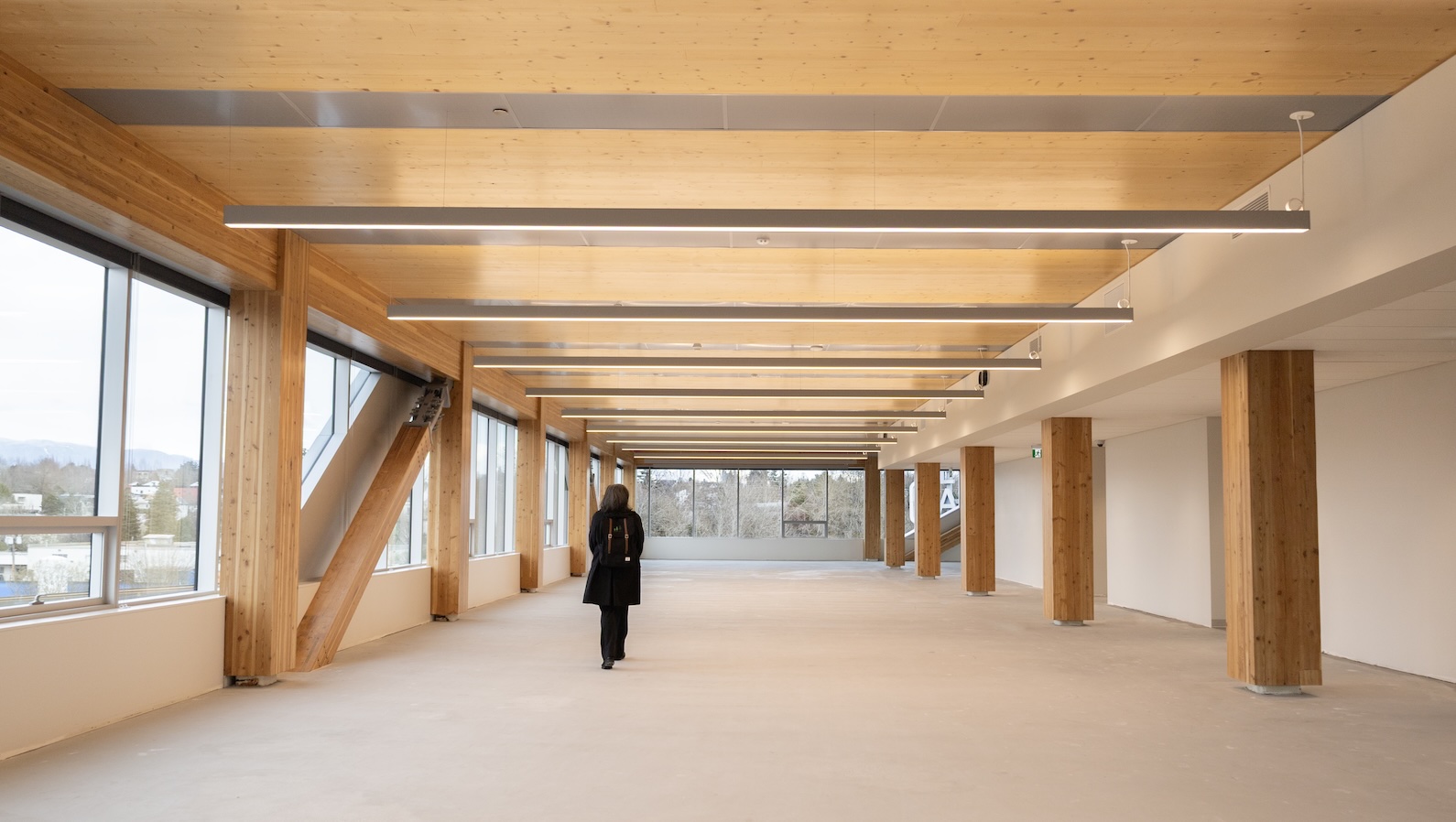
While the technical and environmental arguments for mass timber are robust, architects also emphasize the "biophilic" benefits—the innate human tendency to seek connections with nature. In traditional skyscrapers, structural elements are usually hidden behind drywall or drop ceilings. In mass timber buildings like the Hive, the wood is often left exposed, creating a warm, tactile environment that has been shown to reduce stress and improve productivity for occupants.
Katie Mesia, firmwide design resilience co-leader at Gensler, notes that this aesthetic appeal is a major driver for developers. "It has a tactile quality about it that people sort of want to interact with," Mesia said. "That desire to be close to nature has always been there."
This "human-centric" design approach is increasingly seen as a competitive advantage in the commercial real estate market, as companies seek office spaces that promote employee well-being and reflect corporate sustainability goals.
Challenges and the Path Forward
Despite the momentum, mass timber faces significant hurdles. The supply chain for CLT is still in its infancy in North America compared to Europe, leading to higher material costs in some regions. Additionally, while the timber frame is sustainable, most mass timber buildings still rely on concrete foundations and steel connectors.
The industry is also grappling with the logistics of construction. While timber panels are prefabricated and can be assembled much faster than pouring concrete—reducing neighborhood noise and construction timelines—they require precise engineering and leave little room for on-site errors.
However, the completion of the Hive and the success of the Milwaukee Ascent suggest that the industry is overcoming these obstacles. As more projects reach completion, the "proof of concept" grows stronger, encouraging regulators and insurers to support the expansion of wooden skylines.
The future of urbanism may not be found in new synthetic materials, but in the sophisticated application of the world’s oldest building block. By integrating the evolutionary resilience of the forest with modern seismic technology, the architects of the Hive and its contemporaries are creating a new blueprint for cities—one where the skyscrapers not only reach for the clouds but also help protect the atmosphere they inhabit.