The state of Texas is projected to forgo approximately $3.2 billion in sales tax revenue over the next two fiscal years due to a decade-old tax exemption designed to attract the data center industry. This figure, recently released by the Texas Comptroller of Public Accounts, underscores a dramatic shift in the state’s fiscal landscape as the rise of artificial intelligence and high-capacity computing transforms what was once a modest incentive program into one of the costliest tax expenditures in the state’s history.
Legislative leaders in Austin have signaled that the sustainability of this exemption is now under intense scrutiny. As the state prepares for the upcoming legislative session in January, lawmakers are weighing proposals to either significantly narrow the eligibility requirements for the tax break or repeal the program entirely. The debate pits the state’s desire to remain the nation’s premier destination for technology infrastructure against growing concerns over lost revenue, grid reliability, and the minimal job creation typically associated with these massive, automated facilities.
The Escalating Fiscal Impact of Data Center Exemptions
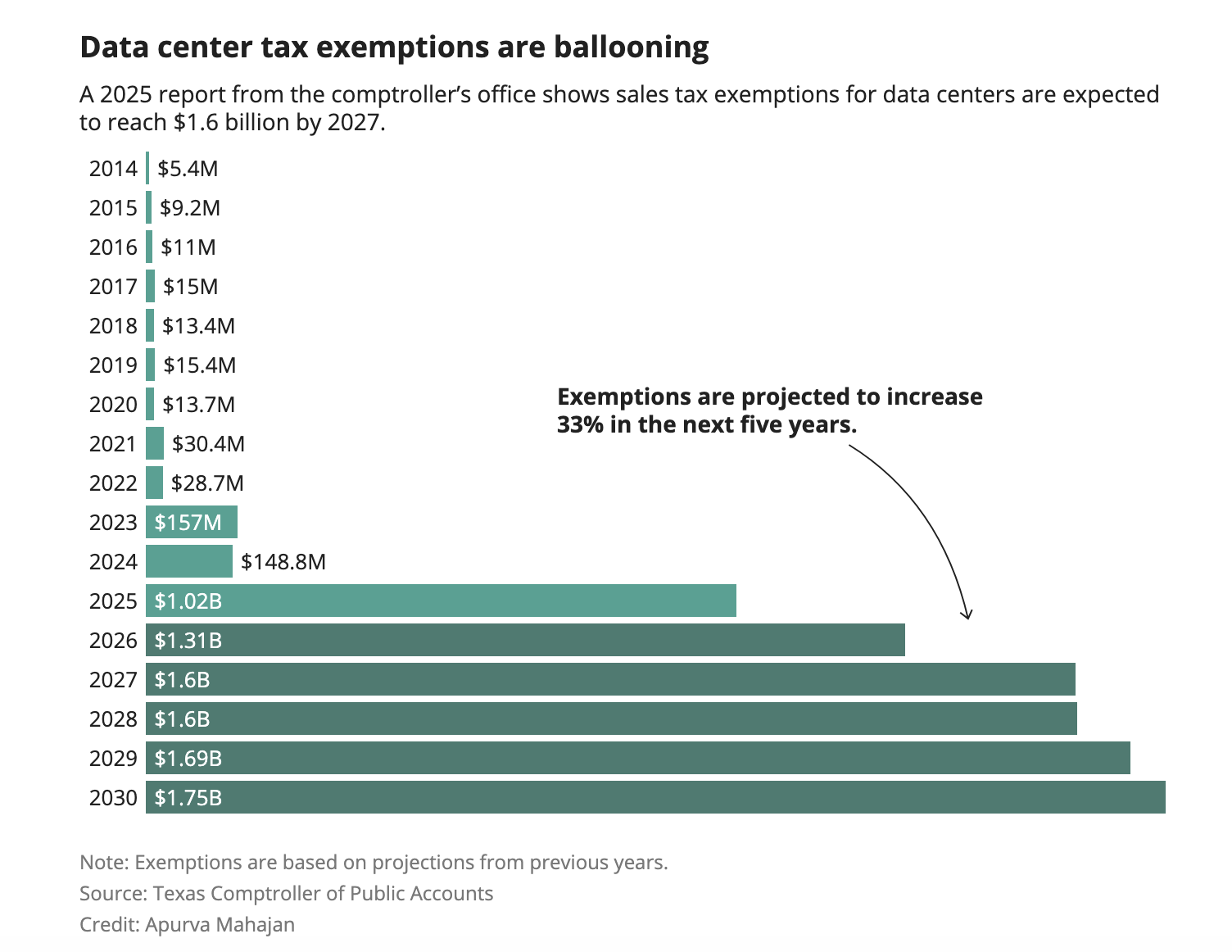
When the Texas Legislature first approved the sales tax exemption for data centers in 2013, the industry looked vastly different. At that time, data centers were primarily utilized for enterprise cloud storage and web hosting. The facilities were smaller, required less power, and the fiscal impact on the state treasury was negligible. Between 2014 and 2022, the exemption resulted in an annual loss of state revenue ranging from $5 million to $30 million—a figure considered a reasonable trade-off for attracting high-tech investment.
However, the landscape shifted violently with the advent of the generative artificial intelligence boom. By 2023, the cost of the exemption jumped to $150 million annually. For the current fiscal year, Texas is on track to forgo at least $1.3 billion. State projections indicate this number will continue its upward trajectory, with the annual value of the tax break expected to reach nearly $1.8 billion by fiscal year 2030.
The $3.2 billion loss projected for the upcoming biennium represents a significant opportunity cost for the state. To put this figure in perspective, the lost revenue could fully fund the state’s newly proposed school voucher program or double the capacity of the state’s disaster fund, which provides critical grants to local communities for flood prevention and emergency response. The program is now outpacing the cost of the controversial Chapter 313 tax abatement program, which was allowed to expire last year after lawmakers determined that the billions in local school property tax breaks granted to manufacturing and energy companies were no longer providing a sufficient return on investment for taxpayers.
A Chronology of the Texas Data Center Boom
The rise of Texas as a data center powerhouse was not accidental, but the scale of the current expansion has caught even the most seasoned fiscal analysts by surprise.
In 2013, then-State Representative Harvey Hilderbran authored the original legislation. The goal was to make Texas competitive with other states that were aggressively courting the burgeoning tech sector. Under the law, qualifying data centers are exempt from the state’s 6.25 percent sales and use tax on a wide array of equipment. This includes servers, storage devices, software, power infrastructure, cooling systems, and emergency generators. Notably, the exemption also applies to electricity—a major operational cost for facilities that run thousands of high-heat processors 24 hours a day.
By 2015, the legislature expanded the program to include a "large data center" category. To qualify for the standard exemption, a facility must be at least 100,000 square feet, create at least 20 full-time jobs paying 120 percent of the county’s median salary, and involve a $200 million investment over five years. The 2015 update created a tier for facilities larger than 250,000 square feet, requiring 40 jobs and a $500 million investment.
Just three years ago, the Comptroller’s office estimated the tax break would cost roughly $180 million for the 2027-2028 budget cycle. The 2025 revision to $3 billion reflects a fundamental miscalculation of the speed at which AI developers like Google, Meta, and Microsoft would scale their operations. Today, Texas hosts more than 300 operational data centers, with 142 more currently under construction. This surge has allowed Texas to surpass Virginia—long the world’s data center capital—in the number of active construction projects.
Political Backlash and Legislative Response
The sheer magnitude of the revenue loss has united a diverse coalition of lawmakers in opposition to the status quo. State Senator Joan Huffman, a Republican who chairs the powerful Senate Committee on Finance, has been among the most vocal critics. In recent statements, Huffman characterized the new fiscal projections as "unsustainable" and "extremely concerning." She has committed to filing legislation that would either repeal the exemption or drastically tighten its scope.
The sentiment is shared by Lieutenant Governor Dan Patrick, who recently directed the Senate to study the impact of these facilities on the state’s resources. Patrick emphasized the need for "safeguards" to ensure that the state is receiving a tangible benefit from these investments. The concern is not merely financial; there is a growing realization that while data centers represent billions in capital investment, they are not major employers. Critics argue that a $200 million facility that creates only 20 jobs—many of which may be security or basic maintenance—does not justify a billion-dollar tax giveaway.
On the other side of the aisle, State Representative Trey Martinez Fischer, a Democrat and vice chair of the House Ways and Means Committee, has echoed the call for a "two-way relationship." Martinez Fischer noted that while Texas welcomes business partners, the current arrangement places too much of the burden on the state’s tax base while the industry reaps the lion’s share of the rewards.
The Senate Committee on Finance is scheduled to hold interim hearings in July to dissect the industry’s impact. These hearings will likely focus on the broad list of exempt purchases and whether the current job-creation requirements are outdated in an era of hyper-automated AI clusters.
Industry Defense: The 21st-Century Economy
Representatives for the tech industry warn that any move to curtail the tax breaks could derail Texas’s momentum. The Data Center Coalition, a trade group representing major tech firms, argues that these facilities are the "lifeblood" of the modern economy, supporting everything from financial transactions and telehealth to global logistics and e-commerce.

Dan Diorio, the coalition’s vice president of state policy, argues that data centers should be viewed through the same lens as traditional manufacturing. He contends that the state benefits from the massive local property taxes these facilities pay, as well as the indirect economic activity generated during their construction. A study commissioned by the association claims that data centers generated $3.2 billion in other local and state taxes in 2024, theoretically offsetting the sales tax losses.
However, fiscal experts like Nathan Jensen, a professor at the University of Texas at Austin, remain skeptical of the "all-or-nothing" narrative often presented by industry lobbyists. Jensen points out that taxes are rarely the primary driver of location decisions for data centers. Texas’s abundance of land, its deregulated energy market, and its central geographic location are often more significant factors. Jensen suggests that even if the state were to tax these facilities at full value and lose half of the potential investment, the net gain to the taxpayer would still be significantly higher than the current arrangement.
Public Opposition and Infrastructure Strains
Beyond the halls of the State Capitol, data centers are facing a "not in my backyard" (NIMBY) movement that has crossed ideological lines. Residents in cities like San Marcos, Amarillo, College Station, and Waco have successfully pressured local officials to reject or delay data center projects.
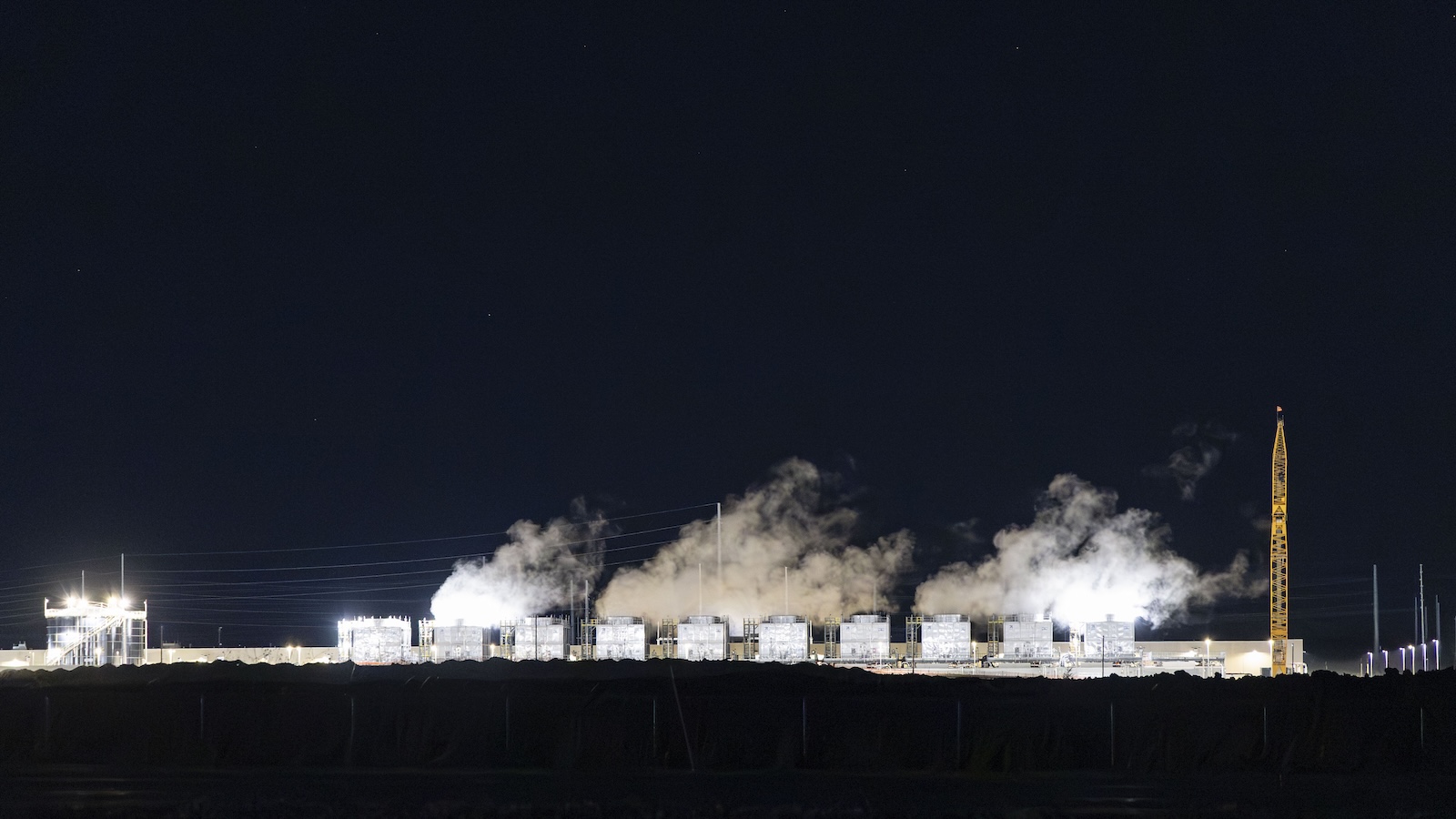
The primary concerns for local residents are often environmental and logistical. Data centers are notorious consumers of water and electricity. In some regions, a single large-scale facility can consume as much power as 700,000 homes. This puts immense strain on the ERCOT grid, which has already faced scrutiny over its reliability during extreme weather events. Furthermore, the cooling needs of these facilities can drain local aquifers, a major concern in drought-prone parts of Texas.
A recent Quinnipiac poll found that 65 percent of Americans oppose the construction of a data center in their immediate community. This public sentiment is providing additional political cover for lawmakers who wish to rein in the industry’s rapid expansion.
The National Landscape: A Race to the Bottom?
Texas is not alone in its struggle to balance tech growth with fiscal responsibility. Currently, 37 states offer some form of tax exemption for data centers. However, as the costs of these programs skyrocket due to the AI boom, several states are reconsidering their positions:
- Virginia: Lawmakers have called a special session to discuss phasing out a $1.6 billion annual sales tax break, arguing the revenue is needed to balance the state budget.
- Illinois: Governor JB Pritzker recently announced a two-year suspension of the state’s data center sales tax break, citing concerns over rising energy costs for residential consumers.
- Georgia and Michigan: Both states are currently debating legislation that would either cap the total value of data center exemptions or tie them to more stringent environmental and employment standards.
The trend suggests that the era of "blank check" incentives for the tech industry may be coming to a close. States are increasingly asking whether the industry, which is dominated by some of the most profitable companies in human history, actually requires public subsidies to build the infrastructure essential to their core business models.
Implications and Future Outlook
The upcoming 2027 legislative session in Texas will likely serve as a bellwether for how the state handles large-scale industrial incentives moving forward. If the legislature moves to repeal or significantly alter the data center tax break, it could signal a broader shift away from the "Texas Miracle" strategy of aggressive tax competition.
Lawmakers have several paths forward. They could implement a "sunset" provision that forces the program to expire unless explicitly renewed. They could also raise the job-creation and investment thresholds to reflect the current scale of the industry—perhaps requiring hundreds of jobs rather than 20 for a billion-dollar facility. Another option is to exclude electricity from the exemption, forcing data centers to contribute to the maintenance of the very grid they rely upon.
As the July hearings approach, both the tech industry and fiscal hawks are preparing for a protracted battle. For the industry, the stakes are the continued low-cost expansion of the AI frontier. For Texas taxpayers, the stakes are billions of dollars in potential revenue that could be used to address the state’s pressing needs in education, infrastructure, and public safety. Regardless of the outcome, the days of the quiet, low-cost data center tax break are over; the industry is now a central figure in the debate over the state’s economic and fiscal future.