
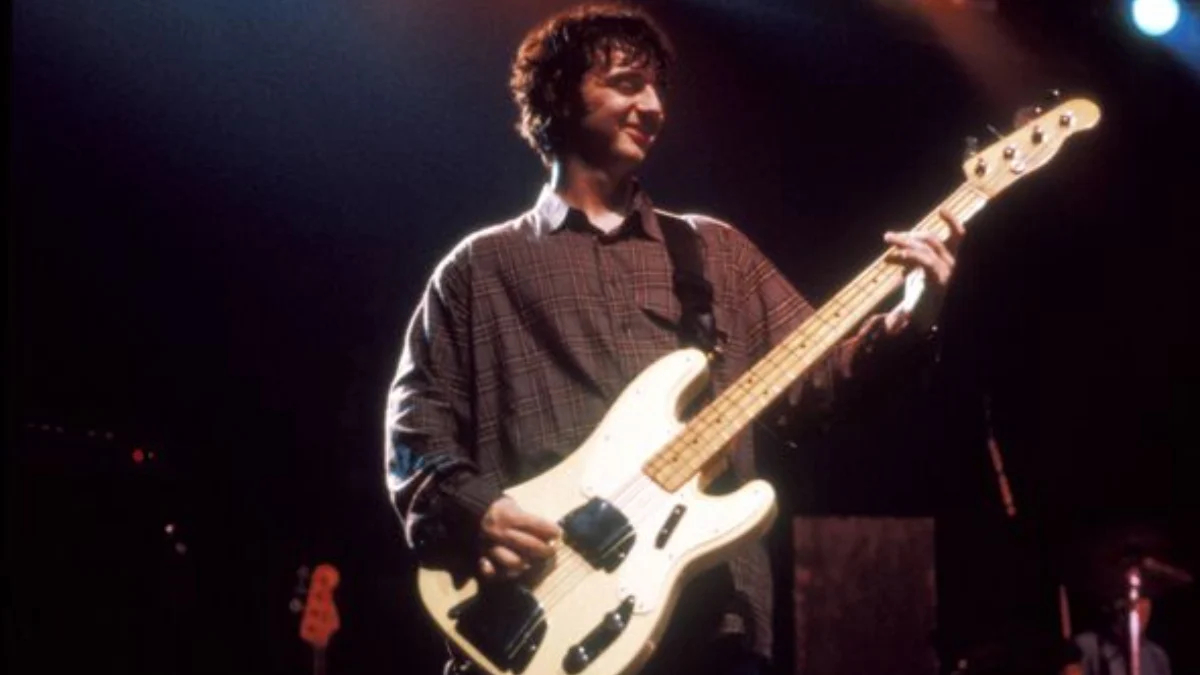
The Rock & Roll Hall of Fame has rectified an oversight in its 2026 induction class, confirming that Paul “Guigsy” McGuigan, the original bassist and a co-founder of the iconic British band Oasis, will be formally recognized alongside his former bandmates. This correction comes swiftly after initial reports indicated McGuigan was excluded from the official list of inductees, sparking a wave of support and calls for his inclusion from fans and observers of the music industry. The swift resolution highlights the Hall of Fame’s responsiveness to public feedback and its commitment to accurately representing the historical significance of inductees.
The Genesis of an Oversight and the Swift Correction
The initial announcement of the Rock & Roll Hall of Fame’s 2026 class, which prominently featured Oasis, failed to include Paul McGuigan. This omission was brought to light by publications such as Rolling Stone, which noted that while other early members like drummer Tony McCarroll were listed, McGuigan, a pivotal figure in the band’s formative years and their most critically acclaimed albums, was absent. McGuigan was an integral part of Oasis from their inception in 1991 until his departure in 1999. His distinctive basslines formed the bedrock of the band’s early sound, prominently featured on seminal albums like Definitely Maybe (1994), (What’s the Story) Morning Glory? (1995), and Be Here Now (1997). These albums not only defined the Britpop era but also achieved massive global commercial success, cementing Oasis’s legacy as one of the most influential rock bands of the 1990s.
The discrepancy immediately ignited a discussion within music circles, with many arguing that McGuigan’s contributions were indispensable to Oasis’s sound and success. The hashtag #JusticeForGuigsy began to trend on social media platforms, underscoring the widespread sentiment that his exclusion was a significant oversight. Within a remarkably short period, reportedly just two days, the Rock & Roll Hall of Fame updated its official website to include McGuigan as an inductee. The Hall of Fame has not explicitly detailed the cause of the initial omission, leaving open the possibility of a clerical error or a direct intervention from the band’s representatives. Regardless of the specific reason, the correction ensures that McGuigan’s crucial role in Oasis’s history is acknowledged by the esteemed institution.
Paul McGuigan: The Unsung Architect of Oasis’s Sound
Paul McGuigan, affectionately known as “Guigsy,” joined Liam and Noel Gallagher, Paul “Bonehead” Arthurs, and Tony McCarroll in forming Oasis in Manchester in 1991. He served as the band’s bassist throughout their most explosive period of creativity and commercial dominance. His rhythmic precision and understated melodic sensibility provided the vital anchor for the Gallagher brothers’ anthemic guitar riffs and soaring vocals.
McGuigan’s tenure with Oasis coincided with the band’s meteoric rise from the Manchester club scene to global superstardom. His basslines on tracks like "Supersonic," "Live Forever," "Wonderwall," and "Don’t Look Back in Anger" are instantly recognizable and have become integral to the fabric of modern rock music. His presence on stage, often a steady, unassuming figure, contrasted with the flamboyant personalities of the Gallagher brothers, yet his musical contribution was undeniably foundational.
By 1999, McGuigan had made the decision to leave Oasis. Reports at the time, including those from The Guardian, indicated that his departure was communicated via fax. This abrupt exit marked the end of an era for the band, and while Oasis continued with new members, the lineup that defined their initial success, including McGuigan, remained a subject of fan nostalgia and critical discussion.
The Significance of the Rock & Roll Hall of Fame Induction
The Rock & Roll Hall of Fame induction is one of the highest honors a musician or band can receive. It recognizes artists who have had a significant impact on the development and preservation of rock and roll music. For Oasis, their induction into the 2026 class acknowledges their profound influence on popular culture, particularly their role in revitalizing rock music in the 1990s and spearheading the Britpop movement.
The initial oversight regarding Paul McGuigan’s inclusion raised questions about the vetting process for Hall of Fame nominations. Historically, the Hall of Fame has faced scrutiny regarding its inclusion criteria and the representation of various eras and genres. However, the swift correction in Oasis’s case suggests a willingness to address such issues promptly when they arise, particularly when the omission of a key member is clearly evident to those familiar with the band’s history.
The inclusion of McGuigan not only corrects a factual error but also serves as a validation of his artistic contribution. It ensures that the narrative surrounding Oasis’s induction is more complete and accurate, reflecting the collective effort that went into creating their iconic sound.
Broader Context: The 2026 Rock & Roll Hall of Fame Class
Oasis is one of several prominent artists and groups being inducted into the Rock & Roll Hall of Fame in 2026. The diverse lineup reflects the Hall of Fame’s effort to honor a wide spectrum of musical achievements. Other inductees include:
- Wu-Tang Clan: The legendary hip-hop collective, recognized for their groundbreaking impact on the genre.
- Phil Collins: The celebrated solo artist and Genesis frontman, known for his prolific songwriting and drumming.
- Joy Division / New Order: The influential post-punk and electronic music pioneers, whose legacy spans two distinct yet connected bands.
- Sade: The Grammy-winning British singer, celebrated for her smooth, sophisticated blend of R&B, soul, and jazz.
- Iron Maiden: The iconic heavy metal band, a cornerstone of the New Wave of British Heavy Metal movement.
- Billy Idol: The British rock icon, known for his rebellious image and distinctive punk-infused rock sound.
- Luther Vandross: The multi-platinum selling R&B superstar, celebrated for his soulful voice and romantic ballads.
The induction ceremony is scheduled to take place at the Peacock Theater in Los Angeles on Saturday, November 14th. A broadcast of the event will subsequently air in December on ABC and be available for streaming on Disney+. This year’s ceremony promises to be a significant event, bringing together a remarkable array of musical talent to celebrate their enduring contributions to music history.
McGuigan’s Post-Oasis Life and Potential Attendance
While the Rock & Roll Hall of Fame induction is a significant recognition, Paul McGuigan’s personal life has taken a different trajectory since his departure from Oasis. Reports suggest he has largely stepped away from the music industry, prioritizing his family life and developing a passion for football (soccer). He has even co-authored a book, The Greatest Footballer You Never Saw, which delves into the life of the enigmatic English footballer Robin Friday.
Given his reported disinterest in the limelight and his past method of departure from Oasis, it remains uncertain whether McGuigan will attend the induction ceremony. The possibility, however, remains, and his presence would undoubtedly be a poignant moment for fans who have followed Oasis’s journey from its inception. The inclusion of his name in the official record, however, stands as a testament to his undeniable role in shaping one of rock music’s most significant bands. The correction by the Rock & Roll Hall of Fame ensures that the historical record is more accurate, acknowledging the full scope of talent that contributed to Oasis’s enduring legacy. The swift action taken by the Hall of Fame in response to public sentiment also underscores the evolving dynamics between institutions, artists, and their global fan bases in the digital age.










Leave a Reply