In a narrow 50-49 vote on Thursday, the United States Senate passed a resolution to repeal a 20-year moratorium on mining in Minnesota’s Boundary Waters Canoe Area Wilderness, utilizing a powerful and controversial legislative tool known as the Congressional Review Act (CRA). The decision marks a significant victory for proponents of domestic mineral production but has ignited a firestorm of criticism from environmentalists, tribal nations, and legal scholars who argue the move bypasses established regulatory processes and threatens one of the nation’s most pristine ecological treasures. The resolution now moves to the desk of President Donald Trump, who is widely expected to sign it into law, effectively opening the door for industrial-scale copper and nickel mining within the watershed of the million-acre wilderness.
The Congressional Review Act: A Tool of Rapid Deregulation
The Congressional Review Act, a 1996 law championed by then-House Speaker Newt Gingrich, was originally intended to give Congress a mechanism to oversee and occasionally overturn federal agency rules. Under the CRA, a simple majority in both chambers of Congress can pass a "joint resolution of disapproval" to invalidate a recently issued regulation. Critically, these resolutions are not subject to the Senate filibuster, allowing the majority party to bypass the 60-vote threshold usually required for significant legislation.
While the CRA was used only once in its first two decades, it has become a central pillar of the current administration’s deregulatory agenda. In 2017, the Trump administration used it to invalidate 17 rules from the Obama era. By 2025, that pace accelerated significantly, with the President signing 22 CRA repeals in a single year. Critics, including Erik Schlenker-Goodrich, executive director of the Western Environmental Law Center, argue that the act is being "weaponized" to dismantle years of scientific research and public commentary with minimal debate.
The application of the CRA in the Boundary Waters case is particularly controversial because of the timeline. The CRA typically grants Congress a 60-day window to overturn a rule after it is submitted. However, the protections for the Boundary Waters were established over three years ago during the Biden administration. Furthermore, the protections were enacted as a Public Land Order rather than a standard regulatory rule. Legal experts, such as Blaine Miller-McFeeley of Earthjustice, have described the Senate’s action as "extraordinarily legally questionable," suggesting that the move pushes the CRA into "uncharted territory" that will likely be challenged in federal court.
Ecological Significance and the Threat of Sulfide-Ore Mining
The Boundary Waters Canoe Area Wilderness (BWCAW) is a sprawling landscape of untouched forests, glacial lakes, and interconnected streams bordering Canada’s Quetico Provincial Park. It is the most visited wilderness area in the United States, supporting a robust outdoor recreation economy centered on canoeing, fishing, and hiking.
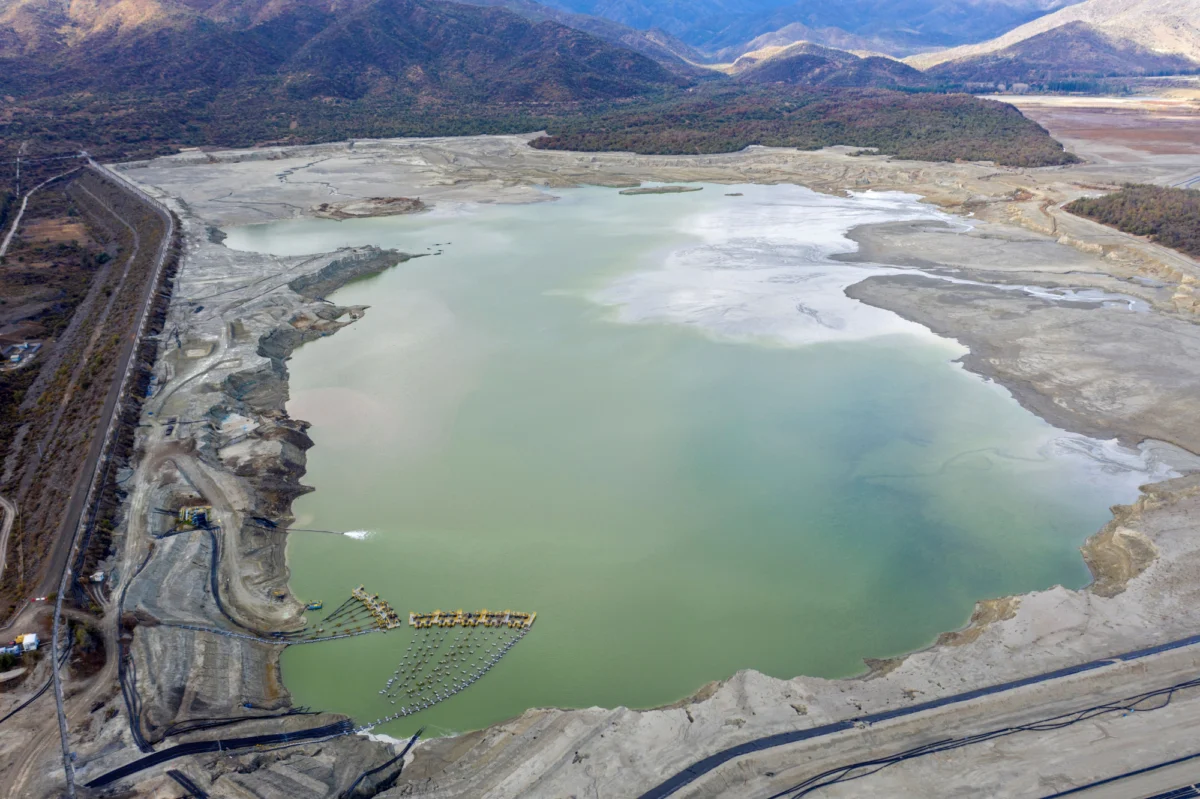
The primary concern for environmentalists is the specific type of mining proposed for the region: sulfide-ore copper mining. Unlike traditional iron ore mining, which has a long history in Minnesota, sulfide-ore mining involves extracting minerals from rock containing iron sulfides. When these sulfides are exposed to air and water, they create sulfuric acid, leading to acid mine drainage. This highly acidic runoff can leach heavy metals like mercury and arsenic into the surrounding watershed.
In 2016, the U.S. Forest Service conducted a comprehensive study and determined that a sulfide-ore mine in this specific watershed could cause "extreme" and "irreplaceable harm." The Forest Service’s opposition was rooted in the fact that the Boundary Waters’ hydrology is incredibly complex; once a contaminant enters the system, it could spread throughout thousands of interconnected lakes and streams, making remediation nearly impossible.
A Chronology of the Boundary Waters Dispute
The battle over the Boundary Waters has spanned several administrations, reflecting the deep divide in American land management priorities:
- 2016: The Obama administration’s Forest Service refuses to renew mineral leases for Twin Metals Minnesota, citing the risk of environmental catastrophe. A study is initiated to consider a 20-year withdrawal of the land from mining.
- 2018: The first Trump administration reinstates the Twin Metals leases and cancels the environmental study before its completion.
- 2022-2023: The Biden administration officially issues a Public Land Order establishing a 20-year moratorium on mining across 225,000 acres of the Superior National Forest, effectively protecting the Boundary Waters watershed.
- 2024-2025: Proponents of the mine, backed by Republican leadership, begin seeking legislative paths to overturn the moratorium, citing the need for "critical minerals."
- April 2026: Senate Republicans utilize the CRA to pass the resolution of disapproval, setting the stage for the repeal of the Biden-era protections.
The Economic Driver: AI, Defense, and Critical Minerals
The push to open the Boundary Waters is largely fueled by a global race for critical minerals. Copper and nickel are essential components for a wide array of modern technologies, including electric vehicle batteries, renewable energy infrastructure, and military hardware.

The surge in Artificial Intelligence (AI) has further strained global copper supplies. A report from S&P Global published earlier this year projected that copper demand will expand by 50 percent by 2040, driven by the massive amounts of wiring required for high-density data centers. Similarly, the Carnegie Endowment for Peace warned of a significant nickel deficit by 2035, noting that the United States currently has limited capacity for domestic production.
The Duluth Complex in Northeastern Minnesota, where the proposed mining would occur, is home to one of the world’s largest undeveloped deposits of these minerals. Proponents of the project, including Republican Senator Mike Lee of Utah, argue that domestic mining is a matter of national security, reducing reliance on foreign adversaries like China for the materials needed for the "green transition" and national defense.
However, critics point out a major flaw in this "self-reliance" argument: the U.S. lacks the infrastructure to process these minerals. Currently, the country has only three copper smelters and zero nickel smelters. Without domestic smelting capacity, the raw ore extracted from Minnesota would likely be shipped abroad for processing—often to the very countries the U.S. seeks to compete with—before being sold back to American manufacturers.
Corporate Interests and Tribal Sovereignty
At the center of the development push is Twin Metals Minnesota, a subsidiary of the Chilean mining giant Antofagasta. The project has long been mired in controversy, partly due to the connections between the company’s ownership and the political establishment. For years, the Luksic family, which controls Antofagasta, faced scrutiny for renting a Washington D.C. property to Ivanka Trump and Jared Kushner during the first Trump term. While the company maintains that its project will be the most environmentally advanced mine in history, local communities remain skeptical.
Perhaps the most significant opposition comes from the Indigenous nations of the region. The Bois Forte Band, the Fond du Lac Band, and the Grand Portage Band of Chippewa hold extensive treaty rights in Northeastern Minnesota, guaranteed by the 1854 Treaty of La Pointe. These rights include the ability to hunt, fish, and gather in their traditional territories.
During floor remarks, New Mexico Senator Martin Heinrich emphasized that by using the CRA to bypass standard negotiations, the Senate is effectively silencing tribal voices. "They disrespect tribal treaty rights and directly risk those tribes’ guaranteed access to their traditional way of life," Heinrich stated. Tribal leaders have argued that the potential for water contamination threatens the wild rice beds and fish populations that are central to their cultural and physical survival.
Broader Implications for Federal Land Management
The use of the CRA in this instance may set a precedent that fundamentally alters how federal lands are managed. If a Public Land Order can be overturned years after its enactment via a simple majority vote, then no land protection—whether for national monuments, wildlife refuges, or wilderness areas—is permanent.
This development occurs alongside a broader push for "permitting reform," specifically targeting the National Environmental Policy Act (NEPA). Signed into law by Richard Nixon in 1970, NEPA requires agencies to conduct rigorous environmental impact statements before approving major projects. While NEPA has been criticized by both parties for delaying clean energy projects like wind and solar farms, environmental advocates warn that weakening these protections in tandem with the "weaponized" CRA could lead to an era of unchecked industrial expansion on public lands.
Minnesota Senator Tina Smith, who led a five-hour filibuster attempt on Wednesday night, warned that the Senate was ignoring its own rules. "The Senate and House should follow the law," Smith said. "They should follow the laws they wrote about how public land orders are treated in this country. I do not believe that happened here."
As the resolution moves to the White House, the legal battle is just beginning. Environmental groups and tribal bands have already signaled their intent to file lawsuits challenging the validity of using the CRA to overturn a Public Land Order. For now, the future of the Boundary Waters remains caught between the demands of a mineral-hungry global economy and the preservation of one of the last truly wild places in the American Midwest.