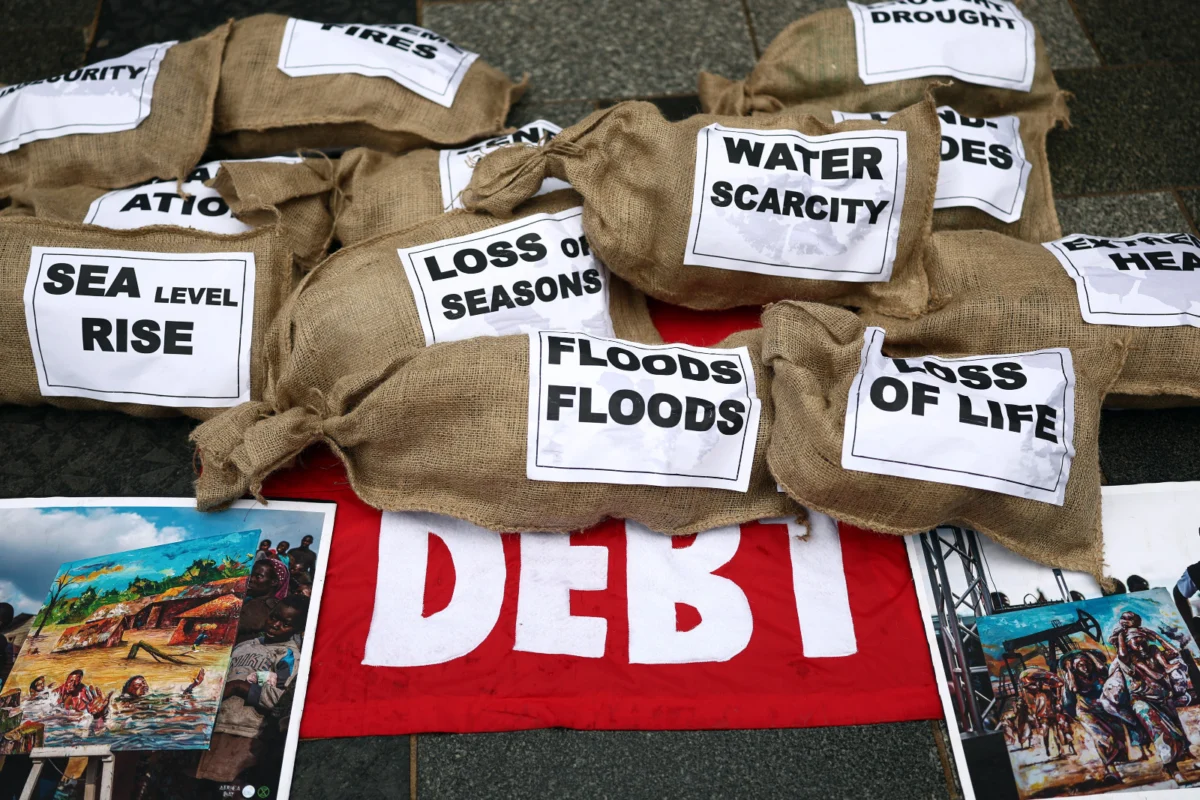
The intersection of environmental policy and national economics has become a primary ideological battleground in American politics, characterized by a fundamental disagreement over the cost of regulatory oversight. For years, the prevailing argument from conservative administrations, most notably that of President Donald Trump, has centered on the premise that climate action constitutes a direct threat to economic prosperity. This narrative posits that international agreements and domestic emissions standards act as a financial drain on the United States, often described by critics as a "green scam" or a precursor to "economic destruction." However, an emerging body of economic research and historical data suggests that the true financial burden lies not in the cost of regulation, but in the escalating price of climate-related inaction.
The Economic Narrative of Environmental Deregulation
The Trump administration’s approach to environmental policy was rooted in the assertion that strict regulations hamper industrial growth and international competitiveness. Upon withdrawing from the Paris Climate Agreement, President Trump argued that the accord would cost the U.S. economy trillions of dollars while allowing other nations to maintain their carbon-heavy industrial bases. This perspective was further applied to the domestic automotive industry, where the administration sought to roll back fuel efficiency standards and stall the transition to electric vehicles (EVs), claiming such measures were necessary to save the industry from collapse.
This policy framework relies heavily on cost-benefit analyses that frequently prioritize immediate industrial savings while discounting the long-term economic consequences of environmental degradation. Under the direction of the Environmental Protection Agency (EPA), the administration revamped the metrics used to evaluate clean air rules. Historically, the EPA accounted for "co-benefits," such as the reduction of asthma attacks, hospitalizations, and premature deaths resulting from lower pollution levels. Recent shifts in methodology, however, have effectively treated the value of saving human lives as zero in certain regulatory calculations. Furthermore, the administration significantly reduced the "social cost of carbon"—a crucial metric used to estimate the economic damage from floods, droughts, and heatwaves—from the $190 per ton later set by the Biden administration to a negligible amount.
A Chronology of Industry-Funded Economic Skepticism
The argument that climate action is prohibitively expensive did not emerge in a vacuum. It is the result of a decades-long effort by fossil fuel interests to shape public and political perception. In the early 1990s, organizations such as the American Petroleum Institute (API) began commissioning economic studies designed to highlight the potential downsides of greenhouse gas regulations.
A landmark 1991 study funded by the industry concluded that a carbon tax of $200 per ton would shrink the U.S. economy by 1.7 percent by the year 2020. Crucially, this study and others like it omitted the countervailing costs of climate change itself, such as property damage from rising sea levels or the loss of agricultural productivity due to shifting weather patterns. This selective accounting created a persistent narrative that environmental protection is a luxury that the economy cannot afford, rather than a necessary investment in stability.
The tradition of selective data usage continued through the recent rollbacks of vehicle fuel efficiency standards. When the EPA rescinded these standards, it promised consumers $1.3 trillion in savings on vehicle payments by 2055. However, internal regulatory impact analyses later revealed that increased costs for fuel, vehicle repairs, and insurance would total approximately $1.5 trillion over the same period. The administration’s estimates also relied on the assumption that gasoline prices would remain stable at around $3 per gallon for 30 years—an assumption proven false by subsequent global market volatility and geopolitical conflicts that drove prices well above $4 per gallon.
Supporting Data: The Rising Price of Inaction
While the costs of regulation are often immediate and visible, the costs of climate change are cumulative and increasingly pervasive. A 2023 analysis from the Brookings Institution highlighted that the average American household now pays between $219 and $571 annually due to the effects of climate change. These costs manifest in rising insurance premiums, increased healthcare expenditures due to wildfire smoke and heat exhaustion, and higher utility bills. For households in high-risk regions, these annual costs can exceed $1,000.
The physical reality of these costs was underscored by the record-breaking spring heat wave that scorched the Western United States in early 2024. This event not only worsened wildfire forecasts but also threatened the snowpack essential for the region’s water supplies. According to the National Oceanic and Atmospheric Administration (NOAA), the United States has seen a dramatic increase in "billion-dollar disasters"—weather events that cause at least $1 billion in damage. In the 1980s, the U.S. averaged roughly three such events per year; in the last five years, that average has jumped to over 20 per year.
The Counter-Argument: Environmental Protection as an Economic Stimulus
Economists such as Gernot Wagner of Columbia Business School argue that the "climate versus economy" debate is a false dichotomy. Historical evidence suggests that environmental legislation can actually serve as a catalyst for growth. The Clean Air Act of 1970 is frequently cited as a primary example. By reducing lead and particulate matter in the atmosphere, the act improved public health and, by extension, worker productivity. Research indicates that the U.S. Gross Domestic Product (GDP) was 1.5 percent higher in 2010 than it would have been without the legislation, primarily because healthier children grew into more productive adults.
Modern green investments operate on a similar principle of economic stimulus. When a government incentivizes the installation of heat pumps, induction stoves, or improved insulation, it creates demand for manufacturing and skilled labor. While these transitions require upfront capital, they inject money into the local economy and eventually reduce long-term operational costs for consumers. For instance, comprehensive home energy renovations can reduce monthly utility bills by over 75 percent, though the "payback period" for such investments can span decades.
Global Perspectives and Fiscal Stability
The debate over the cost of climate action extends beyond the borders of the United States. Many developing nations, currently grappling with high debt levels, face the challenge of investing in climate adaptation while maintaining fiscal solvency. However, a recent study published in the European Journal of Political Economy examined data from 172 countries and found no inherent trade-off between climate adaptation and financial stability.
The study, led by Professor Jorge M. Uribe of the Universitat Oberta de Catalunya, suggests that investments in resilient infrastructure—such as better shelter and flood protection—actually contribute to long-term fiscal health. By preventing the catastrophic destruction of capital and the displacement of populations, these measures preserve the tax base and reduce the need for emergency government spending following natural disasters.
Public Sentiment and Policy Implications
Despite the persistent political rhetoric regarding the "cost" of environmental laws, public opinion appears to be shifting toward a more nuanced understanding of the issue. Data from the Yale Program on Climate Change Communication reveals that 59 percent of U.S. voters believe that protecting the environment improves economic growth and provides new jobs. Only 18 percent of respondents believe that environmental protections are a net negative for the economy.
The findings suggest that the "forced trade-off" framing—the idea that one must choose between a healthy planet and a healthy wallet—is increasingly out of step with both public perception and empirical data. An investigation by The Associated Press into 20 different EPA rule rollbacks found that in 17 cases, the quantified benefits of the rules (in terms of health and environmental protection) significantly outweighed the costs of compliance.
As the impacts of extreme weather become more frequent and financially burdensome, the focus of economic policy is likely to shift from the costs of compliance to the costs of survival. The transition to a low-carbon economy represents a significant structural shift, one that inherently disrupts established industries like fossil fuels. However, for the broader economy, the evidence suggests that the most expensive path forward is the one that fails to address the changing climate. The challenge for future administrations will be to move past the simplified narratives of the 1990s and develop a fiscal framework that accounts for the true, comprehensive value of a stable environment.