
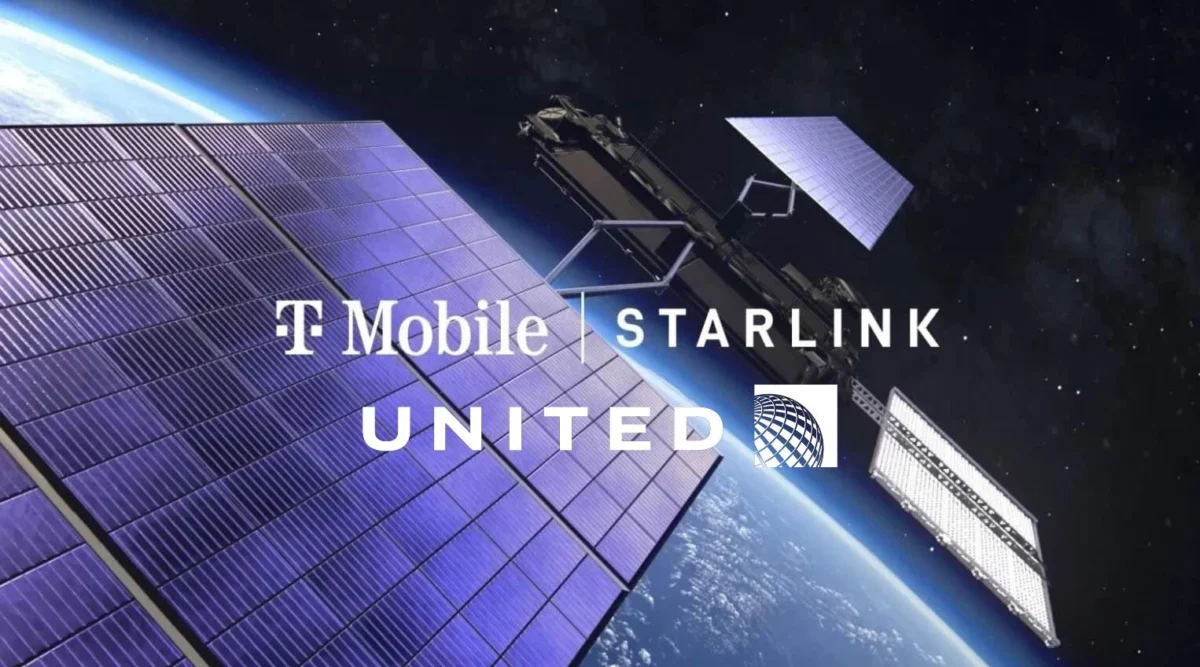
The telecommunications landscape for frequent flyers has undergone a significant shift this week as T-Mobile quietly removed both American Airlines and United Airlines from its popular "In-Flight Connection" benefit program. This development, which was first signaled by the removal of American Airlines several weeks ago, was finalized with the updated removal of United Airlines from T-Mobile’s official coverage pages on April 15, 2026. The move marks the end of a long-standing partnership that allowed T-Mobile customers on specific plans to access free internet services while cruising at 30,000 feet. For millions of travelers who relied on this perk to maintain productivity or stay connected with family, the sudden disappearance of the T-Mobile login option on seatback screens and Wi-Fi portals represents a notable reduction in the value of premium cellular subscriptions.
A Chronology of the Disappearing Benefit
The dissolution of this partnership did not happen overnight, but it was executed with a lack of public fanfare that has left many consumers confused. In early 2026, T-Mobile users began reporting that the "T-Mobile" button on American Airlines’ Wi-Fi landing pages had vanished. Shortly thereafter, American Airlines was purged from the list of supported carriers on T-Mobile’s promotional website. This week, the same pattern emerged with United Airlines. On April 14, 2026, travelers on various United flights noticed the absence of the T-Mobile authentication option. By the following day, United had been officially removed from the T-Mobile support documentation.
Internal reports and community discussions, including those on platforms like Reddit, suggest a phased decommissioning of the service. On United Airlines, the impact appears to have initially targeted aircraft equipped with Panasonic Avionics Wi-Fi systems. However, unverified internal data suggests that the phase-out will expand to aircraft utilizing Thales and Viasat hardware by July 13, 2026. This timeline indicates a calculated wind-down of the contractual obligations between the carrier and the airline, rather than a sudden technical failure.
Official Responses and Corporate Silence
The reaction from the involved parties has been characterized by a mix of deflection and silence. When questioned about the removal of the benefit, a spokesperson for United Airlines clarified that the decision originated with the telecommunications provider. The airline stated that the change is due to an update T-Mobile made to its customer benefit program and encouraged users to contact T-Mobile directly for further details. This statement suggests that United was not the primary driver behind the termination of the agreement but was instead responding to a strategic pivot by T-Mobile.
T-Mobile, for its part, has remained largely unresponsive to direct inquiries regarding the specific reasons for the change. The company did, however, issue a cryptic email to a segment of its customer base. The communication alluded to "updates to in-flight benefits" without explicitly naming the airlines being removed or providing a justification for the reduction in service. This lack of transparency has led to widespread speculation within the aviation and telecommunications industries regarding the underlying motives, ranging from cost-cutting measures to a misalignment of future technology roadmaps.
The Starlink Factor and the Future of United’s Connectivity
One of the most prominent theories surrounding the breakdown of the T-Mobile-United partnership involves United’s aggressive transition to SpaceX’s Starlink satellite internet. United Airlines has been vocal about its commitment to Starlink, even featuring the service in high-profile marketing campaigns, including a Super Bowl advertisement. Starlink’s Low Earth Orbit (LEO) satellite constellation offers significantly higher speeds and lower latency compared to the legacy Geosynchronous (GEO) satellite providers currently used by much of the United fleet.
As United moves toward a goal of equipping its entire mainline fleet with Starlink, the necessity for third-party "roaming" agreements like the one with T-Mobile may be diminishing. From T-Mobile’s perspective, paying United to subsidize Wi-Fi on older, slower systems may no longer be a viable marketing investment, especially if United intends to offer Starlink for free to all passengers in the future—a move that would render the T-Mobile benefit redundant. However, with only an estimated 10% of United’s mainline fleet currently equipped with Starlink, the timing of this removal leaves a significant "connectivity gap" for the remaining 90% of passengers who must now pay out-of-pocket for legacy Wi-Fi services.

Technical Limitations and Bandwidth Saturation
Beyond corporate strategy, technical constraints may be playing a role in the decision to terminate free access. Industry insiders have pointed to growing concerns regarding bandwidth saturation on legacy satellite networks. Specifically, reports have surfaced regarding a memorandum sent to pilots indicating that satellite providers for the Boeing 787 Dreamliner fleet are reaching peak capacity during certain times of the day.
This saturation is particularly acute on transpacific routes, where the limited number of available satellites must handle the data demands of hundreds of passengers per aircraft. When a significant portion of those passengers are T-Mobile customers accessing the network for free, the strain on the system can lead to a degraded experience for all users, including those paying premium prices for "Business" or "First Class" internet access. By removing the free T-Mobile tier, the airlines and providers may be attempting to manage congestion by placing a financial barrier to entry on the network, thereby preserving bandwidth for a smaller pool of paying customers.
Financial Implications for the Frequent Traveler
For the consumer, the financial impact of this change is immediate. For years, the T-Mobile benefit allowed travelers to bypass the standard $8 to $10 domestic Wi-Fi fee (or higher for international segments). For a frequent flyer traveling weekly, this change could represent an additional annual expenditure of over $500. This is particularly frustrating for United flyers, as the airline recently moved away from offering monthly or annual Wi-Fi subscriptions, leaving per-flight purchases as the only remaining option for those without the T-Mobile perk.
Furthermore, this development affects the competitive standing of T-Mobile against other carriers like Verizon and AT&T. The "Coverage Beyond" initiative was a primary differentiator for T-Mobile’s high-tier plans, such as Go5G Next and Magenta MAX. With American and United—two of the "Big Three" U.S. carriers—now out of the fold, the utility of these plans is significantly diminished for a large segment of the domestic traveling public. Alaska Airlines and Delta Air Lines remain on the list of supported carriers for now, though Delta has moved toward its own "Delta Sync" free Wi-Fi model for all SkyMiles members, which is also supported by T-Mobile.
Broader Industry Trends in In-Flight Internet
The situation at United and American reflects a broader transition in the aviation industry toward a "freemium" or "universally free" Wi-Fi model. Delta Air Lines set the precedent by offering free, high-speed Viasat Wi-Fi to all passengers who join its loyalty program. JetBlue has offered free Wi-Fi for years. As airlines realize that high-quality internet is no longer a luxury but a fundamental expectation, the old model of third-party cellular sponsorship is evolving.
The industry is currently divided between two philosophies. The first is the legacy model, where bandwidth is scarce and expensive, requiring airlines to charge high fees or seek corporate sponsors like T-Mobile to cover the costs. The second is the modern LEO model (led by Starlink), where bandwidth is abundant enough to be offered as a standard amenity, similar to in-flight entertainment or snacks. United’s pivot toward Starlink suggests they are moving toward the latter, but the removal of the T-Mobile benefit before the Starlink rollout is complete suggests a rocky transition period for passengers.
Conclusion and Outlook
The removal of T-Mobile’s free Wi-Fi benefit on American and United Airlines marks the end of an era for cellular-airline partnerships. While the exact reasoning remains a subject of corporate confidentiality, the convergence of technical bandwidth limitations, the rise of Starlink, and shifting marketing priorities likely created a "perfect storm" that made the partnership untenable.
For travelers, the immediate future involves higher costs and a greater reliance on individual airline loyalty programs rather than cellular provider perks. As United continues its Starlink installation and American Airlines evaluates its own next-generation connectivity options, the industry will be watching to see if other carriers follow suit or if T-Mobile attempts to negotiate new, more sustainable agreements with different providers. For now, passengers are advised to check their flight’s Wi-Fi availability and pricing ahead of time, as the days of a simple "T-Mobile Login" button on the two largest U.S. carriers have come to a close.










Leave a Reply