
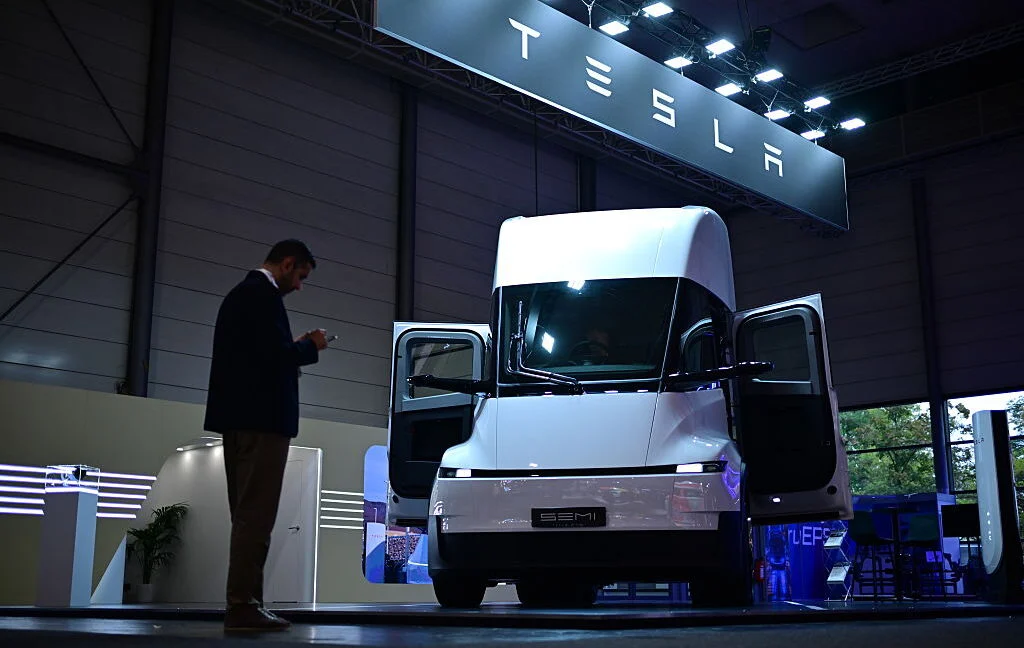
A monumental shift is taking place within the American logistics and freight industry as a powerful corporate coalition—featuring major multinational entities such as Microsoft and PepsiCo—commits to a record-breaking procurement of 2,500 Tesla Semi electric trucks. This massive order, slated for staggered delivery beginning this year and spanning the next 18 months, represents a watershed moment for heavy-duty commercial electrification. If successfully deployed according to schedule, these vehicles will virtually double the total number of operational heavy-duty electric trucks currently navigating United States roadways.
The procurement alliance utilized a collective demand-pooling strategy, enabling participating carriers to successfully negotiate lower price points from manufacturers. According to industry experts, this collaborative approach is becoming increasingly vital as fleet operators attempt to navigate economic volatility, volatile energy markets, and an evolving regulatory framework under the federal government.
The Macroeconomic Paradox: Regulatory Rollbacks Meet Soaring Diesel Costs
The timing of this historic corporate commitment underscores a fascinating economic paradox. Just months prior to this announcement, the Trump administration and congressional Republicans—the very political establishment that Elon Musk heavily funded with millions of dollars to secure a return to the White House—enacted sweeping legislation that stripped away billions of dollars in federal subsidies and support mechanisms for electric vehicles. Furthermore, federal agencies are actively working to lower fuel economy standards specifically tailored for heavy truck engines. Under previous guidelines, manufacturers were held to aggressive climate targets designed to curb emissions from heavy-duty vehicles, which alone account for approximately 7 percent of all United States greenhouse gas emissions.
Despite the withdrawal of federal financial incentives and the relaxation of environmental standards, broader geopolitical and macroeconomic forces have created an unexpectedly favorable market environment for alternative fuel commercial fleets. The ongoing conflict in the Middle East, colloquially referred to in energy circles as the Iran War, has severely disrupted global oil production, refining capacities, and critical maritime shipping lanes. Consequently, domestic diesel prices have experienced unprecedented surges, hitting record highs this month. Current diesel costs are nearly double what they were during the same period last year, placing immense financial strain on freight operators and shipping enterprises nationwide.
Elon Musk addressed these market dynamics in a pre-taped keynote address, pointing directly to the stark economic realities facing the transportation sector. He noted that the heavy-duty electric truck is poised to make profound financial sense for fleet operators because electricity remains significantly cheaper than diesel, particularly during periods of extreme market turbulence. This economic rationale holds true even as the company navigates the fallout and realities of an administration it once closely collaborated with through advisory frameworks like the Department of Government Efficiency (DOGE).
Assessing the Fleet: Why Companies Chose the Tesla Semi
The path toward this record-breaking order involved rigorous evaluation by the participating shippers. Meena Bibra, a spokesperson for the nonprofit Smart Freight Centre—an organization intimately involved in facilitating the procurement deal—shed light on the decision-making process during an interview. Bibra explained that the alliance ultimately selected Tesla’s heavy-duty platform over competing commercial offerings after a comprehensive assessment covering critical operational metrics: price, performance, production capability, and comprehensive service support.
While Tesla captured this landmark order, the broader commercial vehicle market remains diverse. Industry analysts emphasize that if individual carriers have deep-established relationships with traditional truck manufacturers, or if alternative electric vehicle architectures better suit their specific operational parameters, they retain the flexibility to source zero-emission heavy trucks from established legacy builders such as Kenworth, Ride, and Volvo. The diversification of the electric truck market ensures that fleet operators are not entirely dependent on a single supplier as the industry slowly transitions away from internal combustion engines.
Evolution and Timeline of the Tesla Semi
The journey of the Tesla Semi has been characterized by grand ambitions, significant engineering challenges, and persistent delays since its initial unveiling. Understanding the timeline of this vehicle provides vital context for the significance of the current manufacturing milestone:
- November 2017: Elon Musk formally unveils the Tesla Semi prototype during a high-profile launch event in Hawthorne, California, promising initial production by 2019 and boasting groundbreaking range figures alongside advanced driver-assistance features like Enhanced Autopilot.
- 2019–2021: Production targets are repeatedly pushed back due to global supply chain constraints, engineering revisions, battery cell supply shortages, and the broader disruptions caused by the COVID-19 pandemic.
- December 2022: Tesla delivers its very first production-intent Semi trucks to PepsiCo during a handover event at its Gigafactory in Nevada, though production volumes remain extremely low and restricted to pilot testing programs.
- 2023–2024: Fleet data trickles out regarding real-world performance, with PepsiCo deploying the vehicles on regional distribution routes and highlighting the viability of high-capacity battery electric hauling over shorter distances.
- Early 2025: Amid surging diesel prices driven by Middle Eastern geopolitical conflicts, corporate logistics networks accelerate electrification strategies, culminating in the collective procurement alliance ordering 2,500 units.
Despite these milestones, certain technological promises from the original 2017 rollout remain unfulfilled. Notably, Full Self-Driving (Supervised)—Tesla’s advanced driver-assistance software suite—is not yet commercially integrated into the Semi platform. During his recent address, Musk indicated that the autonomous driving feature would make its long-awaited debut on the heavy-duty trucks in "the very near future," though safety advocates and regulatory bodies continue to monitor the deployment of such systems closely, particularly in commercial vehicles of this massive scale.
Broader Industry Implications and Future Outlook
The commitment by Microsoft, PepsiCo, and other major logistics partners to purchase 2,500 Tesla Semis signals a fundamental maturation of the commercial electric vehicle market. For years, skeptics argued that heavy-duty electrification was economically unviable without permanent federal subsidies and heavy regulatory mandates. However, the current shockwaves in global energy markets have flipped the equation, demonstrating that pure operational cost-efficiency can drive sustainable adoption even in the absence of government backing.
As these vehicles roll off assembly lines over the next year and a half, transportation economists will closely monitor their real-world performance, charging infrastructure reliability, and maintenance costs. If the Tesla Semi and its competitor counterparts prove their long-term durability and cost-savings under heavy commercial workloads, the logistics sector may witness an accelerated, market-driven transition that outpaces even the most aggressive policy targets previously set by federal regulators.










Leave a Reply